

#24M "I was missing for 17 days in the Banfield Well"
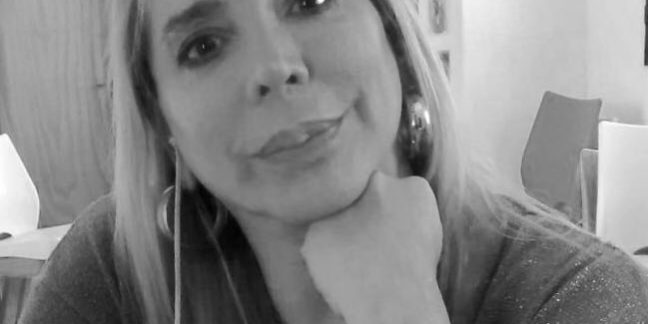
I was born in Rosario and I'm an older trans woman. When I was 16, I was kicked out of my house and started working as a prostitute because it was the only way out I had. At that time, we were just called transvestites; the word "trans" didn't exist. I had to flee to Buenos Aires because during a police raid, I broke a police chief's nose with my purse. I was just a kid. I arrived at my aunt's house and started working as a prostitute in secret. I struggled a lot, and I also had that rebellious streak of youth: the more you're told not to do something, the more you do it.

Share

By Marcela Viega. I was born in Rosario, and I'm an older trans woman. At 16, I was kicked out of my house and started working as a prostitute because it was the only way out. At that time, we were just called transvestites; the word "trans" didn't exist. I had to run away to Buenos Aires because during a police raid, I broke a police chief's nose with my purse. I was just a kid. I went to my aunt's house and started working as a prostitute in secret. I struggled a lot, and I also had that youthful rebelliousness where the more you're told not to do something, the more you do it. In Rosario, I had been institutionalized in a psychiatric-geriatric hospital that still exists. My family thought my homosexuality had to be cured. They put me through sleep therapy. It was shameful to have a trans woman in the family. I was adopted. My parents owned a factory in Rosario; they had come to Argentina fleeing Franco's regime. At 18, I went to Spain. They welcomed me and then told me, “Go back to your country,” they kicked me out. Now I can tell it with a bit of humor, but at the time it was a disaster: first going to a different city, then going to a different country and being turned away, I didn't know what to do. I went back to Buenos Aires because I couldn't set foot in Rosario. I started working on Camino de Cintura, where I had a bus stop. One day a police car pulled up, the officers ordered me to get in, they blindfolded me, and I arrived at a place I didn't recognize. The only thing I had access to was a tap without a thread; I only drank water from a small jug. Later I learned that they had taken me to Pozo de Banfield, a detention and torture center from the last dictatorship. At that moment I didn't understand what was happening. I was disappeared for 17 days. Human beings have one great defense: forgetting. Thanks to my friend Carlos Ibarra, who, along with a lawyer, searched for me at every police station, got me in, and signed the logbook. I am eternally grateful to that friend who stood by me because he could have been the one who suffered. I'm 1.78 meters tall, I'm big, and when I got out I weighed 45 kilos, I had lice in my eyebrows and eyelashes. At that time we got around by taxi because we couldn't take the bus. He carried me all the way to Banfield, to the house of some trans women who took care of me. I didn't have the strength to stand up. That's where I recovered. I went back to prostitution and saved up money to leave the country. We were persecuted everywhere. In Europe there was a little more freedom, but we were persecuted there too. The only trans women who were respected were the artists, like Coccinelle (she was a French trans actress, showgirl, and singer who had part of her career in Argentina). I spent some time in Europe, in Italy, Spain, and France, and then I'd return to Argentina. The police charged us for everything. Every time they caught you, you'd spend 60, 90, or even 120 days locked up. A con artist would get a shorter sentence than a trans woman. The cells were shared with men. We felt our identity was violated, even though we didn't understand many of our rights because we didn't have them. We were used as bargaining chips by the police. If a cop was short on yerba mate, he'd trade us prisoners for a pack of yerba mate. Those were very painful times. Today, many things have changed, and we've gained many rights. Today we have a lot of resources. But there's still a long way to go. There's no quota for trans people, and for us to be accepted and respected, we have to respect everyone. When we were girls, the only path we had was prostitution. Now I think we can find alternatives. Young girls need to be in contact with older women so that we can pass on experiences and promote everything within our reach to help them have a decent life .
.
We are present
We are committed to journalism that delves into the territories and conducts thorough investigations, combined with new technologies and narrative formats. We want the protagonists, their stories, and their struggles to be present.
SUPPORT US

FOLLOW US
Related notes


We are present
This and other stories are not usually on the media agenda. Together we can bring them to light.