

#CHILE 2017, year of fury against LGBTI: violence increased by more than 45%
The Annual Human Rights Report on Sexual and Gender Diversity prepared by the Homosexual Liberation Movement (Movilh) described 2017 as "the year of fury against LGBTI people and same-sex parent families."

Share

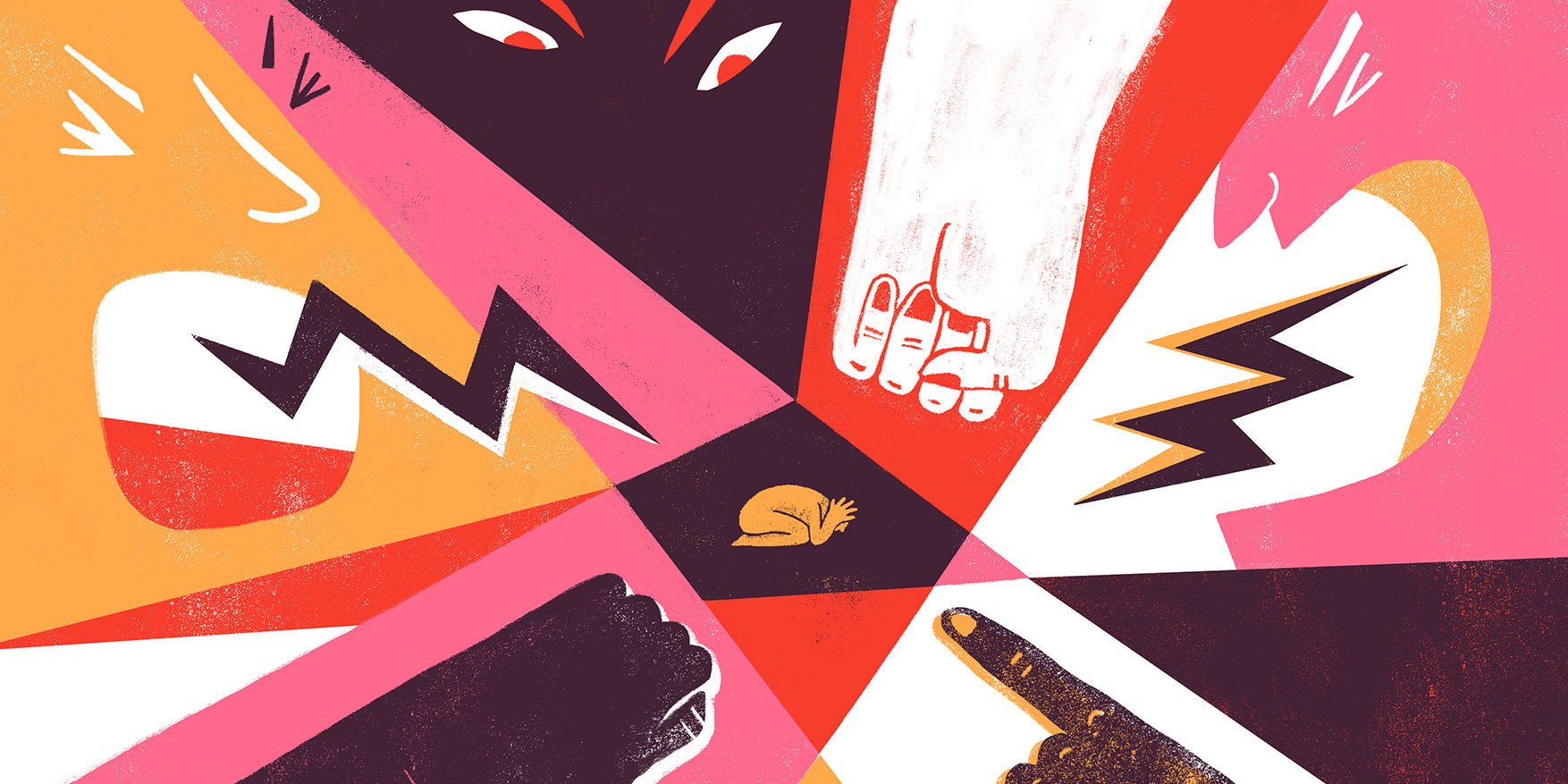
Illustrations: Florencia Capella Photos: Josean Rivera/Presentes Archive The Annual Human Rights Report on Sexual and Gender Diversity, prepared by the Movement for Homosexual Liberation (Movilh), described 2017 as “the year of fury against LGBTI people and same-sex parent families.” The report, released yesterday in Santiago, Chile, reports a 45.7% increase in cases and complaints of discrimination in the country. “ Any setback in the progress made to end homophobia is worrying . There is an advance of conservative defensiveness. We are very concerned that the script is the same throughout the region: they talk about gender ideology,” Rolando Jiménez, spokesperson and head of Human Rights at Movilh, told Presentes after the official presentation of the report.

Chain hatred
Unlike previous years, this time the increase in reports “is not related to greater courage on the part of victims to report attacks, but rather is explained by a worsening of the levels of violence,” the report states. Jiménez emphasized that in the context of the presidential elections, the far right's central discourse “was transphobia and homophobia. They were a key electoral battleground, bringing their contempt for LGBTI people into the public discourse. And all of this was protected by a misunderstood freedom of expression. That explains much of this setback. If the candidates use hate speech, I feel validated for my actions and practices of violence against the LGBTI population,” she said. The report focuses on “The Hate Bus Crusade in Greater Santiago” which triggered “a chain reaction of hatred: it was emulated in other regions, homophobic/transphobic groups intensified the virulence of their rhetoric, and ultraconservative authorities supported the campaign, lending it a certain “validity” in the public sphere as it was presented as a neutral form of expression, rather than harmful to human dignity. It notes that “every pro-LGBTI measure was met with violent initiatives ranging from legal challenges to beatings and attacks in public, especially against human rights defenders.”Positive findings from the Mobile
On the positive side, The study highlights the access to justice that victims are beginning to achieve in the courts. For this reason, it states that the Judiciary has become the "most progressive branch of government in the country in terms of protecting and recognizing the human rights of sexual and gender diversity." In addition to being the entity that has undergone the greatest transformations in this area since 2015, the 16th edition of the Report coincided with the end of President Bachelet's term. It highlights that "of all the governments in place to date, hers was the most progressive."
The numbers of discrimination
According to the report, 484 hate incidents were reported in 2017. This is the highest number on record, representing 20% of all abuses that occurred in the last 16 years. These 484 incidents included: 2 murders, 56 physical or verbal assaults perpetrated by civilians, 1 case of police abuse, 38 cases of workplace discrimination and 20 cases of educational exclusion, 77 homophobic/transphobic demonstrations, 38 instances of institutional marginalization, 11 instances of obstruction of access to services or products in public or private spaces, 72 abuses perpetrated by family members, friends, or neighbors, 166 hate speech incidents, and 3 cases of human rights violations in the cultural, media, and entertainment sectors. Abuses increased in 7 of the 11 categories of discrimination. The highest increase was in hate speech (245% more than in 2016), followed by abuses in culture and media (200%), homo/transphobic mobilizations (108%), educational discrimination (53%), physical or verbal aggressions committed by civilians (40%), hit-and-runs driven by family members or neighbors (28%) and job exclusions (18%). Twenty percent of the cases involved gay men, a 26% increase compared to 2016; 18% involved transgender people; 14% involved lesbians; and 48% involved the LGBTQ+ community as a whole. Compared to 2016, reports of abuse against transgender people decreased by 17% and against lesbians by 1.4%. Of the total number of abuses, the report attributes 49 to institutions and 304 to individuals, many of whom are linked to ultra-Catholic, ultra-Evangelical, neo-Nazi, or far-right movements.
Where is discrimination concentrated?
The Metropolitan Region (31%), Valparaíso (14%), Biobío (10.1%) and Coquimbo (4.6%) were those where the most cases of discrimination were documented in 2017. They are followed by Los Lagos (3.7%), La Araucanía (2.5%), Antofagasta (2.3%), Maule (2.1%), Libertador Bernardo O'Higgins (1.7%), Magallanes and Chilean Antarctica Region (1.2%), Tarapacá (0.6%), Atacama (0.4%), Los Ríos (0.2%), Arica and Parinacota (0.2%). The regions with the largest increases in reported cases compared to 2016 were Libertador Bernardo O'Higgins (300%), Coquimbo (266%), Los Lagos (157%), La Araucanía (100%), Biobío (88%), Magallanes and Chilean Antarctica (50%), Metropolitan Region (39%), and Antofagasta (10%). LGBTI organizations intervened in 97.2% of the cases, providing support and guidance to the victims.A more progressive judiciary
“The Judiciary was late in defending and promoting the human rights of LGBTI people and same-sex parent families, but when it did, it surpassed the other branches of government in openness, advancing by leaps and bounds in an unprecedented way.“,” the report says. It adds that the “accelerated evolution of the Judiciary since 2015 was consolidated in 2017 to the point that issues such as the rights of transgender children, same-sex marriage, and same-sex adoption have already been settled at the institutional level, since He has spoken in favor based on a human rights perspective. On the contrary, The legislature has not yet approved these laws And the Executive's measures move between consensus, in addition to accelerating the legislative process in a circumstantial and discontinuous manner.”During 2017, the courts issued 5 rulings in favor of the rights of LGBTI inmates held in penitentiary centers., in addition to changing the legal name and sex of 89 people, in circumstances where in 2006 it had only authorized 7“,” the study specifies. Furthermore, it details that in 2017 The Supreme Court also applied the Zamudio Law twice for homophobia, in addition to handing over custody of her two children to a man who lived with his same-sex partner. There were others Five rulings from different courts against labor abuses against LGBTI people“While the courts rejected two appeals for protection against pro-diversity educational policies and a lawsuit for malfeasance filed by an NGO against Judge Luis Fernández for changing the legal name and gender of a trans girl,” Movilh stated, “at the same time, the transphobic murderer of Litzi Odalis Parrales was convicted, and two women who assaulted a mother for defending her eight-year-old son from homophobic insults were sanctioned.” “This represents at least 107 rulings in favor of LGBTI rights issued within the period of one year, "This contrasts with the homophobic and transphobic past of the Judiciary," the investigation points out.61 positive milestones, 6 negative ones
The study highlights that during 2017 “there were 67 significant events that marked the history of human rights for LGBTI people.” On the level of the public policies:
- The Superintendency of Education issued a circular to protect the rights of transgender students
- The Reloncavi Health Service became the fourth in the country where body reshaping surgeries can be managed
- The Sótero del Río Hospital developed a program on gender identity
- The Ministry of Health emphasized its rejection of conversion therapies for homosexuality.
- The First National Human Rights Plan incorporated LGBTI themes
- A state website was launched to inform and raise awareness about same-sex marriage.
- Bachelet became the first head of state to give a pro-equality message on the occasion of the International Day Against Homophobia and Transphobia, as did the Minister of Education Adriana Delpiano.
- The Municipality of Providencia distributed among its officials circular number 1 on non-discrimination , mentioning all the categories protected by the Zamudio Law.
- His counterpart in Recoleta inaugurated the Pedro Lemebel Public Library.
- The municipality of Quellón organized the first March for Inclusion and Diversity in the commune, and Las Condes and the Plaza de Tribunales in Concepción displayed the rainbow flag. The fountains in Plaza Cruz, Plaza Bélgica, and the Paicaví and Lomas de San Sebastián roundabouts in the Biobío region were illuminated with rainbow colors, as was the arch of the University of Concepción.
- A reform to the Civil Union Agreement was approved that extends the 5 days of work leave to cohabiting partners.
- President Bachelet presented to the National Congress a Bill that sanctions Incitement to Physical Violence and the Equal Marriage Bill, which was preceded by two historic ceremonies on the matter held at La Moneda, within the framework of compliance with the agreement signed before the IACHR.
- The Socialist Party caucus presented a bill that sanctions incitement to hatred.
- Members of Parliament from the New Majority coalition introduced a bill that would allow same-sex couples to adopt.
- The Chamber of Deputies approved a resolution promoted by the Communist Party that rejected the discriminatory messages promoted by the self-styled “Freedom Bus”.
In the cultural, academic and/or media fields:
The National Television Council (CNTV) launched its first guide against homophobia and transphobia; the film "A Fantastic Woman" was selected to represent Chile in the race for the Oscars; the Academia de Humanismo University implemented regulations that guarantee respect for the name and social gender of trans people; the University of Chile became the first institution of higher learning to offer a course on the reality of LGBTI people; and actress Daniela Vega became the first trans woman to participate in an advertising spot.In the social field and in mobilizations :
The Santiago Metro joined the International Day Against Homophobia and Transphobia with a campaign, and the LGBTI Movement celebrated the First LGBTI Film Festival in Aysén, the First Campaign Against Homophobia in Football, the first Pride march in Punta Arenas, and the First March for the Best Interests of the Child in Santiago, in addition to convening the first debate on marriage equality organized by civil society in the National Congress. Meanwhile, the public testimony of Carla Aranda González, daughter of a homophobic/transphobic leader, resonated, sparking national and international debate and accelerating the passage of the gender identity law.On the international stage:
- The Inter-American Court of Human Rights established that same-sex marriage and the protection and respect of gender identity are guaranteed in the American Convention on Human Rights.
- The UN Human Rights Council passed a resolution banning the death penalty for people who have sex with someone of the same sex.
- The OAS gave the green light to the “Resolution on the Promotion and Protection of Human Rights”, which includes sexual orientation and gender identity as protected categories.
- Chile and Canada assumed the co-presidency of the Coalition for Equal Rights of Lesbian, Gay, Bisexual, Transgender and Intersex (LGBTI) People.
- The UN Human Rights Committee ruled that Australia violated the International Covenant on Civil and Political Rights by refusing to rectify the birth certificate of a married trans woman.
- Moonlight, an LGBTI-themed film, won the Oscar for best picture.
- In 2017, the first homophobic crime committed by agents of the Dictatorship came to light.
 The negative milestones These included hate campaigns by the self-proclaimed "Freedom" and "Family" buses; a lawsuit filed by an NGO against Judge Luis Fernández for authorizing the legal name and gender change of a 5-year-old girl; the Senate's approval of a gender identity bill that excludes children and married people and pathologizes those over 18; the insults directed at President Bachelet at the evangelical Te Deum; and the sad passing of Gilbert Baker, the designer of the LGBTI flag.
2017 Ranking of Homophobia and Transphobia
The report details a ranking of individuals with the highest levels of homophobia, noting that, on an individual level, the list is headed by the murderers of LGBTI people (Cristián Andrés Muñoz Muñoz, César Antonio Araneda Palma, Bernabé Vega, and Héctor Morales), followed by the director of the Christian Legislative Observatory, Marcela Aranda; the president of the NGO Parents Objectors, Francisco Fritis; and the director of Citizen Go, Luis Losada. In second place, according to this report, are Senators Manuel José Ossandón and Iván Moreira, Representatives José Antonio Kast and Ignacio Urruria, and the former mayor of Talca, Juan Castro Prieto. In third place, Movilh places the psychologist from the Restoration Foundation, Marcela Ferrer, and in fourth, Judge Ricardo Blanco. Fifth place is shared by Senators Juan Antonio Coloma, Jacqueline Van Rysselberghe, Ena Von Baer, and Francisco Chahuán, and Representatives José Manuel Edward, María José Hoffman, Patricio Melero, Iván Norambuena, Claudia Nogueira, Arturo Squella, Osvaldo Urrutia, Felipe Ward, and René Manuel García. (The complete list, up to position 25, can be found in the report.)How to prevent discrimination
 The events of 2017, the report states, demonstrate the need for progress toward non-discrimination to be accompanied by measures to prevent abuses, protect individual victims of injustice, and strongly reject hate speech. “We are witnessing a stage where any positive transformation is met with greater violence by traditional homophobic and transphobic groups.” Movilh stated that the report will be delivered to representatives of the three branches of government, national and international human rights organizations, and all individuals or institutions interested in learning more about LGBTI people, same-sex parent families, and the year-long history of their rights. The full report can be downloaded here > http://bit.ly/2HUkjJM]]>
We are present
We are committed to journalism that delves into the territories and conducts thorough investigations, combined with new technologies and narrative formats. We want the protagonists, their stories, and their struggles to be present.
SUPPORT US

FOLLOW US
Related notes
We are present
This and other stories are not usually on the media agenda. Together we can bring them to light.