

#8M "We want them to respect our gender identity and stop killing us"
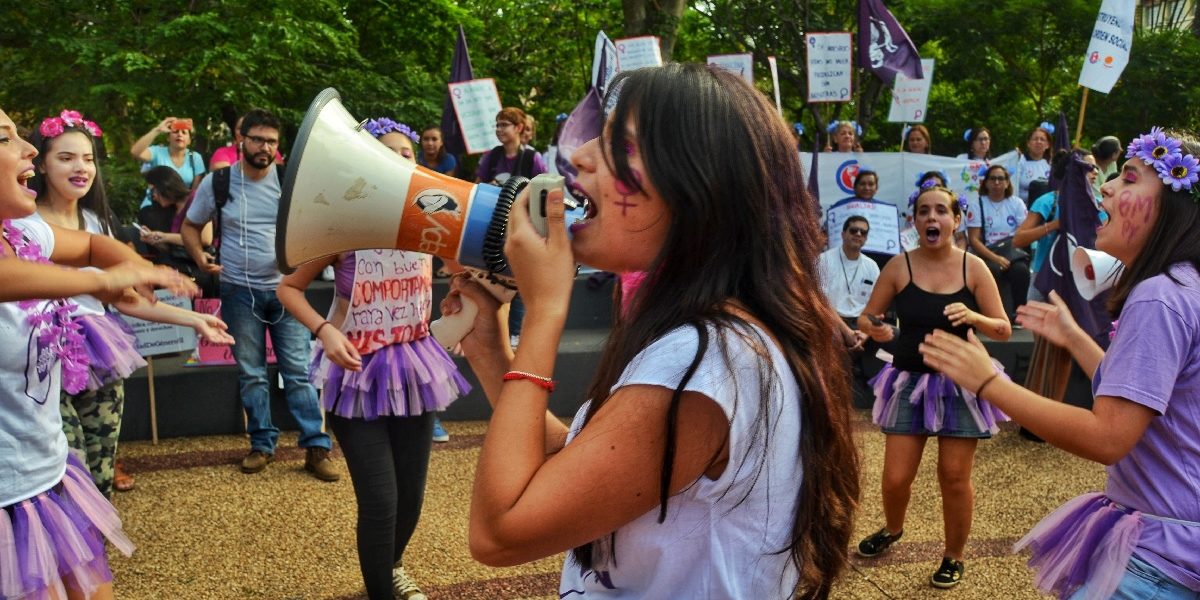
Lesbian, bisexual, and trans women were highly visible at the #8M march through downtown Asunción. They were among the more than 6,000 women who demanded equal pay and recognition of domestic work and caregiving, and who protested against harassment and workplace violence, among other demands.

Share

By María Sanz, from Asunción.
Photos: Jess Insfrán Pérez. With specific demands, lesbian, bisexual, and trans women were among the more than 6,000 women who marched through downtown Asunción to demand equal pay and recognition of domestic work and caregiving, and who shouted against harassment and workplace violence. “We seek the radical transformation of patriarchal, capitalist, and transphobic justice,” read one of the spokespeople. They also called for public policies that include trans women, investigations into hate crimes committed against them, and the passage of a gender identity law and a law against all forms of discrimination. The demands of diverse women were also included in the #8M manifesto. Mariana Sepúlveda, from the organization Panambí (for the rights of trans people), and Carolina Robledo, from Aireana, participated in the reading, among other feminist activists and leaders of social and labor organizations. “We demand an end to workplace discrimination and sexual harassment, exacerbated by being lesbians, and an end to prejudice against lesbian teachers,” declared another reader of the manifesto. The rights of women deprived of their liberty were also highlighted, “including lesbians, who don’t even have access to conjugal visits” from their partners.
[READ ALSO: #HateCrimes2017: More than 400 reports of violence against LGBT people in Paraguay]
Some of the activists were part of Aireana's "Tatucada" (a lesbian rights group), a percussion band that energized the demonstrators. Later, a cast of trans actresses took to the stage in the central Plaza de la Democracia, at the end of the march, with a performance that blended a festive atmosphere with the demand for justice for the 59 cases of trans women murdered since 1989. Mili Rodríguez, sex worker and activist of the Escalando organization (association of trans people)He told Presentes that “in Paraguay, the majority of Trans people engage in sex work because they are never given the opportunity to work at a gas station or a supermarket.” She added that many trans women are lawyers or notaries, but they cannot practice their profession because they are trans, and if they decide to do so, they have to work using their legal name, because their chosen name and gender identity are not accepted. “We don’t want any more violence; we want our gender identity to be respected, for us to be accepted as we are, and for them to stop killing us,” Rodríguez declared.
[READ ALSO: #Paraguay: Calls for justice in the transphobic murder of Andrea González]
“Lesbians suffer double discrimination”
Mónica Encina, public official and activist of the lesbian organization LesvosShe emphasized to Presentes that lesbian women were very active during all the assemblies leading up to #8M in 2018, and that even at the march on November 25 against violence against women, “almost all the spokespeople and team coordinators were lesbians.” She asserted that lesbians suffer “double discrimination in the workplace: for being women and for being lesbians.” She also stated that many lesbian women, because of their way of dressing, expressing themselves, or cutting their hair, are denied access to customer-facing jobs and are relegated to telephone customer service or telemarketing jobs, where they are not visible. Bisexual women, the most invisible
Lía Benítez, a university student who identifies as bisexual, told Presentes that “women continue to have low-paying jobs and continue to experience violence simply for being women in their workplaces, in activist spaces, or at university.” Benítez particularly condemned the sexism and harassment that female students receive from male professors and classmates, and stated that male student representatives are often elected or their knowledge is valued more highly than that of women.
 Bisexual women, the most invisible
 She also pointed out that bisexual women are “more invisible than lesbians and trans women.” “In my family, or with some classmates, there’s always the comment: ‘So what are you? Are you a lesbian or not? Make up your mind!’ And what they don’t understand is that bisexuals simply love people, because in the end, what difference does gender make?” she asked.
We are present
We are committed to journalism that delves into the territories and conducts thorough investigations, combined with new technologies and narrative formats. We want the protagonists, their stories, and their struggles to be present.
SUPPORT US

FOLLOW US
Related notes


We are present
This and other stories are not usually on the media agenda. Together we can bring them to light.