

Mariana Gómez before the court: “The judges didn’t let me speak”
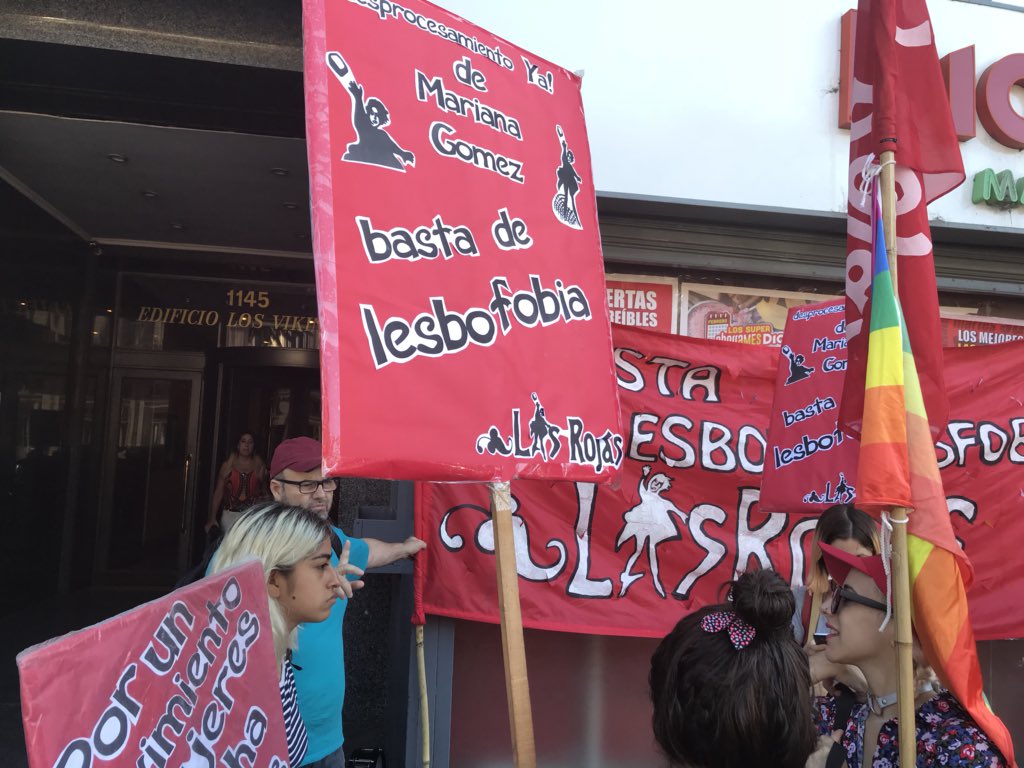
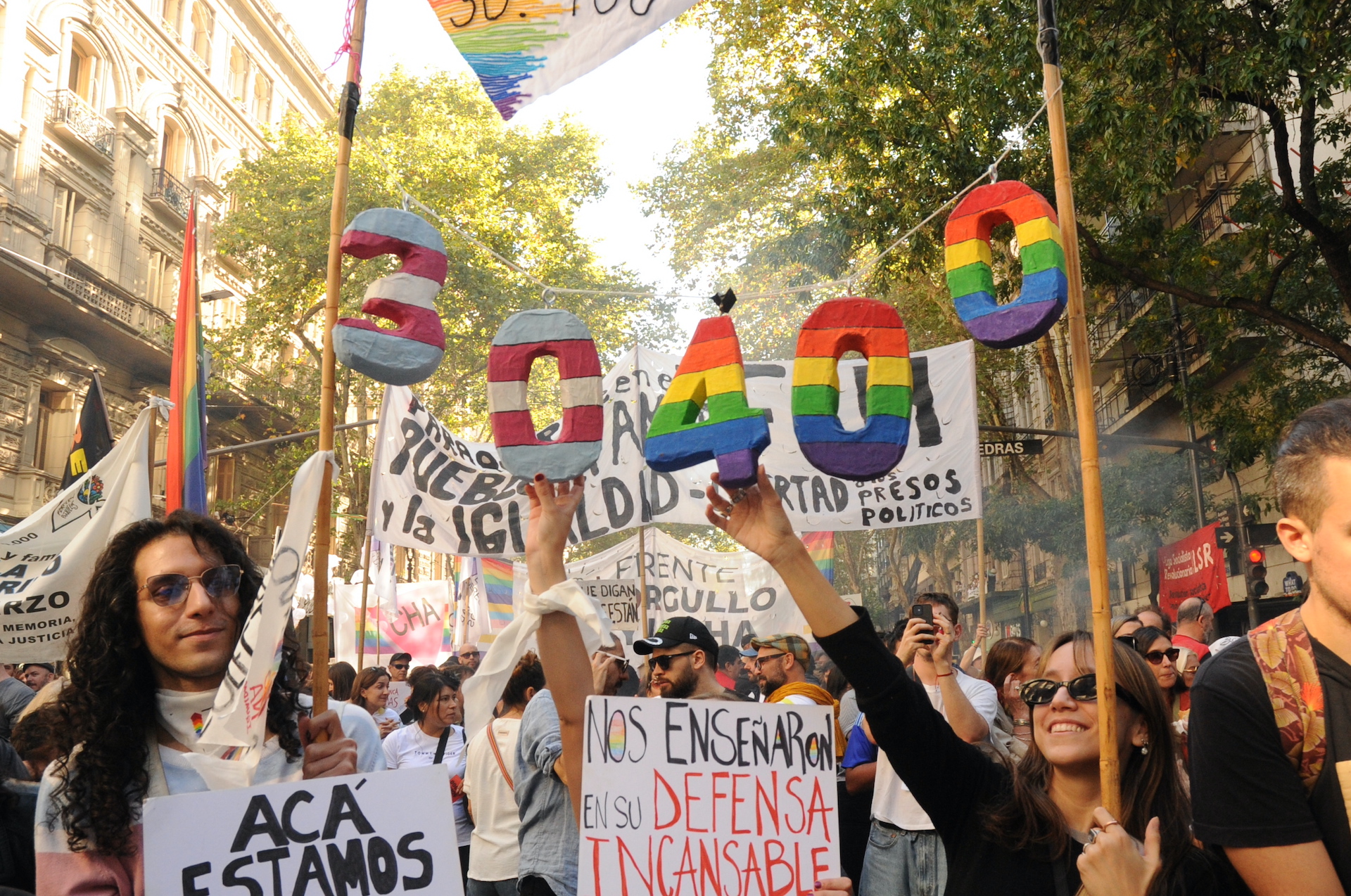
This morning, Mariana Gómez had her hearing at the Criminal and Correctional Court of Appeals in the City of Buenos Aires. Early on, activists and family members gathered at Viamonte 1147 to support the 25-year-old and her wife, Rocío Girat, both victims of police violence in an incident last October that resulted in Mariana's indictment and asset seizure for "resisting authority and assault."


Share

By Ana Fornaro
Photos: Presentes Agency
This morning, Mariana Gómez appeared in a public hearing before the Criminal and Correctional Court of Appeals of the City of Buenos Aires, which will decide whether she will remain under indictment and have her assets frozen. Early this morning, activists and family members gathered at Viamonte 1147 to support the 25-year-old and her wife, Rocío Girat, both victims of police violence in an incident last October in the City of Buenos Aires, which resulted in Mariana's indictment and asset freeze for "resisting authority and assault."
[READ ALSO: #LesbianKisses Mariana Gómez is prosecuted after being arrested for kissing her wife]
Today's hearing was crucial, and the tension was palpable. Mariana was nervous; she hadn't slept the night before, preparing what she would say to the judges: that it was a case of lesbophobia, that the police officer who confronted and arrested her, Jonatan Rojo, called her a "kid," and that he also physically assaulted her. That the judge of first instance, María Fontbona de Pombo, disregarded the evidence when she indicted her on December 29th. And all this, supposedly, for smoking in a prohibited place and defending herself against a police officer. But Mariana has testified before the courts before. During her adolescence, she was a victim of sexual abuse. In all these years, no judge heard her testimony. Today was no exception.
“The judges wouldn’t let me speak. They didn’t want to listen to me,” she told Presentes as she left the hearing. She was surrounded by her wife, her mother, and her brother, who hugged her, trying to calm her tears.
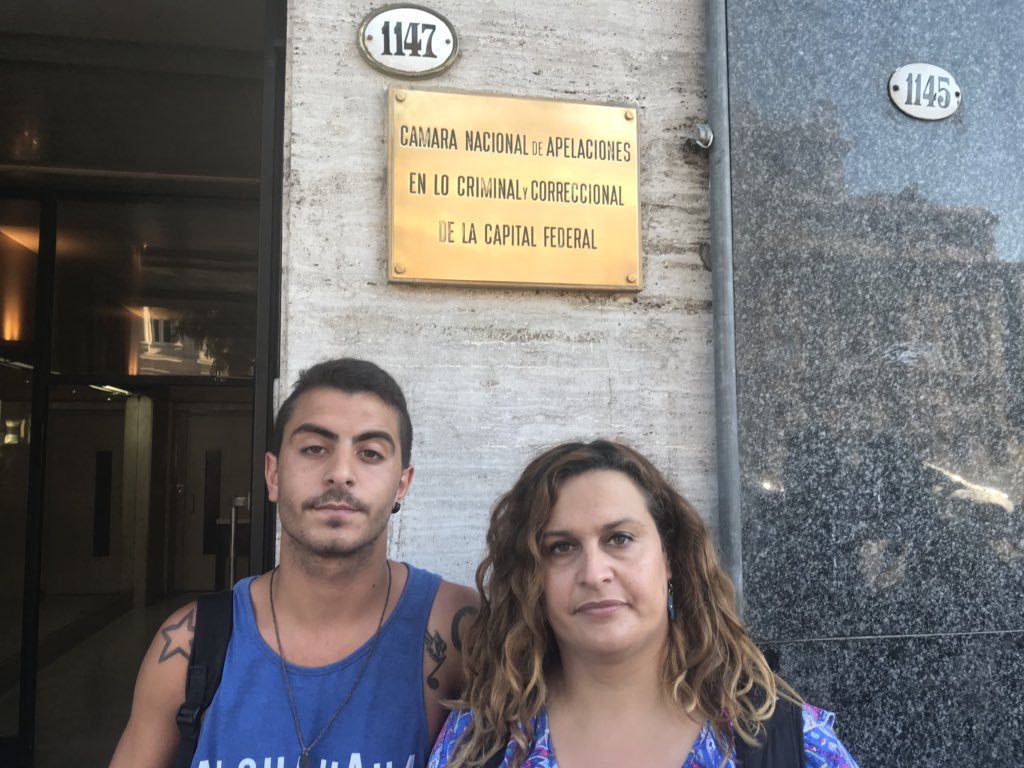
Celeste Sbiglia and Facundo Sbiglia, mother and brother of Mariana Gómez
“We demand that the Judiciary not endorse sexism”
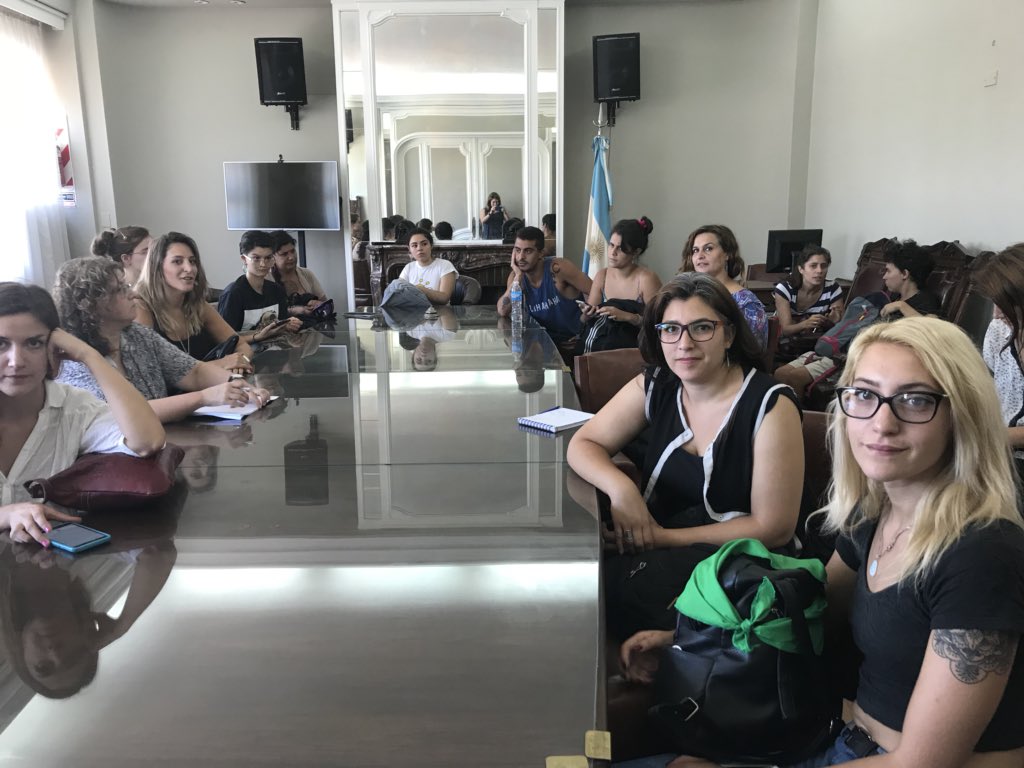
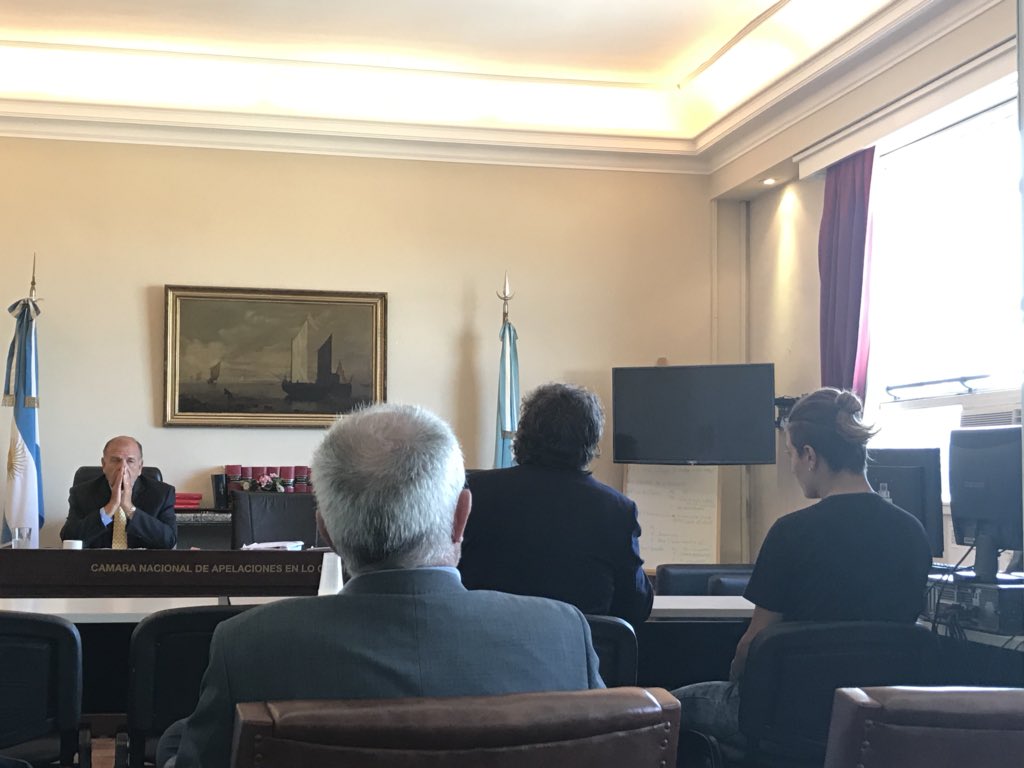
The thirty-person courtroom was filled with family members, activists, and journalists. Facing the court, presided over by Judge Julio Marcelo Lucini, were Mariana and her lawyer, Lisandro Teszkiewicz. Behind them, in the front row, were lesbian and feminist lawyer Luciana Sánchez, a member of the organization Colectivo para la Diversidad (COPADI), and Luis Duacastella, Deputy Public Defender of the City of Buenos Aires. Both, along with other groups such as 100% Diversidad y Derechos and Asociación Pensamiento Penal, had filed amicus curiae briefs, non-binding submissions to offer opinions and arguments regarding the case.
[READ ALSO: #LesbianKisses Mariana Gómez's hearing: why the case should be dismissed]
In his presentation, the defense attorney emphasized that the trial judge who prosecuted Mariana refused to hear Rocío Girat's testimony and that there had been a biased assessment of the evidence. "According to all the testimonies, including Jonatan Rojo's, smoking is common in that prohibited area, and there had never been an arrest before, which demonstrates an arbitrary selection of the individual," he said.
Another argument Teszkiewicz made was that the officer's arrest warrant was illegitimate. “Mariana and Rocío are married, but not just any married couple. Both were victims of sexual abuse, and Rocío, at that time, was about to testify, once again, against her father, a former member of the Argentine Navy. She was going through a difficult time, and that's why Mariana accompanied her to Constitución station when she went to work. Jonatah Rojo saw them kissing and decided to attack Mariana and Rocío out of a prejudice of lesbophobia.”
 Although Mariana put out her cigarette that day at Constitución station, as the officer asked, and tried to leave, she was arrested. “You’re not leaving here, kid , you’re under arrest,” he told her.
“That was the illegitimate order that Mariana refused to obey. She was then taken to the police station at subway line E, stripped naked, and searched,” Teszkiewicz added. She concluded: “We ask the judges not to say that the word of the police is more valid than the truth, than testimonies, and than evidence. We ask that the Judiciary not condone sexism or police abuse and that it overturn this indictment.”
No room for amicus curiae; no room for Mariana
After the defense attorney finished speaking, it was time to talk about the lawyers who had filed the amicus curiae briefs. But they were only able to briefly state what they were requesting.
In the case of COPADI, Luciana Sánchez said, “I would like to argue about the gender stereotypes used in the judge's ruling.” And on behalf of the Public Defender's Office, Luis Duacastella said, “I would like to argue about these types of unlawful detentions by the police and the lack of proportionality.” However, neither was able to present their arguments.
Judge Lucini said it wasn't the right time, that they already had their written statements, and adjourned the hearing. Upon hearing this, the defense attorney requested a moment to hear from Mariana, who hoped to speak. The presiding judge again refused. They refused to hear her.
[READ ALSO: Big kiss in PHOTOS and VOICES: against Lesbophobia, #LesbianKisses]
“I thought the hearing was terrible. They didn't listen to us again. They didn't take our side of the story into account. Mariana has never been heard by a judge. It was the first time a judge was going to hear her, and they denied her that again. We are fighting to stop them from trampling on our rights, and they keep doing it, right in front of us ,” Rocío Girat told Presentes as she left the hearing.
The Court has up to five days to announce its ruling and say whether it revokes the prosecution, as requested by the defense, upholds the sentence of the trial judge, or requests more evidence.
We are present
We are committed to journalism that delves into the territories and conducts thorough investigations, combined with new technologies and narrative formats. We want the protagonists, their stories, and their struggles to be present.
SUPPORT US

FOLLOW US
Related notes


We are present
This and other stories are not usually on the media agenda. Together we can bring them to light.