

This is how the first polyclinic for trans people in Santiago, Chile works
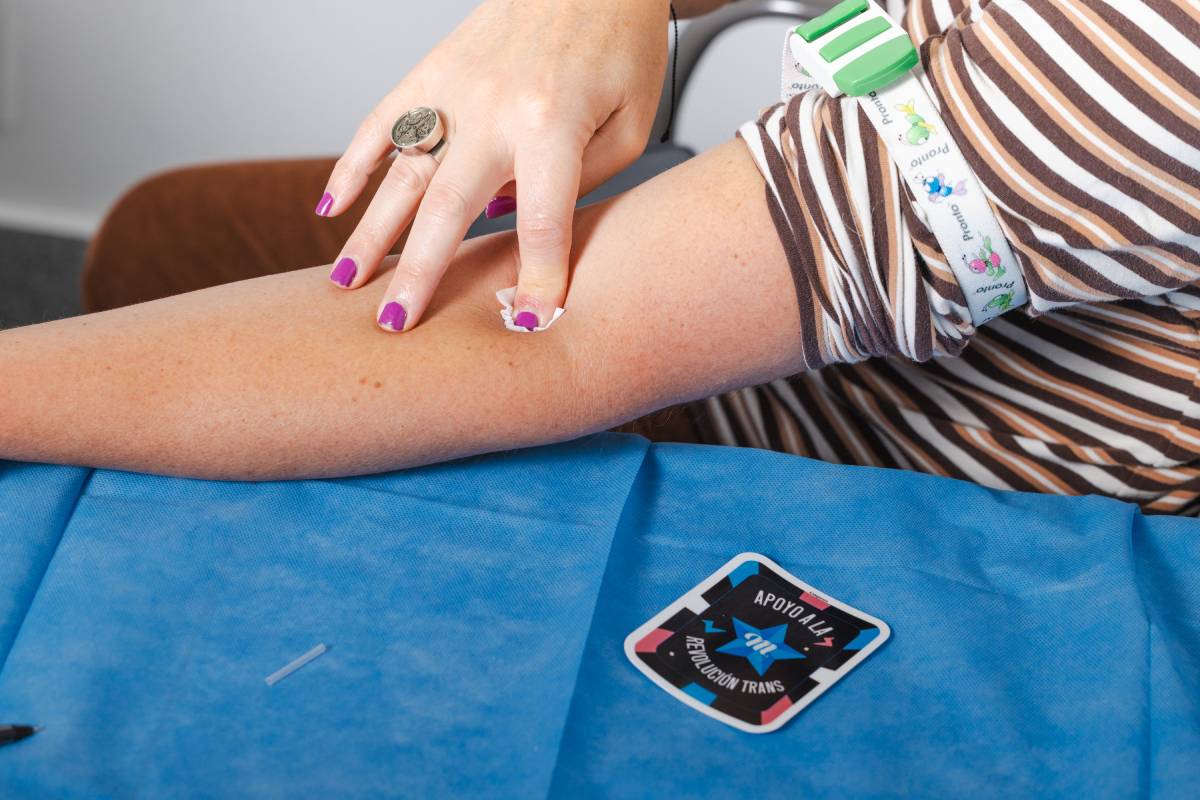
In a small office at the Sótero del Río Hospital, located in Puente Alto, one of the most populous neighborhoods in Santiago, are the files of the first users of the "Trans Poli", a project that was born last year to assist trans people, but was not made official until the beginning of this month.


Share

By Airam Fernández, from Santiago, Chile. In a small office at the Sótero del Río Hospital, located in Puente Alto, one of Santiago's most populous neighborhoods, lie the files of the first users of the "Trans Clinic," a project that began last year to assist transgender people but wasn't officially launched until the beginning of this month. There are no flags or rainbows. Nothing to indicate that this is where the clinic operates. It's a temporary office and the only space they had to start with, explains Dr. José Luis Contreras, head of the Gender Identity Program at the hospital, the first of its kind in the Metropolitan Region. Despite the absence of LGBTQ+ symbols, everyone at the hospital knows that the "Trans Clinic," as it was informally named last June with the first registrations, is located in corridor 8.
 At the initiative of the workers
“We realized that many professionals were aware of the issue and were accepting requests from trans people almost clandestinely, without many even knowing it,” says Contreras, who is also head of the hospital's outpatient department. When he learned what was happening, he decided to form a team of professionals from different medical fields who work with the issue or who were interested in researching it. They established a protocol that now includes everything from individual and family psychological support to free hormone therapy, thanks to funding from the South East Metropolitan Health Service. To this end, they trained 250 primary care professionals, including doctors, social workers, psychologists, and administrative staff, with guidance from activists from Organizing Trans Diversities (OTD), explains the program coordinator.
 At the initiative of the workers
How to register
Living in one of the southeastern districts of the city and being registered with Fonasa (the public agency that manages state health funds in Chile) are the only two requirements for transgender people seeking guidance and wishing to enroll. The first step is to attend an interview with a social worker to complete the intake form, who then refers the person to another interview in the psychological services area. If they wish, they can continue with psychotherapy. Although this step is optional, Dr. Contreras notes that most people do not rule it out. “Psychological support is very important because the transgender population is not exempt from the mental health conditions that other people may have. We have seen that a third arrive with severe depression due to family rejection, discrimination, and violations of their rights,” says Contreras. According to data from the OTD's "T Survey," the first independent research published last year on the situation of trans people in Chile, more than half of the population (56%) have attempted suicide and 84% admit to having attempted it before the age of 18.
 How to register
Hormone therapies
Puente Alto also has the highest rates of femicide and domestic violence. “For us, this data is fundamental, and that's why we place so much emphasis on the psychological aspect, so we can properly support them in their transition,” the doctor explains. The third step is referral to the endocrinology department for a complete medical checkup. This determines the appropriate hormonal treatment. At this point, one of the biggest challenges has arisen, the doctor confesses: “The pediatric endocrinologists at the hospital have been more reluctant to get involved.” Of the 65 people who have enrolled in the program, twelve are 17 and 18 years old, and a 10-year-old boy joined a few weeks ago, according to the South East Metropolitan Health Service. Therefore, they are in talks with a specialist from the Catholic University Hospital to begin working together. For now, only in terms of containment and guidance, since trans children were excluded from the Gender Identity Bill, which has been under discussion for five years and which in January went to its third stage, to continue its discussion in March in the Senate.“This hospital was my bridge”
Although the Sótero del Río Hospital's initiative isn't the first to address trans issues within the public health system, it is the only one in the Metropolitan Region to do so in this way. "Our vision is comprehensive, and we involve the family in the entire process whenever possible," says Contreras. Las Higueras Hospital in Concepción has a similar program. In Valparaíso, Carlos van Buren Hospital is the most advanced in gender reassignment, thanks to the work of urologist Guillermo Mac Millan. One of the biggest lessons learned at Sótero is that not everyone wants to go through the gender reassignment process. "When we started the project, we thought it would be the complete opposite," Contreras acknowledges. To assist and support those who do want to take this step, the Sótero del Río authorities established a partnership with Dr. Mac Millan, who has been performing genitoplasty surgeries for over 40 years and maintains waiting lists of up to three years.
 “This hospital was my bridge”
Romina, the pioneer
Romina Zúñiga, 28, is one of the first trans women to seek guidance at the public hospital in Puente Alto five years ago. “When I wanted to begin my transition process, I scheduled an appointment with a psychologist elsewhere, but she had no idea about this or how to help me with what I was going through. All she told me was that she knew a social worker at this hospital, who in turn knew an endocrinologist interested in working with trans people. That's how I got here,” Romina explains. At that time, to access the procedure, she needed a psychiatric certificate, signed by a psychiatric team. “It was seen as a pathology. That's no longer the case, at least not here. But the beginning of my process was incredibly long, and without that certificate, which took me a year to obtain, I couldn't start my hormone therapy,” she recalls. If she used to spend 300,000 pesos every three months (approximately $500) on Decapeptyl, a testosterone suppressant, plus 45,000 pesos a month ($75) on three boxes of Estradiol, now she pays nothing. “I always say that my family has been my fundamental support throughout this whole process. And then there's the Trans Polyclinic. Without their work, I wouldn't be anywhere near my reassignment surgery. This hospital was my bridge to get to the one in Valparaíso, which is where I'm going to have the surgery,” says Romina. Since her experience has been positive, she has been spreading the word within the community. Two of her referrals already have their files at this hospital. In March, she will be the first user of this hospital's Gender Identity program to undergo gender reassignment surgery.We are present
We are committed to journalism that delves into the territories and conducts thorough investigations, combined with new technologies and narrative formats. We want the protagonists, their stories, and their struggles to be present.
SUPPORT US

FOLLOW US
Related notes

We are present
This and other stories are not usually on the media agenda. Together we can bring them to light.