

PERU: “You can’t get rid of being gay with holy water or repression”
Arequipa mayoral candidate Ricardo Medina Minaya proposed converting LGBT people to heterosexuality. Alexandra Hernández, an activist with Matrimonio Igualitario Perú (Equal Marriage Peru), analyzes the rise of this hate speech in the region. She responds and asks: When will we see a candidate who promises to convert homophobes?

Share

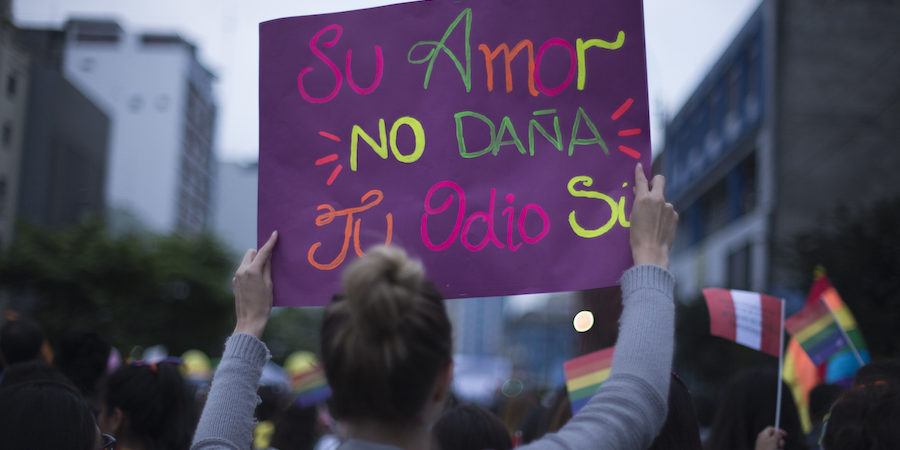
Arequipa mayoral candidate Ricardo Medina Minaya proposed converting LGBT people into heterosexuals. Alexandra Hernández, an activist with Marriage Equality Peru, analyzes the rise of this hate speech in the region. She responds and asks: When will we see a candidate who promises to convert homophobes? By Alexandra Hernández* “I respect and value them, but I believe there hasn't been enough progress on programs to help them return to their natural state ” is part of the discourse of a mayoral candidate in a southern Peruvian department. Yes, he's referring to LGBTI people. Ricardo Medina Minaya promises to eradicate homosexuality and close places where LGBTI people gather, such as bars and nightclubs. The reason? Not enough is being done to help LGBTI people return to the correct, natural, heterosexual, cisgender, binary path. Every so often, figures like this emerge. By feeding society's fear and morbid curiosity, they gain followers who propel them to power at the cost of human rights violations and discrimination against LGBTQ+ people. Homophobia, when embodied in political or religious movements, is even more dangerous. Medina believes that being LGBTQ+ destroys human nature—a nature that exists solely for procreation and justifies sexist hierarchies. Any expression of free sexuality and affection, for pleasure, is seen as dangerous and must be controlled. Through this fear, they seek to normalize hate speech and block initiatives that promote comprehensive sex education and a gender perspective.
[READ MORE: #HateCrimes2017 Peru: main violence against LGBTIQ+, from the State ]
Medina and his homophobic cronies refuse to understand that attempts to “eradicate homosexuality” constitute a flagrant violation of the human rights of LGBTI people. But not only that. These kinds of actions only succeed in suppressing or hiding the behavior, not in changing people's sexual orientation or gender identity. The American Psychological Association (APA) made a review of all studies published between 1960 and 2007 on therapies and methods of sexual orientation conversion. It found that the change was quite infrequent. The report also revealed that some conversion therapies could have negative consequences, including anxiety, depression, and suicidal feelings. UK Therapy Council It issued a statement in 2014, stating: “There is no evidence that these practices are effective.” It also reports that they have harmful potential and are based on religious interpretations of sexuality rather than on studies and adequate information about sexual orientation and gender identity. Internationally, the UN emphasizes The importance of not pathologizing LGBTI people, because this type of approach hinders access to rights and endorses abusive treatment and discrimination.[Inter-American Court of Human Rights: States in the region must guarantee gender identity and marriage equality]]
So how is it that people like Medina can spout violent and homophobic rhetoric with such impunity? In Peru, as in almost all of Latin America, truly secular states do not exist. The spheres of power are permeated by a culture of machismo and homophobia. Ricardo Medina has not only been the subject of this news story, but at the beginning of 2017, he claimed that the landslides and natural disasters that occurred that summer were a divine punishment Because the Peruvian government implemented a gender perspective in the national education curriculum. Furthermore, he dared to claim that the recent earthquake in Chile occurred because of the legalization of same-sex marriage. Despite the obvious irrationality of his statements, these kinds of comments serve as a social barometer. It is crucial that we feel outraged, respond, and recognize it for what it is: violence. Homophobia is dangerously climbing the ladder of power. throughout Latin Americaespecially through funding and platforms provided by the Catholic and Evangelical churches. Chile, Peru, and, more recently, Costa Rica These are examples of it. Even on the eve of the publication of the Advisory Opinion The Inter-American Court of Human Rights ruling reaffirms the need to establish policies and regulations in favor of the lesbian, gay, bisexual, and transgender population. It seems we are at the mercy of conservatism, despite all the progress being made in international treaties.[READ MORE: How the Inter-American Court of Human Rights' decision to respect LGBT rights affects Peru]]
We must be vigilant against the discourses emerging in our region that perpetuate discriminatory attitudes. The statements of the homophobic Ricardo Medina are a symptom that our visibility threatens the patriarchal status of society. But the battle is fought daily at every level, personal and political. How do we take away the power of the Ricardo Medinas we encounter every day on television, in our families, on social media, and in politics? Let's continue to reclaim the spaces that have been historically forbidden to us. Let's continue to be visible, marching, using public space, gathering in bars and clubs, demonstrating that... gay It cannot be removed from us with holy water or repression. *Alexandra Hernández holds a degree in psychology and is a neuropsychologist and researcher specializing in gender studies. She is a feminist and LGBTI activist with the Más Igualdad Perú Association, which organizes the campaign for marriage equality. ]]>We are present
We are committed to journalism that delves into the territories and conducts thorough investigations, combined with new technologies and narrative formats. We want the protagonists, their stories, and their struggles to be present.
SUPPORT US

FOLLOW US
Related notes
We are present
This and other stories are not usually on the media agenda. Together we can bring them to light.