

Mosquito Sancineto: “Depending on the moment, sometimes I am a woman and sometimes I am a man”
By Paula Bistagnino. Being a child and studying theater “back then” was considered strange. “Back then” was the late 70s and early 80s, during Argentina’s last military dictatorship. “And on top of that, I was already androgynous. So imagine, if being different back then wasn’t…”

Share

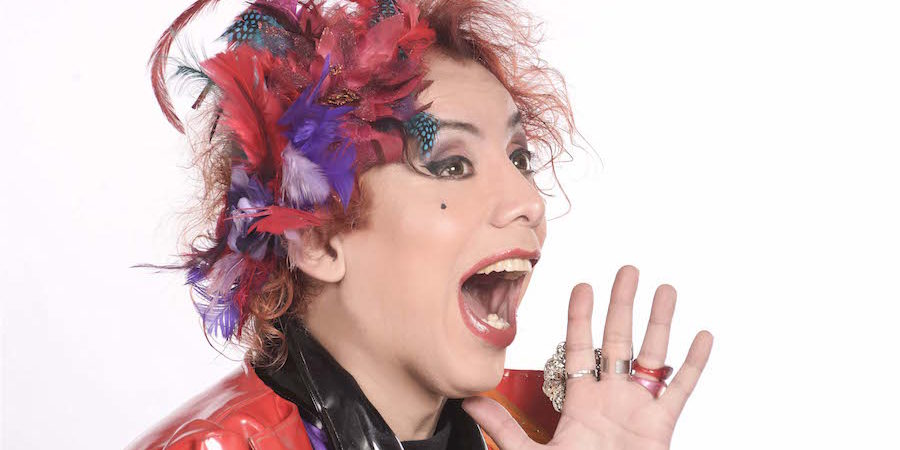
By Paula Bistagnino. Being a child and studying theater “back then” was considered strange. “Back then” was the late 70s and early 80s, during Argentina’s last military dictatorship. “And on top of that, I was already androgynous. So imagine, if being different wasn’t a problem then, it never was,” says Fabio “Mosquito” Sancineto, actor, director, teacher, a leading figure in improvisational theater, and artist. “It depends on the moment and the circumstances; sometimes I’m a woman, sometimes I’m a man. “Just today I was thinking about that: I’ve always considered myself a completely queer being.” But it's not something I've built; it came from my theatrical experience: I play a transvestite, but I can also play a cis man or woman in a drama with ease.” In his nearly four decades on stage, since his debut as a child in 1979 directed by Inda Ledesma in “The Idiot Prince” (Dostoevsky) –winner of the Molière Award– he has done: eighty, ninety, one hundred theatrical productions; twenty film appearances and another ten on television; he was nominated for the Konex Award for his career achievements and has received many other awards such as the María Guerrero and the Florencio Sánchez; he founded and directs an Improvisational Theater Company that has taught generations –this year he celebrates 30 years of improvisation–, but he has also performed Copi at the Cervantes Theater and Discépolo at the San Martín Theater with Pompeyo Audivert. And now he is performing “The Destroyers.” "A dance hall story," in which she is the transvestite of a trio of cumbia singers who travel in a van for an entire night and who clash because all three are lovers of the producer.
-What was that adolescence and sexual discovery like in the 80s?
-In my case, it came through theater. And when this sexual orientation was already emerging as a teenager, it was easier because, as I mentioned, all my theater colleagues were "different" and almost all of us had the same "issue." Still, at first I didn't know how to handle it, obviously, but that environment was very protective. The truth is, I experienced a peaceful growth, and that was also because I always had one clear principle: that I wasn't going to deceive myself. In any way. About anything.-It's not so easy being a queer actor/actress and transcending the LGBT audience, did you seek it out?
I think it's part of this thing about rebelling against being pigeonholed. About striving for freedom in every sense. I didn't give up anything about who I am for that to happen, and it did. This thing about being and knowing I'm "weird" but not living like that. About kicking that to the curb in other people's faces. I think it also developed along my acting journey. Studying with Norman Briski was key artistically, because he managed to channel all that visceral stuff of mine that I still didn't quite know what to do with. And then I grew up following that avant-garde movement that included Alejandro Urdapilleta, Batato Barea, Humberto Tortonese, and the "Gambas al Ajillo" (Garlic Shrimp) group. That was the path I chose to take, and I'm very proud of it. I've done a lot of queer theater, a lot of Ave Porco, but I can also play the rich, wicked, and promiscuous old lady from that era at the San Martín Theater. And that's where I'm at. -Is carrying that queer being, or that variable she/he/they, sometimes more complex than saying: I am such and such?
-Absolutely. Being pigeonholed, the whole labeling thing, doesn't bring me much peace of mind; in fact, it drives me crazy. And I feel perfectly fine this way, but sometimes I realize that others aren't comfortable with it. For example, a cis man who falls in love with me and needs me to be the person he wants me to be. There's a lot of pressure from the other side to define me, which is really their issue. It happens, it happens a lot, it happens on the bus, but I think things are opening up now. We're starting to break free from these labels.
 -Is carrying that queer being, or that variable she/he/they, sometimes more complex than saying: I am such and such?
-You were at the last edition of the El Bolsón Diversity Festival. How was your experience?
It was fantastic. I'd been to the first one, ten years ago, and I found a festival with a much larger audience, with so many people from all over the country: young people, very strong in their sense of belonging, very self-assured, with clear goals and a strong presence. And with such beautiful affection and love for us, those of us on stage, for Susy Shock and Marlene Wayar, the historical icons. I felt, I think we all felt, that all that struggle hadn't been in vain.-How do art and politics coexist in you?
"I come from a family of activists, so it was always a given for me. I was never a political activist myself, but I discovered that it was here, in art and through art, that I was going to do my own thing. For me, art and politics go hand in hand. I believe that an artist is a necessary element in society to open not only spirits but also minds. It's a tool of resistance. More than ever, after having been at the El Bolsón festival, I believe that art in our collective has that inherent power of resistance. But also, in this time of neoliberalism, in which they come to take everything from us, art is also a way to defend ourselves against these people who come to steal everything and destroy us." “The Destroyers. A Dance Hall Story” is showing Saturdays at 9pm at the “El método Kairós” theater-bar (El Salvador 4530, Palermo, City of Buenos Aires)]]>We are present
We are committed to journalism that delves into the territories and conducts thorough investigations, combined with new technologies and narrative formats. We want the protagonists, their stories, and their struggles to be present.
SUPPORT US

FOLLOW US
Related notes
We are present
This and other stories are not usually on the media agenda. Together we can bring them to light.