

“Tevez, nobody learns from being slapped around: we, a large number of beaten-up faggots, are telling you this.”
Gym time, soccer school, all the "little friends" with their soccer cleats and me, the only one with yellow, red and green sneakers

Share

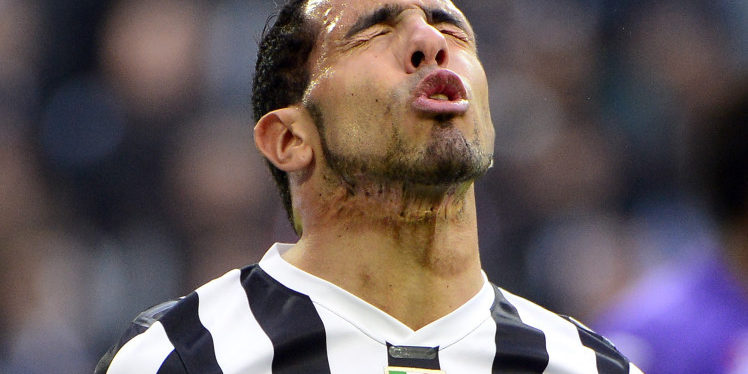
By Lucas Gutiérrez. Carlos Tevez is worried that his only son, Lito, who hasn't even turned four yet, might "turn gay." He said so in an interview with T&C Sports . He's worried because the boy has grown up, and is still growing up, surrounded by women. "His mother, his grandmothers, being the only boy, you know?" the Boca Juniors player tells the journalist. And then he blurts out: "If I don't take him to the neighborhood to get a couple of slaps, he's about to turn gay." A goal from midfield, and a point against homophobia. "Turning gay" is the term that has been used to label gay men for an indeterminate amount of time. And sports seemed to be one of the ways to bring back that lost masculinity. There are many of us gay kids from the neighborhood who were sent by our fathers, to prevent us from "turning gay," to get "a couple of slaps."
Sport and alpha males
Gym class, soccer practice, all the "little friends" in their soccer cleats, and me, the only one in yellow, red, and green sneakers. Because that folkloric common sense is being created: the idea of raising little soccer-playing boys with "strength and stamina." And it's on that foundation that so many feelings are built. Sports become a nightmarish experience where every time it becomes clear that we're not the alpha males Dad wanted, we're punished. And like in the Roman circus, we're left floating there in the most effeminate sneakers, getting hit by balls from the other gladiators and the thumbs-down from that patriarch who throws us to the lions. So, this quote from Tévez perpetuates a heteronormative model of panic over effeminate behavior, a violent response to a problem that isn't the child's, but the adults'. You can be gay (or queer or gay or gay) and play any kind of sport. But here nobody cares about sports, here the important thing is that the kids aren't faggots.Caress vs. slap
Those family members who support, care for, and "overprotect" the children are condemned (what does "overprotecting" even mean in the eyes of a relative who sends you to be slapped?). Every feminizing trait must be combated by throwing the offspring into "reality" (whose reality?). The caress versus the slap. The street is invoked to educate, support is condemned and replaced with "be a man." They chisel their retrograde idea of "masculinity" onto our bodies with nothing but blows and humiliation. No, Tévez, nobody learns anything from slaps. We, a great many gay men who have been beaten, punished, humiliated, expelled, and more, are telling you this, and today we are even more gay and, above all, proud to be so. And, believe it or not, many of us are athletes. Because they also tried to "educate" us this way. And those of us who are proudly responding today do so with the memory of many deaths in our history. Because this form of "education" justifies violence, beatings, censoring ways of being, and so much savagery that we have suffered for generations. This shouldn't have continued for a long time, that's why we're telling you this, Tévez.Do not justify
Reading comments on social media makes me wonder: are we seriously going to justify these statements by invoking Tévez's working-class background and lack of formal education? The LGBT+ community is attacked and murdered by people from all social classes and with all levels of education. Homophobia is a mutant that rears its ugly head in every social class. What if Lito gets his wrist twisted tomorrow? What would Tévez do? Look, Tévez, we don't "become" who we are by being around kids from some neighborhood, or by playing a sport, or by getting slapped around. That's what breaks us. We become who we are through conversations, through sharing, through making mistakes together, and through many (many) other things that have nothing to do with what you're saying.We are present
We are committed to journalism that delves into the territories and conducts thorough investigations, combined with new technologies and narrative formats. We want the protagonists, their stories, and their struggles to be present.
SUPPORT US

FOLLOW US
Related notes
We are present
This and other stories are not usually on the media agenda. Together we can bring them to light.