

Camila Sosa Villada: “Being trans is in itself a form of activism”
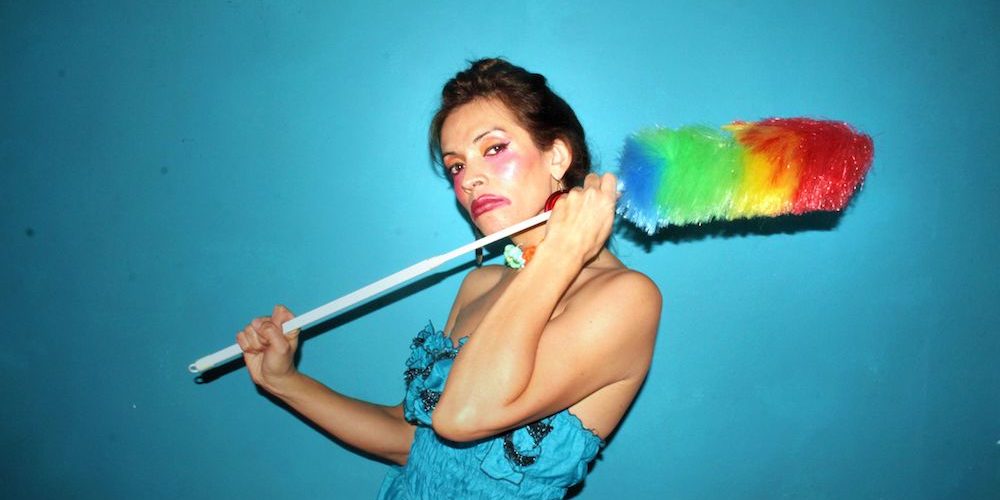
Actress, writer, playwright, singer, Camila Sosa Villada became known for her starring role in Javier Van De Couter's film "Mía." But much more followed: her own documentary, television appearances, and extensive theater work.

Share

By Paula Bistagnino.
Photos: Guillermo Albrieu Llinás.
A transvestite activist artist. What came first in a person's life isn't always easy to figure out. But Camila Sosa Villada is clear about it: “Before transitioning, I wrote, sang, and acted in school plays. That was my life as it always was. Let's say: life outside of my sexual identity, to put it that way. Even if I hadn't exercised my right to be trans, I would have continued writing and acting. What I do now is prior to and much stronger than any identity,” says the actress, playwright, writer, performer, transvestite, and activist from Córdoba. She studied Communication and Theater at the University of Córdoba, but found the synthesis of that identity, vocation, and commitment when she put all of that into her writing and performances. This began in 2009—when she was 27—when she premiered her solo show. Carnes tolendas, a stage portrait of a transvestiteHis name began to circulate. The texts on his blog Sandro's Girlfriend The ideas—which would later become a book—were already circulating, but they still lacked a face, body, and voice. That's when film director Javier Van de Couter saw her and decided that she would no longer be a secondary character in his film, but rather the protagonist—along with Rodrigo de la Serna and Maite Lanata—of the award-winning Mine.
During these years she became one of the leading figures in the Cordoba scene and from there she moved to Buenos Aires, where she performs regularly. She has her own documentary. Camila, from the soul. She did television, a lot of theater, and received several awards. Last year she did The Difunta Correa Cabaret –a miraculous and mythical figure of popular culture, A woman who breastfed a baby after she died. A character she chose because of a very personal story: ten years ago, when she was homeless, her parents made a promise, asking her to find work for her, and within three months she was already doing it. Tolendas MeatsAnd this year he already has a double premiere planned, both theatrical and editorial: he will do In the solitude of the cotton fields, directed by Luciano Del Prato.
 In addition, he will publish his second book – the first was the collection of blog posts Sandro's girlfriend-: The Useless Journeywith Ediciones Documenta. And as if that weren't enough, after studying four years of a Bachelor's degree in Communication and another four of a Bachelor's degree in Theater, both at the University of Córdoba, this year she will begin studying Psychology.
-You were born in La Falda, what was it like growing up there and coming out in a small town?
I was born in La Falda, but we didn't move to Mina Clavero until I was ten. I lived there until I was 18, and it was there that I transitioned. My childhood was like, I suppose, everyone else's. Except I was clearly effeminate. I was a kid who loved jumping rope and playing hopscotch. I connected better with girls than with boys, and I didn't like soccer, basketball, or volleyball. My classmates noticed. In school, in folk dance class, I was the gay one in the group. That made things harder than usual. On top of my family problems—my dad was an alcoholic, my mom was depressed—I also had to deal with surviving bullying and attacks for being effeminate. Luckily, I was a good student, so I often sought protection from the bigger, rougher kids in the class in exchange for doing their homework or getting them involved in my projects.-At 15 in La Falda you started dressing as a woman. Was it something spontaneous or was it a decision to confront everyone like that?
"It was a very natural process, it came with time. I never had to think about my identity, it was there and it happened little by little. First, I assumed I liked boys, then Cris Miró appeared on TV, and things changed. Because all those things I did in secret—dressing in my mother's clothes, thinking of myself as a woman—took on a social dimension. I could be like Cris; someone had made it possible. You saw trans women on TV all the time, appearing on Mauro Viale's show, women who were determined to do anything, empowered. Suddenly I didn't feel alone; I was immersed in a movement. That personal process was very easy. The social one was more complicated: first, I wrote a novel where I was the protagonist, and I was in love with my gym teacher. All of that was true, except that in the novel I had already transitioned. I was a fully grown woman who seduced the gym teacher." A friend at the time gave my novel to everyone to read and told them who that girl really was, and that's how everyone at school found out. I didn't resist or deny anything. On the contrary, I started going out dressed as a woman, the first time when I was 14. I took advantage of the fact that it was summer and the town, being a tourist destination, was full of people, and I blended in a bit more. By 15, I was going out dancing at night, and after that, no one could stop me. Very sad things happened then. My parents couldn't accept it; I felt excluded, attacked, and misunderstood. That feeling of helplessness lasted until a few years ago, when I stopped dwelling on it and started thinking about other things. Having been a transvestite in the 90s in a small town like Mina Clavero, which casts a veil of bitterness over those memories, also presents a tremendous contrast: there was nothing more exhilarating and pleasurable than dressing as a woman and wandering around town. It's one of the best things that ever happened to me. I had discovered my own life and was living it, regardless of the horror or fear the townspeople might have felt towards me. Being happy was more important.
-You mentioned in an interview that a teacher told you: “Look, it’s my fault you haven’t been able to develop in this class. I’ve never had a trans student before. And I think you’re going to suffer a lot, but you’ll have to work on your own. Because when people see you act, they won’t see a girl, they’ll see a trans person. And they’ll judge you, make you suffer, make you have a bad time. But if you work on your own, earn respect, and people want to work with you because you’re talented, you’ll do very well.” What did that mean for your life and for the artistic career that followed?
"Ohhh, that anecdote is with the great Paco Giménez, whom I consider my mentor, the only one I can call that. Because that bond is one of the most beautiful in my life. It was like that from the beginning. He taught acting and theater production in the third year of the Theater degree program. I think he tried to open my eyes, but we all know how blind we students can be sometimes. I had been acting blindly. My cross-dressing didn't matter at that time, because it was very natural for me. But it was an issue for others… What he told me was a weapon for me. I said: 'This is it! I am unique, not to say one of a kind.' At least here in Córdoba, at that time, I had the opportunity to do something being unique. A trans dramatic actress. It went well for me. It was a great gift he gave me. And an act of immense humility on his part. To say that was an act of love on his part."-Just listening to you, reading your posts, following you a bit on social media is enough to see that you're always on high alert, detecting and exposing, sometimes even denouncing, gestures or words that attack and discriminate. Is this a daily battle? Is there still a long way to go?
Yes! It's a battle against ignorance that I'm waging from a very small and insignificant place. I'm not a famous actress, I'm not the kind of actress or writer who enjoys enormous popularity. That's why it's much more exhausting, because it's more of a grassroots resistance, word of mouth, one by one. I've suffered a lot from the excessive aggression of a system for being trans, just for that… It has left very concrete marks on me that influence my relationships, my self-esteem, and my perception of my body every day. Every day I have to work on these things simply because of the harm done to me for being trans. Unnecessary suffering from which people say you learn a lot. Generally, the people who say that haven't experienced it firsthand. I don't think that suffering is necessary to learn anything. It's useless suffering that fills you with resentment, at least in my case. To avoid being a pain in the ass, I fight against those bad memories and try to highlight the futility of that harm. It doesn't help those who inflict it or those who receive it. It will be many years before this situation changes. Nevertheless, it will change. Because of this work and the collective effort of the LGBTQ+ community—sharing experiences, raising awareness, and demanding our rights—we will see a different world. I am optimistic about this: we will see a better world. There's a trans woman participating in the Golden Globes now—who would have thought? -What is your connection with the transvestite-trans collective, with their causes, their battles?
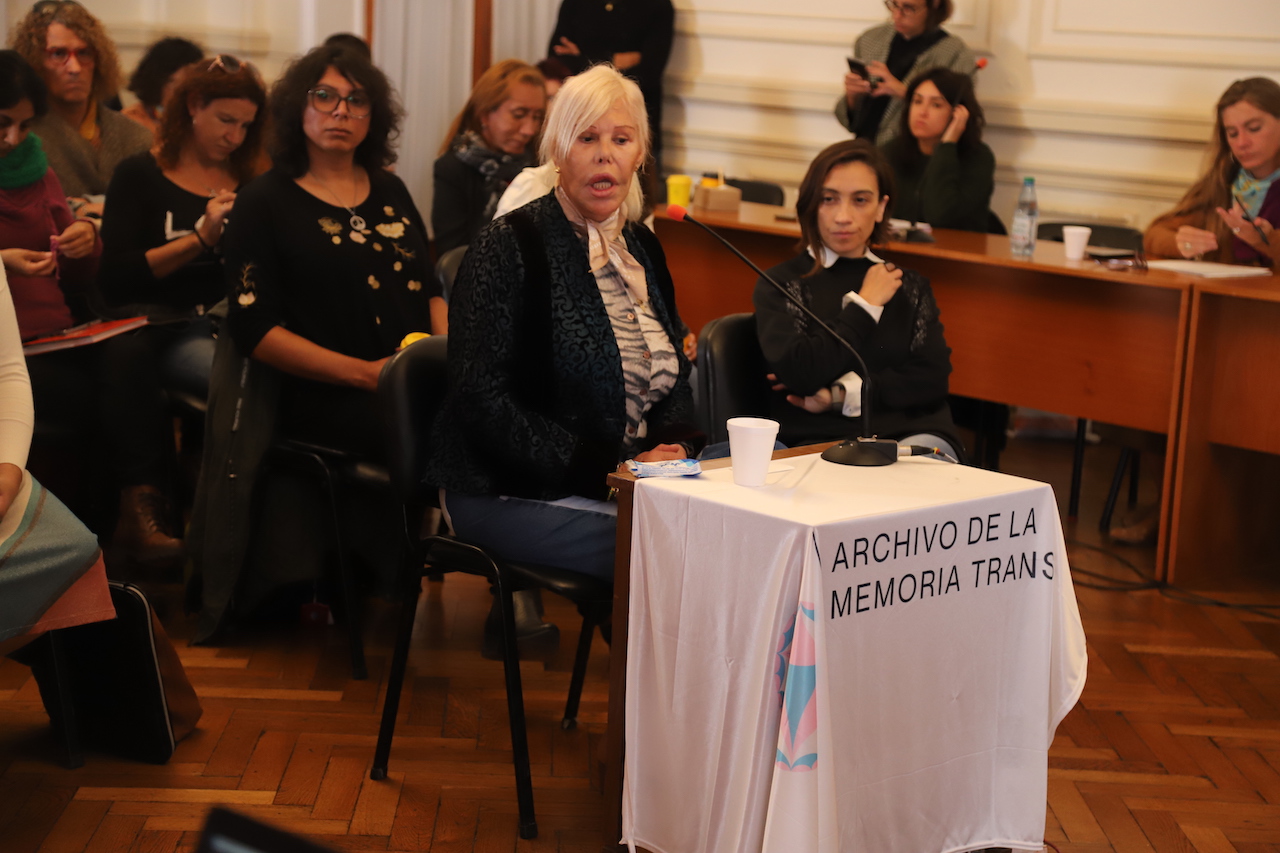
Well, somewhat related to the previous question, I've always found it very difficult to be in groups. I only have four chairs at home because that's the number of people I can tolerate without having a nervous breakdown. I've lived alone for 17 years, so I'm a solitary person. I am part of a collective and I support every struggle because I fully share them. I connect more with certain groups than with others. I love the Trans Memory ArchiveThat's a deeply loving work about our history. That record is incredibly sweet and humane. It transcends politics. It's something profoundly cultural. Very moving. I also believe that being trans is in itself a form of activism, a very solitary activism, as Naty Menstrual says. We slowly come together, we reclaim our voice, we unite, we rediscover each other, we expose ourselves—it's an exemplary form of activism that we trans people have been waging.
 -What is your connection with the transvestite-trans collective, with their causes, their battles?
Watch the trailer for Camila, from the soul:
https://www.youtube.com/watch?v=1zImtfDiBzQ ]]>We are present
We are committed to journalism that delves into the territories and conducts thorough investigations, combined with new technologies and narrative formats. We want the protagonists, their stories, and their struggles to be present.
SUPPORT US

FOLLOW US
Related notes
We are present
This and other stories are not usually on the media agenda. Together we can bring them to light.