

#CHILE Gender Identity Law: debate postponed due to Pope's visit
While the articles of the law are being discussed, a controversy arose over the decision by the president of the Chamber of Deputies, Fidel Espinoza, to cancel the debate in the chamber scheduled for Tuesday the 16th.

Share

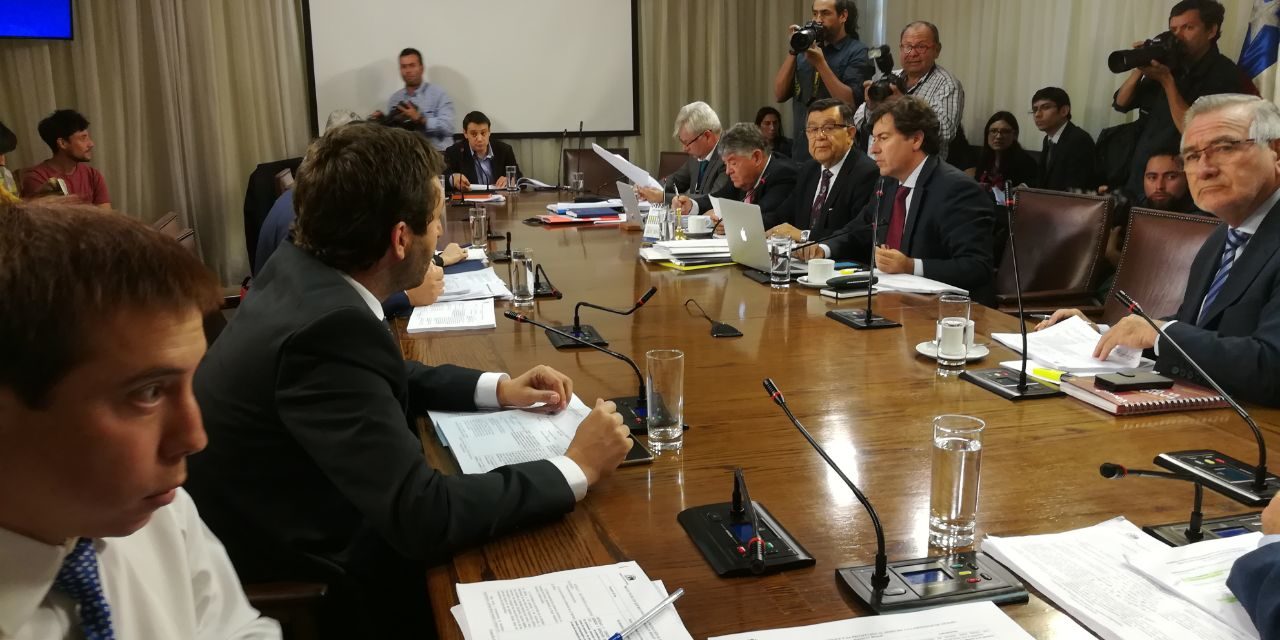
Opening photo: OTD Chile. Amid the controversy sparked by the statements of the Speaker of the Chamber of Deputies, Fidel Espinoza, the Human Rights Commission began its discussion of the articles of the Gender Identity Law. This debate will extend over three days, until Thursday, January 11, according to the legislative activity schedule published by the lower house. “As Speaker of the Chamber, I will not allow myself to create controversy surrounding the Pope's visit. I am someone who greatly respects his visit. I also have things to raise with him, such as what we are experiencing in Osorno with Bishop Barros. I made a commitment to deliver a protest document to him, along with the laity of Osorno, and therefore I will not allow myself to generate controversy over a matter that is highly sensitive for the Church,” Espinoza said in statements to Radio Biobío. The vote on the law was scheduled for Tuesday, January 16, after the Human Rights Commission approved the bill on Thursday (by a vote of 8 to 4). Yesterday, Espinoza, of the Socialist Party, said he disagreed with voting on the Gender Identity Law on the same day that Pope Francis begins his official visit to Chile. Meanwhile, Congress approved declaring a holiday in the city of Santiago so that the faithful who wish to travel to see the Pope can do so. Regarding this, Deputy Karol Cariola of the Communist Party was emphatic: “The Chamber of Deputies approved that the 16th be a holiday in the Metropolitan Region and that Catholic people, people who want to attend Mass, can participate in the day's activities freely. (…) It's a different matter entirely to stop processing bills within the appropriate timeframes,” she stated.

“We live in a secular state”
Organizations that defend the rights of sexual diversity criticized the congressman's remarks. “The only person stirring up controversy is Espinoza. He is the one who has linked the Pope's visit to the vote on the Gender Identity Law, along with Congressman José Antonio Kast. No one else has seen any problems with this,” said Ramón Gómez, president of the Movement for Homosexual Integration and Liberation (Movilh), through the organization's website. He added: “We live in a secular state, and Espinoza should be the first to respect that. Furthermore, January 16th is not a holiday in Valparaíso, and what Espinoza should be doing is working.” “It’s difficult to understand how a state authority can agree to an official visit when someone is bothered by an issue, and then postpone the discussion of a bill that has been in the works for five years. It’s incomprehensible and unjustified,” said Juan Enrique Pi, from the Iguales Foundation, in statements to Radio Cooperativa. He recalled that this is a bill that has been “postponed and stalled.” The bill was presented to the Senate in May 2013, and after more than four years of delays, it was recently granted legislative urgency. “The justification for wanting to postpone it once again is quite weak. It’s hard to understand how the Speaker of the House can say that the Pope might be offended,” Pi said. In the same interview, Pi demanded that Sebastián Piñera, the president-elect, publicly address two issues: the Gender Identity Law and same-sex marriage. Following the controversy, Espinoza wrote on his Twitter account: “I never said it wouldn't be discussed. It's just that doing it on the same day the Pope begins his official visit seems a bit provocative. I insist: the bill will be voted on in the Chamber in January. If we need to hold more sessions for that, we will. The bill is in preliminary stages. More important than the date is the political will to approve it.”
How does it continue and what is discussed regarding the articles?
“The general approval of the bill is the first significant step forward in the processing of the Gender Identity Law (LIG) since it reached the Chamber of Deputies. Now, only the amendments need to be analyzed and voted on so that the bill can be voted on in the Chamber, thus completing the second constitutional stage,” stated Constanza Valdés, Legal Advisor for OTD Chile, after the approval last week. After passing through the Senate, the bill lost some articles that organizations consider fundamental. Among them was the right to legal name and gender change for children and adolescents. These are some of the issues that will be discussed over the next three days regarding the wording of the law. There is also an effort to eliminate the “requirements” that were added for adults: for example, requests for medical and psychiatric examinations to authorize a change of gender identity.The spokesperson for the Homosexual Liberation Movement, Rolando Jiménez, stated that he hopes for the enactment of “a good law” that advances rights and guarantees for both adults and minors: “The approved amendments were agreed upon between the Movement for Sexual Diversity and the Executive branch; therefore, they recover the initial spirit which, among other things, allows children and adolescents to make use of the law, because it normalizes their lives and provides them with guarantees of psychological stability. It changes the lives of transgender minors, and therefore, we are confident that the amendments we have agreed upon with the Executive branch are on the right track and that a good law will be passed,” Jiménez specified. The bill will continue its legislative process this Wednesday, when the inclusion of children and adolescents in the legislation will be voted on.The executive branch's amendment limiting the concept of gender identity to this law was approved, stating that the right to gender identity is the right to change one's name and registered sex. #LigAhora #MyIdentityMyRight pic.twitter.com/eX66iR2WEh
— OTDChile Association (@OTDChile) January 9, 2018
Share
We are present
We are committed to journalism that delves into the territories and conducts thorough investigations, combined with new technologies and narrative formats. We want the protagonists, their stories, and their struggles to be present.
SUPPORT US

FOLLOW US
We are present
This and other stories are not usually on the media agenda. Together we can bring them to light.