

Karen Ovando: “The situation of the LGBTQ+ community in our country is still very vulnerable.”
A radio and television host, popular among young people, a rocker, lesbian and activist, says that in the Paraguayan media there are many LGBTI people but they do not publicly acknowledge it and even campaign against the rights of the community.

Share

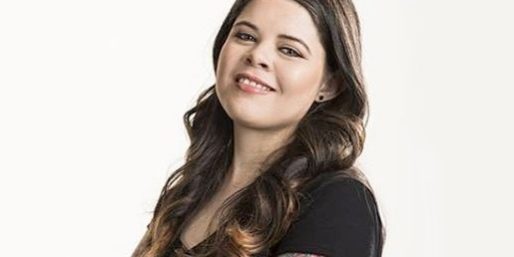
Opening Photo: Courtesy of Urbana 106.9. Karen Ovando has been working in Paraguayan media for over a decade. She started in radio and then moved to television. As her career grew, so did her commitment to and activism within the LGBTQ+ community. She realized that coming out publicly was important for the many young people who follow her and to give visibility to a community that remains very vulnerable. She lives in Asunción with her wife, Leda Sostoa, a renowned illustrator, designer, and tattoo apprentice. They married last year in Argentina, as marriage equality is not legal in Paraguay. “Before meeting my wife, I was determined to become more involved in feminist and LGBTQ+ movements, and meeting her was fundamental because I learned and continue to learn so much,” she says. Born into a humble, lower-middle-class family, she has worked in radio since she was 19. It started as a hobby, driven primarily by her love of music, at the radio station "Azul y Oro" in the city of Luque, where she lived. There she realized she loved doing radio and decided to take it seriously, enrolling in broadcasting school. She worked at that station and also at Rock & Pop Paraguay until 2015, and hosted a segment of "Cromática Rock," a local rock program that airs on Paraguay's public television channel. Last year, she did a music segment with voice-over on the nightly news program on Channel 13 RPC, and in 2017 she returned to radio on Radio Urbana with a program that airs Saturdays and Sundays from 1 to 4 p.m.  "How was your coming out?" "I didn't have one of those coming-out stories you see in movies, where you sit your parents down and tell them you're gay. My mom figured it out and talked to me about it when I was 15. Everything was fine; I was still her daughter, and she still loved me." She asked me to be careful around people; she knew it wouldn't be easy and she was afraid. She told me she would always be there for me. My dad passed away when I was 18, and we never talked about it. There weren't any problems with my siblings either, and I suppose most of my relatives figured it out over time or through gossip. I never hid anything from my friends either. The same thing happened when I started working; I don't talk much about my personal life, so they rarely asked me anything. There were a few instances where I had to play dumb to avoid conflict. As I approached 30, coming out publicly became more important to me, and my desire to be an activist grew. In my radio programs and other spaces, I always expressed my support, but I knew that saying, "I'm a lesbian, and this is my partner," would change many things for the LGBTQ+ community, especially for my followers. The support of family, friends, and those close to you is fundamental. Our families always showed us support. Despite often being afraid of what might happen to us, they were always there for us, and that made everything much easier. -What do you think is your main contribution from your position to other LGBTQ+ people who may not have come out yet? -Being a lesbian in Paraguay means you're still denied entry to some public places like shopping malls or nightclubs, especially if you're a lesbian who doesn't conform to the norms and beauty standards established by society. My main contribution is visibility. While I never hid my sexual orientation from people in my family or even at work, coming out publicly has a different impact. People want to see themselves represented in others: seeing more people coming out publicly makes them feel more confident, less alone, and a little more hopeful that things will change. Practically since I started doing radio, I've had LGBTQ+ listeners who would call or write to me off-air to share their problems. Many of them wrote to thank us for encouraging us to come out and announce our marriage in a country as intolerant as ours. In my own circle, I experienced very little discrimination; most of the aggression towards me and my partner comes from social media, almost always from strangers, sometimes people who listen to me on the radio, or people I barely know. But talking with friends or other people, we know that this isn't the reality for everyone. I was very fortunate, and I always say that. What I do believe is that, being a publicly open figure, there's almost no support from companies or brands for my radio programs.
  -How do you see the situation of LGBT people in Paraguay? -Although there's a bit more openness on the subject, I think the situation for the community in our country is still quite vulnerable. There are a lot of young men and women who are still being kicked out of their homes or forced to hide their identity. In Asunción, there seems to be a bit more openness on the subject, and from my point of view, social media helps a lot, but that's not the same reality for young people in other cities, and even worse, for those living in the interior of the country. If in the capital we barely hear about cases of violence against LGBTQ+ people because few dare to report it, imagine what people who live further away and with less access go through. Is there a resurgence of violence against the LGBTQ+ community? -Yes. With the increase in visibility and acceptance of certain groups, conservative sectors reorganized and began to exert pressure through campaigns and powerful groups. Several politicians use "defending the traditional family" as their campaign platform and are against the so-called "gender ideology," the same ideology that these sectors have established as a kind of scapegoat or bogeyman to be feared and prevented from destroying the family, taking children away, and turning them into homosexuals. Unfortunately, many media outlets give a lot of airtime to these groups that make a living promoting intolerance by attacking and misinforming us. -You got married in Argentina. Do you see same-sex marriage happening in Paraguay in the near future? -Yes. We got married in Ramos Mejía at the La Matanza civil registry with a lot of support from my best friend and her family, who live there and whom we often visit. They made things very easy for us. I hope I'm wrong, but I don't see it happening anytime soon. Although we are gradually seeing more public figures, including politicians, who are in favor. This is a predominantly Catholic and conservative country, but also quite hypocritical. For example, there are several figures on TV and in other media who are known or very obvious to be gay, but for personal reasons they deny their own identity and campaign against LGBTQ+ rights. In any case, I haven't lost hope. We will continue fighting for our rights. , Urbana Up, airs Saturdays and Sundays from 1 to 4 PM on Radio Urbana.
We are present
We are committed to journalism that delves into the territories and conducts thorough investigations, combined with new technologies and narrative formats. We want the protagonists, their stories, and their struggles to be present.
SUPPORT US

FOLLOW US
Related notes
We are present
This and other stories are not usually on the media agenda. Together we can bring them to light.