

Indonesia: flogging of LGBTI people and persecution of journalists who report it
By Esteban Marchand, from Johannesburg. In November, I attended the Global Conference on Investigative Journalism in Johannesburg, South Africa, representing Presentes, and I had the opportunity to meet colleagues from over 200 countries around the world. Learning about their diverse backgrounds and asking about the situation of LGBT people was enriching and confronted me with…

Share

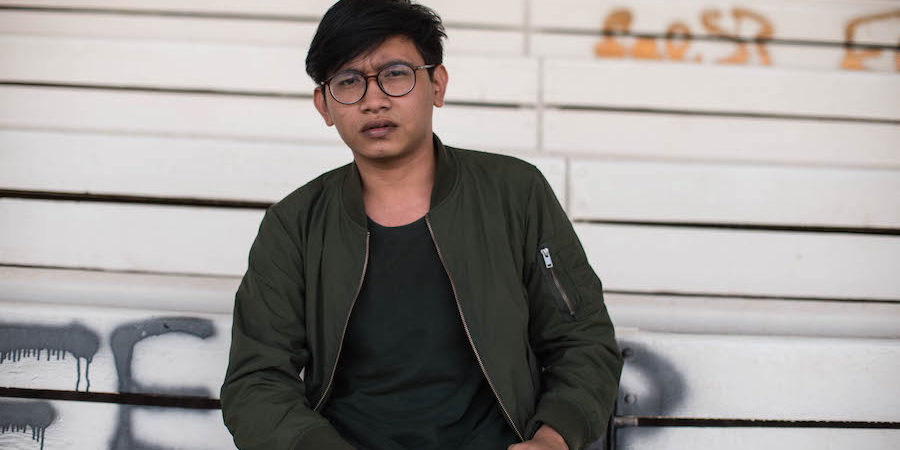
By Esteban Marchand, from Johannesburg. In November, I attended the Global Conference on Investigative Journalism in Johannesburg, South Africa, representing Presentes, and I had the opportunity to meet colleagues from over 200 countries around the world. Learning about their different contexts and asking about the situation of LGBT people was enriching and confronted me with realities I was unaware of. Among them, I spoke with Aulia Adam (23 years old), an Indonesian journalist from Jakarta. In this interview, we discussed the challenges faced by the LGBT population in that region (where you can be punished with up to 100 lashes for having sex with a person of the same sex) and the role the press plays in reproducing hate speech issued by official government sources.
– What is the biggest problem facing LGBT people in Indonesia?
Anti-LGBT sentiment is not new in Indonesia. Most people are unaware of this issue. Homosexuality is still considered a 'mental illness.' In past decades, Islamic extremists have targeted LGBT people at public events, frequently disrupting or canceling scheduled activities. In Aceh, the only region in Indonesia that has fully implemented Sharia (Islamic law), the punishment for being caught having sex with a person of the same sex is 100 public lashes. Officials in that region have openly fueled hatred toward LGBT people, referring to them as a 'threat' that is 'invading' Aceh province. In 2016, hate speech against LGBT people increased. The organization Human Rights Watch (HRW) documented that some public comments by government officials triggered a series of threats against Indonesians in the LGBT community by state commissions, Islamic militants and major religious organizations.[READ ALSO: This is the map of homophobia]
The Minister of Higher Education, Muhammad Nasir, said he wanted to ban LGBT student organizations in universities. He later retracted his statement on Twitter, but the damage was already done. In the following weeks, anti-LGBT statements, ranging from the absurd to the apocalyptic, resonated in the media: at a maternal health seminar, a mayor warned young mothers not to eat instant noodles, but to dedicate their attention and time to cooking nutritious food and teaching their children not to be gay. The Minister of Defense described LGBT rights activism as a proxy war against the nation waged by outsiders, more dangerous than a nuclear bomb: “It is dangerous because we cannot see who our enemies are, but unexpectedly everyone is brainwashed. Today, the (LGBT) community, which demands more freedom, is truly a threat. In a nuclear war, if a bomb falls on Jakarta, Semarang will not be affected, but in a proxy war, everything we know could disappear in an instant; it is very dangerous.”– Doesn't this make people more aggressive and abusive towards LGBT people?
Yes. Public statements from the government have obviously made this a very political issue, and it affects people in general. LGBT issues are now more intense in Indonesia. There's a journalist from Benkulu I interviewed last year because her work became very controversial on Facebook. Her name is Phesi, and she received negative comments because she wrote about a place near where she lived that was very trans-friendly. She even received a death threat on Facebook. Phesi is just a journalist doing her job; can you imagine what happens to people who are part of the LGBT community? HRW also documented heartbreaking stories about trans people being beaten, imprisoned, and punished by the Sharia police (Wilayatul Hisbah) in Aceh. These days, it's very common to hear about police raids on what they call "gay parties," "gay gyms," or "gay spas."
– ¿How are issues related to the LGBT population covered?
– What I can say is that the number of news stories with a positive focus on LGBT issues is very small here. Most newsrooms don't have enough knowledge on this topic. The Alliance of Independent Journalists (CHILI A survey conducted in 2016 by AJI revealed that most newsrooms (editors and reporters) don't truly understand what it means to be LGBT. AJI found that they don't even consider LGBT people as sources. Only 7.21% of sources are LGBT individuals. Therefore, it's safe to say that they don't consider the issues facing the LGBT community a sensitive topic. Some media outlets even publish content that is critical of this community and spread hate speech against it. It's very easy to find LGBT bias in the media.Are there any books, songs, or audiovisual content that accurately represent LGBT people in Indonesia?
– Movies? There are some good films that portray the LGBT community here in Indonesia. I think Paul Agusta's 'Parts of the Hearts (2012)' and some of Lucky Kuswandi's work have a positive view of the lives of this community. Lucky's web series CONQ was well-produced, but unfortunately, it was removed from YouTube at the request of the Indonesian government. Some artists have projects on this topic. I can't mention them all because I don't know them all. One of those projects can be seen on the Instagram account @insidemonochrome which seeks to capture the LGBT youth in Indonesia. Rio Damar, a Chevening scholar, has a project in which he created a website for LGBT people to share their coming-out stories. It's called melela.org. Melela means 'coming out of the closet' in Indonesian.– What is your optimistic vision for Indonesia in 10 years? And what is your realistic vision?
How do I see Indonesia in the next ten years in an optimistic way? Well, I can see that the younger generations are growing up better and becoming more respectful of each other, with some differences. We must return to our roots, our official national motto: Bhineka Tunggal Ika (United in Diversity). And a realistic view… I don't know precisely, but to continue on the topic of LGBT people in the future, I think there will be some progress in the health sector. It's difficult to say now if we remember how hard 2016 was for people in this community. The next five years may still be dangerous for people in this group. In the next two years there will be elections: in 2018 we will elect mayors and in 2019 our new president and members of parliament. From what we saw in past elections, not only will the LGBT issue be highly politicized, but religious and racial issues will also be sensitive topics. Indonesia will face hard times, I suppose, and that will affect the LGBT community in a negative way.We are present
We are committed to journalism that delves into the territories and conducts thorough investigations, combined with new technologies and narrative formats. We want the protagonists, their stories, and their struggles to be present.
SUPPORT US

FOLLOW US
Related notes


We are present
This and other stories are not usually on the media agenda. Together we can bring them to light.