

Gabriela Cabezón Cámara: from Martín Fierro to the queer novel
Like a national and rural big bang, Gabriela Cabezón Cámara has just published The Adventures of China Iron, the untold story of the famous china of the macho gaucho.

Share

By Gabriela Borrelli Azara
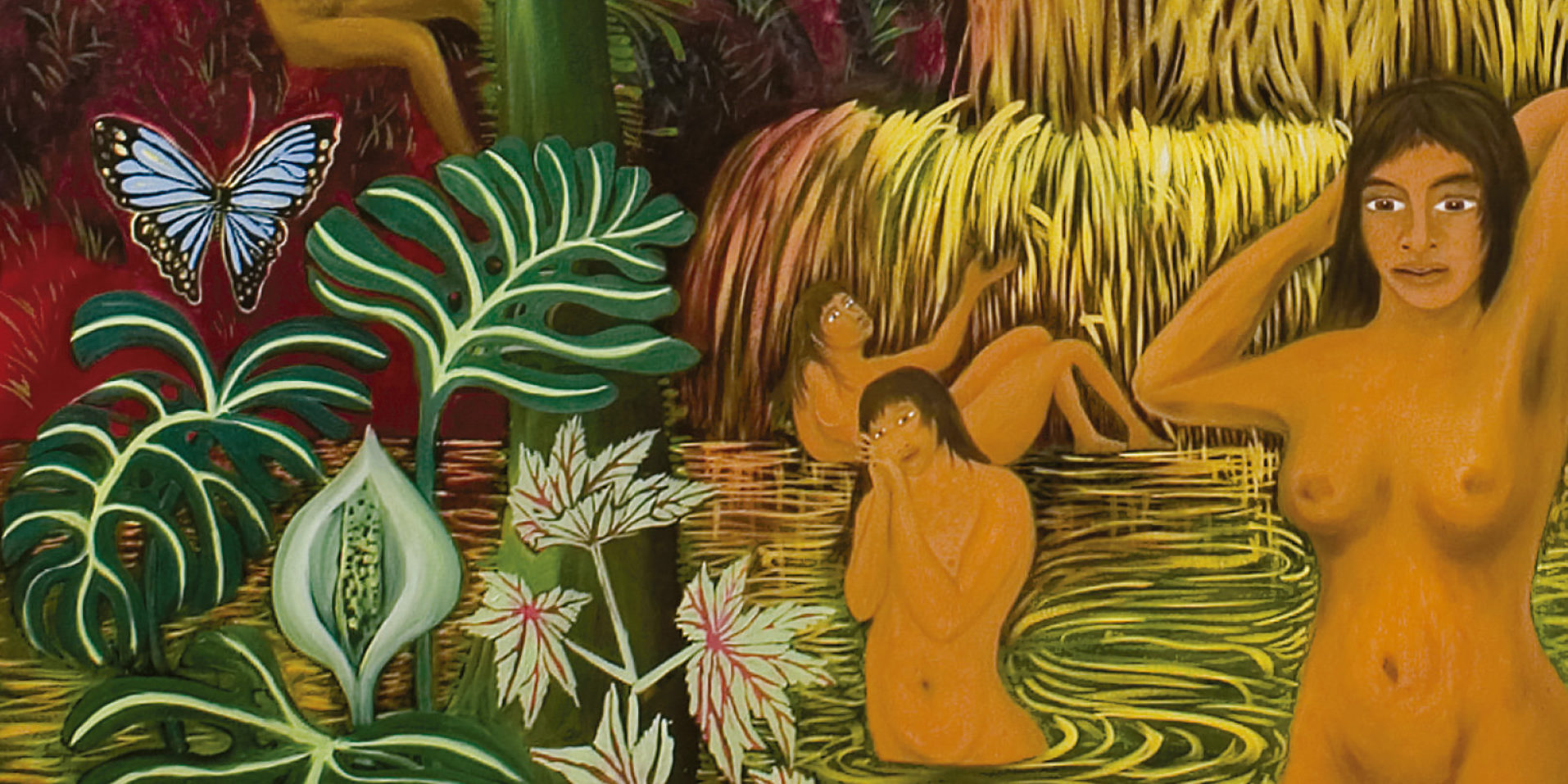
Photos: Magdalena Siedlecki/Random Like a national and rural Big Bang, Gabriela Cabezón Cámara has just published *The Adventures of China Iron* , the untold story of the famous "china" of the macho gaucho. It is the latest book by the author who burst onto the Argentine literary scene with the story of the Virgin Cabeza in 2009. There, she narrated the love story between Qüity, a crime reporter, and Cleo, a trans woman who communicated with the Virgin Mary and who would become the political leader of the shantytown where she lived. In that first text, Cabezón Cámara told a story of dissident love and worked with language. At the heart of a love story, the explosion of the Spanish Golden Age with the dynamite of shantytown slang. Then came the ballad tradition, which she explored with satire in *Romance of the Black Blonde*, and once again the love story features two women. Now she does it again. And it's all an explosion when Gabriela Cabezón Cámara drops a bomb on the Spanish language and implodes it. It's the brilliance of Estreya that La China sees as soon as the famous Martín Fierro leaves, dragged away by the draft. The brilliance as the birth of what could have been. La China looks at her characters, and looks at an Englishwoman, and thinks and climbs aboard. La China uses an umbrella to fetch water from the river and dresses as a man, and discovers tea and the freckles of that Englishwoman. La China interweaves English into a language she doesn't yet master but with which she thinks. Where did she come from, why Fierro, and why not something else? La China is the possibility that everything could have been different. That there was a beginning and that that beginning was in the hands of the guns and not the Chinese women. Not even of the ecological gaucho "Rosarios" who accompany La China and the Englishwoman in the Argentine gaucho road novel, a genre that Cabezón inaugurates.
-Why the adventures of China and not the history of China?
-Because it's more playful. Because it's linked to a certain 19th-century novel that fascinates me, the kind that came in the Robin Hood collection. Because it also involves adventure, a promise of entertainment and discovery, obstacles that are overcome, and goals that are either achieved or not.-What does gaucho literature have to tell us about being Argentinian, if such a being existed?
It's a genre that shifts from epic to novel, from the heroic first-person plural to the defeated self. It's the story of a class that rises up to make a revolution, only to be discarded like trash when the landowners no longer need them to stop paying taxes to the Spanish or to kill Indians. It's the genre that ultimately gives birth to Martín Fierro, that gaucho humiliated to the point of exhaustion and finally broken, resigned to not even desiring justice. Martín Fierro is a beautiful novel, but in *La vuelta*, it's the novel of defeat, the novel that demonstrates the senselessness of any rebellion, of any desire to have what is one's own, the senselessness of the social order. And resignation as the only possible way of life if you were born on the wrong side. The people who believed in something like "being Argentinian"—"being national," as they called it—chose Martín Fierro as the national book against the immigrants and the ideas of worker organization they brought. And if the book survived it is because, I insist, it is a beautiful novel despite its second part, of which two-thirds of its pages could be discarded.-Could your book be read as a queer utopia of cultural diversity?
Yes. When they killed the Indigenous people, they killed (they kill) those who bothered (bother) them in order to take the land as their own. But they also killed those whose different way of life is evidence that such a thing exists—another way of life. A way of life that doesn't need to commit biocide to increase or maintain its profit margin. That doesn't even think in terms of profit margin. So, The idea of communities of diverse nationalities living in harmony with nature can certainly be interpreted as a utopia of cultural diversity.Regarding queerness, What kind of utopia could be desired without the liberation of bodies and desires? What kind of utopia could be built on the shackles of obligatory and fixed identities?
-Why is the Chinese woman named Josefina?
-For Josefina Ludmer, known as China. Because she was a tremendous critic, one of those who generate their own work, a new perspective on the literature and culture they observe, a lysergic critique. It's a tribute.-What moment did you enjoy the most: when you thought about and wrote the novel, when you read it finished, or when we read it now? Is literature also a source of enjoyment?
-I experienced joy in those moments when you feel the writing vibrate in your body, when you feel the text breathe, gain its own strength, live and pass through you, like the river that flowed through Juan L: A river was crossing me, a river was crossing meAnd now, when the other readers arrive. And when I saw the cover, which is beautiful. And when I found out the price, because I wanted it to be cheap and it is cheap.READ the first chapter of The Adventures of China Iron.
]]>We are present
We are committed to journalism that delves into the territories and conducts thorough investigations, combined with new technologies and narrative formats. We want the protagonists, their stories, and their struggles to be present.
SUPPORT US

FOLLOW US
Related notes
We are present
This and other stories are not usually on the media agenda. Together we can bring them to light.