

“The State was responsible for the violence in our life stories”
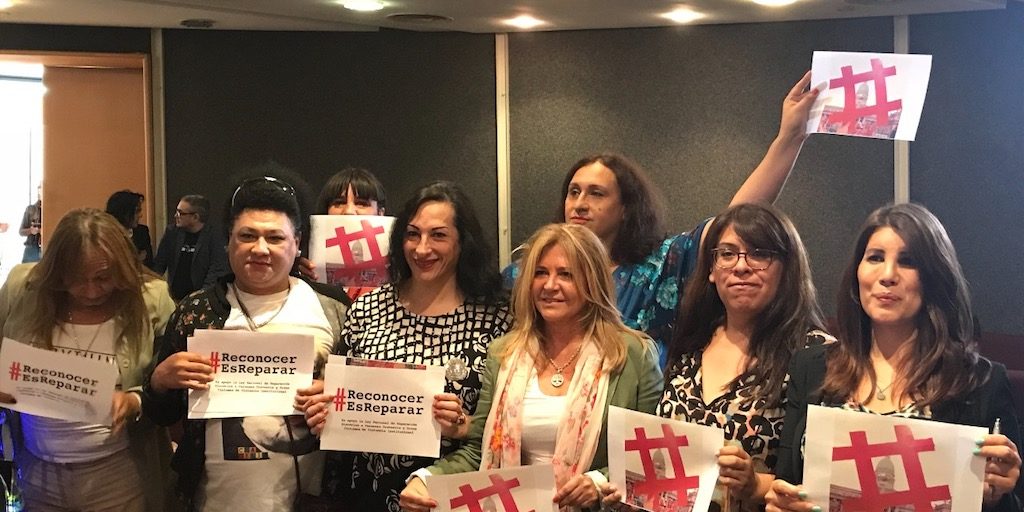
In the Argentine Senate Auditorium, a bill was presented to provide reparations to transgender and transvestite people who suffered institutional violence because of their gender identity. This took place within the framework of the #ReconocerEsReparar (Recognize Is Repair) campaign, promoted by more than 30 LGBTQ+ organizations.

Share

“Being transvestite or transgender was considered a crime in our country. Thousands of transvestite and transgender people were persecuted, imprisoned, mistreated, and abused because of their gender identity. The national law for reparations for transvestite and transgender people seeks to acknowledge institutional violence and offer reparations to transvestite and transgender people. #RecognizingIsReparating.”
[READ ALSO: #RecognizingIsRepairing: pension project for transvestites and trans victims of police violence]
The project puts on the agenda one of the demands being pursued by the transvestite-trans collective along with the trans employment quota law. The law seeks to provide a special pension to transvestite and trans people over 40 years of age who were subjected to violence, both by the application of police edicts and any other degrading act by the security forces. The bill, signed by Senator Sigrid Kunath (Front for Victory – Entre Ríos) and co-signed by ten other legislators, was presented by Senator Kunath. “Today we are taking a step towards ensuring that people whose rights have been violated can access a pension. While this law doesn't fully repair the damage caused, at least the State will be present through various institutions that will address the violated rights, thus beginning the path to redress,” said Kunath. She was accompanied by Senators María Teresa González (Front for Victory – Formosa) and Marina Riofrío (Front for Victory – San Juan). The same bill was introduced in the Chamber of Deputies in October 2016 and has been stalled in the Internal Security Committee since early 2017.
[READ ALSO A #Shout declares a state of emergency for transvestites and trans people]
María Teresa González said, “We are not living in the best of times for the recognition of minority rights. That is why we need fighters right now.” She asked the LGBT community members present to stand with the legislators who signed the bill. “Things are not achieved individually and once and for all; it is a daily struggle,” she added.
"United to achieve historical redress"
Flavia Flores, 52, represents the Mocha Celis High School and is one of the campaign's driving forces. She recounted that when she was young, trans women and transvestites didn't have the right to go out in the street, not even to buy food. "They would arrest us simply for being trans, and there they would abuse and torture us," she said. She added, "It would be wonderful if we could unite to fight for this project. Here, we are all equal. We all suffer."[READ ALSO: To provide reparations to trans and travesti victims of police violence]
Norma Girardi, an activist with the Association for the Struggle for Transvestite and Transsexual Identity (ALITT), said she is 63 years old and considers herself a survivor. She recalled that when she conducted a survey for a book with Marlene Wayar, Diana Sacayán, and Lohana Berkins, they realized that all the women told the same story: “It was the police. The account was always the same: police abuse.” Alba Rueda, from Mujeres Trans Argentinas (Argentine Trans Women), said that “it is urgent to have this bill approved because our trans sisters need it to have recognition that the State was responsible for a web of violence that is present in our life stories.” The activist also spoke about the protocol for the detention of LGBT people from the Ministry of National Security. “It puts us on alert and puts us at risk. That is why it is essential to have this law,” she said.
We are present
We are committed to journalism that delves into the territories and conducts thorough investigations, combined with new technologies and narrative formats. We want the protagonists, their stories, and their struggles to be present.
SUPPORT US

FOLLOW US
Related notes


We are present
This and other stories are not usually on the media agenda. Together we can bring them to light.