

Carla and Cynthia: "We want to change the way people see lesbians"
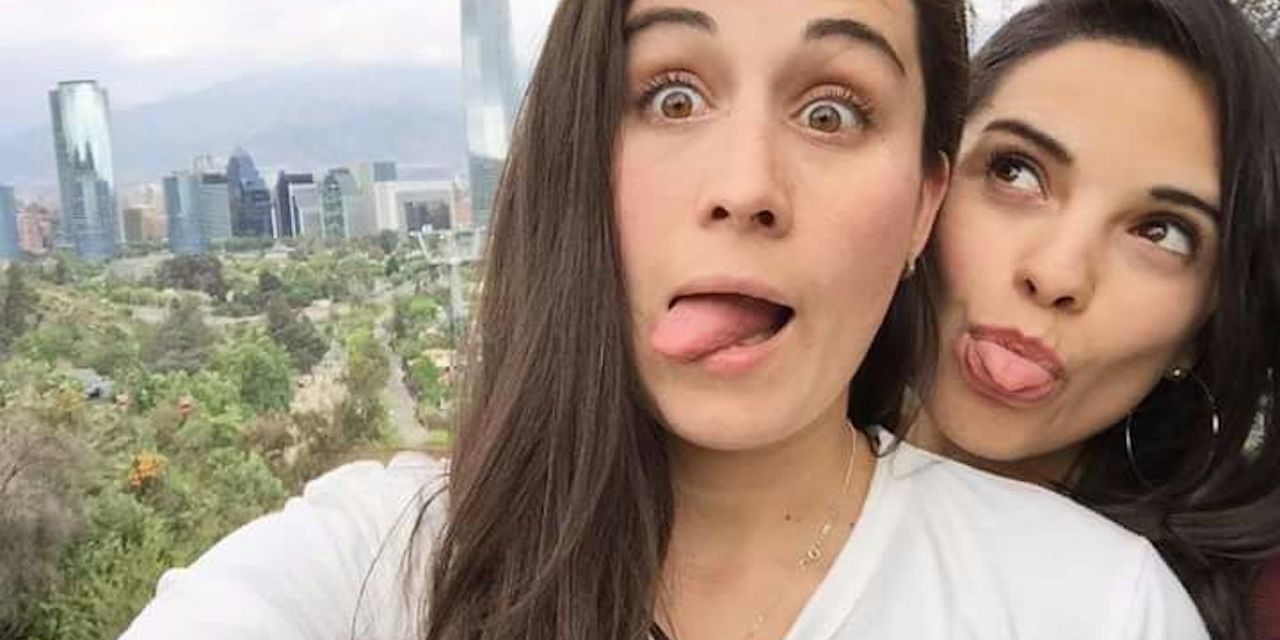
Carla and Cynthia are two young Chilean women who have been sharing their lives on YouTube for almost two years, in a sort of reality show. They met in Santiago in 2014, fell in love quickly, and set off to travel through Europe. They began documenting their trip, thinking their friends would enjoy seeing how their adventure together was unfolding. What happened was that they went viral.

Share

Airam Fernández, from Santiago, Chile: Carla and Cynthia are two young Chilean women who, for almost two years, have been sharing their lives on YouTube in a sort of reality show . They met in Santiago in 2014, fell in love quickly, and traveled through Europe together. They started documenting their trip and thought their friends would enjoy seeing how their adventure together was unfolding. What happened was that they went viral. They have over 340,000 subscribers on True Love Show, a channel that made them the first Spanish-speaking YouTubers to create lesbian content and which has become a reference point for the LGBTQ+ youth community in Chile. It also opened doors to other projects they both dreamed of: writing a book to tell their story and partnering with a foundation to help other young people who, like them, didn't have an easy life before accepting themselves and coming out. Backed by the Todo Mejora Foundation, their latest endeavor was to delve into politics to discuss diversity, with the aim of interviewing some of the presidential candidates who will face off at the polls this Sunday, November 19th. At the Santiago International Book Fair, the YouTubers answered the #5Questions from Presentes while signing copies of Dile que la amas (Tell Her You Love Her ) for a long line of young people, mostly girls, almost all of them nervous, eager, and happy to meet them and get a photo with them.
-What did you want to achieve by writing Tell Her You Love Her , besides telling your own story?
Carla: It all started on YouTube, showing our daily lives and, more than anything, the beautiful parts of our life as a couple. Suddenly, it became a huge community watching our videos; we couldn't believe it. As we became so well-known, Penguin Random House found out about us and approached us with a proposal to write a book. We thought about it for about a month before saying yes, because beyond telling our story, what we wanted was to reveal things that aren't seen on the YouTube channel, precisely to help other people with our story. We didn't have an easy life growing up, to put it mildly. We know what it's like to be rejected and treated with indifference simply for being lesbians. So, the book recounts all these events autobiographically. Today, I'm a psychologist and Cynthia is a business engineer, but Becoming professionals and getting here was incredibly difficult because we grew up in a prejudiced Chile, where being lesbians was seen socially as something very bad. Things aren't quite like that now. Our country has made progress, though not as much as we'd all like, but what we want to do is help others who might be going through similar experiences to what we've already gone through. We also want to raise awareness about diversity and try to change the way people see lesbians, like in Chile, where we're sometimes ridiculed or sexualized. -Did you ever think that your YouTube channel would become this huge success and change your lives in this way?
Cynthia: We never imagined it would be like this. This has been a crazy experience, and we're incredibly grateful. We never wanted to be famous, if that's even what we are, I don't know. What interests us about doing this, coming here to sign books and being available to talk to our followers all this time, is that we can get a sense of what our audience is really like. Before, we only saw numbers through the channel, and yes, over time those numbers grew a lot, but seeing it up close and being able to hug everyone and give back some of what they give us is really cool.
Carla: Unintentionally, we've become a positive role model for younger lesbians in Chile. That's a huge responsibility that we accept with great humility and gratitude. Few YouTubers dare to take such a strong stance and support people like this. The fact that we have been able to write a book, have a successful YouTube channel, be able to talk about current issues and even be a little involved in politics, is our contribution to making diversity issues visible in Chile and that fills us with great pride.

-What do you like least about this media side of things?
Carla: On the one hand, it's very gratifying when someone approaches you and greets you with such warmth, as if they've known you for a long time. In London, we were walking along, just like any other tourists, when suddenly someone, out of all the tourists, called out to us and came up to say hello. It turned out she was a fan of Paraguay—it was that crazy and surprising. But on the other hand, it seems many people don't understand that we're not a perfect couple, just like no couple is. I say this because there was a time when we ended our relationship, due to problems any couple might have, and when it became public, people started interfering too much, almost morbidly, wanting to know every detail. There were even people who added our families on social media, as if to pry into why we had separated. Fortunately, we got over that. But definitely Overexposure is what we like least about all of this.-What did you think of Europe, compared to Chile, regarding LGBTI issues?
Cynthia: Everything is different! One thing that really impressed us is how different the Pride march is and the number of allies surrounding it. Children, mothers, heterosexual couples, lesbians, gay men, trans people, and above all, people of all ages participate, because what's really being celebrated is a day of diversity. In Madrid, it's incredible. I think it's the best experience I've ever had. The Northern Ireland march was also very beautiful. And in Amsterdam, the way they approach these terms is very different as well. For example, they make fun of the concept of "marriage equality," but only because of the term "equal," because for them, marriage is marriage, period; it's for everyone. We found that very admirable. What we also noticed was that nobody looked at us, not for any reason. If we were on the subway holding hands, always very affectionate, nobody stared. In Chile, that still raises a lot of eyebrows. Carla: Another thing that really struck us was meeting a 15-year-old girl and spending a lot of time with her. The way she grasped and accepted concepts like same-sex marriage, homosexuality in general, abortion, women's rights, gay rights, and same-sex adoption was incredible. She understood everything without any personal experience related to any of these issues. That says a lot about how children grow up there. I wish I had thought like that at 15 and had had all the information this girl had to form such a solid opinion at such a young age.-How did you take on the huge responsibility that the Todo Mejora foundation gave you to interview the candidates Alejandro Guillier, Marco Enriquez-Ominami, Beatriz Sánchez and Carolina Goic?
Cynthia: Working with Everything Gets Better It has been very important for us, and it started long before the electoral project. We have this great foundation that supports us, with backing that arrived at a time when the advice we were so often asked for was simply overwhelming. When we started the channel, the messages and cries for help also began pouring in, from girls who emailed us to tell us they were going through the same thing, that they didn't know how to tell their families they were attracted to other girls, or people who were experiencing very deep depressions as a result of rejection. This became more frequent, and in that sense, Todo Mejora (Everything Gets Better) has been a great ally in facing this alongside us and supporting all those people who follow us and who have been hurt. Regarding the interviews with the candidates, at first we were very anxious to participate, since we were talking about a much bigger challenge, which is precisely to represent and highlight the current issues for the LGBTI community. Approaching the presidential candidates to discuss diversity and our community in concrete terms, and asking them about issues that haven't been addressed in the televised debates beyond slogans, was a very exciting experience. It was important to gather this information and share it with people so that, in the elections next Sunday, the 19th, they can vote with awareness and knowledge of our rights and the rights of everyone. This project... We were positively struck by the fact that almost all the candidates - because we cannot fail to mention that some did not want to participate - propose a Gender Identity Law from childhood and also training programs for all institutions in the country, to have the necessary skills to address these issues. We see that at least they are not standing idly by and there is an awareness to be able to do something real, in order to hold all actors responsible as guarantors that there is no more discrimination in Chile.

We are present
We are committed to journalism that delves into the territories and conducts thorough investigations, combined with new technologies and narrative formats. We want the protagonists, their stories, and their struggles to be present.
SUPPORT US

FOLLOW US
Related notes
We are present
This and other stories are not usually on the media agenda. Together we can bring them to light.