

Goyo Anchou: “LGBT cinema is full of bourgeois stories”
From the trenches of queer guerrilla cinema, Goyo Anchou fires back at conformity and naiveté in gay film production. He defends his hatred of the world as it is, which he takes to extremes in his new film: Heterophobia, an anti-patriarchal rhapsody, is a call for the castration of all men to end oppression.

Share

From the trenches of queer guerrilla cinema, Goyo Anchou fires back at conformity and naiveté in gay film production. He defends his hatred of the world as it is, which he takes to extremes in his new film:
Heterophobia, an anti-patriarchal rhapsody , is a call for the castration of all men to end oppression. By Paula Bistagnino.
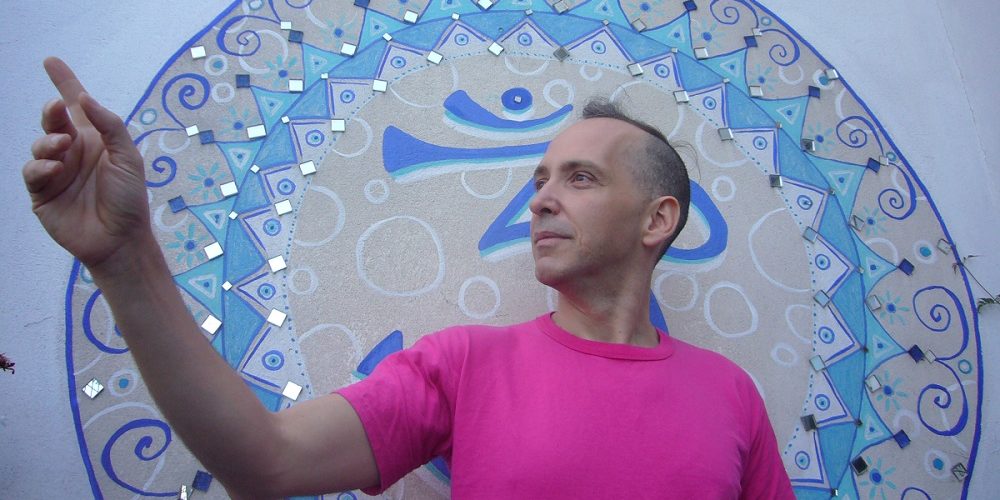
Photos: courtesy of GA. “A faggot is a faggot, he always has to be below the man. If you understand that, you’ll be fine. You’ll even be happy. If not, forget it, you’ll be unhappy. And on top of that, you’ll get your ass kicked,” a gay man tells Mariano, the film’s protagonist, after raping him. This marks the beginning of an emotional journey: from initial guilt mixed with a messianic desire for redemption, to the conclusion that the only possible action against patriarchy is revolution. And the weapon is castration. “Only the castration of the male will liberate us,” says filmmaker Goyo Anchou, a Mar del Plata native in exile, director and producer of this film, which he began more than three years ago and whose radical nature has led to a premiere at MALBA. Furthermore, due to the positive reception it received since its presentation as a work in progress at the 2015 Asterisco Festival, a sequel, The Triumph of Sodom, is already in the works. This will be Anchou's fifth film. He debuted in 2003 with Sappho —a trans remake of the 1943 original starring Mecha Ortiz and Mirtha Legrand—followed in 2011 with the documentary Batato's Movie , which he co-directed with Peter Pank, and in 2013 with The Name of Beings. “I'm a marginal filmmaker who takes on unspeakable odd jobs so I can dedicate myself to filmmaking. I gave up everything to do this.”
-You make gay films, did one thing go hand in hand with the other during your childhood in Mar del Plata?
-Yes, absolutely. It was a drag being gay in the provinces in the 1980s. And that's why art and film served as a refuge, one of the few safe havens at that time.That's why I was as certain I was gay as I was that I was going to fly out of Mar del Plata. I came to Buenos Aires with the idea of being gay, continuing to be gay, but peacefully. Alone, far from my family and my surroundings. That was a necessity, but the second was also to make films. So as soon as I turned 18, I came here. And I always knew I was going to make gay films.My desire has always been to realize my fantasies in film and tell gay, queer, and strange stories.These were the stories I never heard as a child, the stories I longed to experience as a teenager marginalized by my sexuality. At that time, all I could think about were marginalized stories. Later, you develop and grow, but that was my initial desire.
– heterophobia born as radical as it ended up being?
-In its very beginning, I wanted it to be a very professional script, written in a more or less polished way to present to the INCAA (National Institute of Audiovisual Arts). But then I realized that despite all my efforts to format the story to make it acceptable to them, it was impossible. And so, since it wasn't going to fit into the system, I was going to do the opposite: radicalize it and turn it into a film that no institution would ever have financed. And it's a film that calls for the castration of all men on earth; cutting off penises to end the problem of gender oppression in the country. And to stop trying to follow the rules of heterosexuals to be accepted. How depressing.-Is it also a rhapsody against gays who want to get married and start a family?
-But of course! I'm fed up, fed up, fed up with watching movies about good guys who want to be the good neighbor. They want to get married, be monogamous, buy a kitten, and adopt a child who'll be accepted into an Opus Dei school, like Florencia de la V. Or all the PRO activists out there now. And worldwide, if you look at the programming schedules of LGBT festivals, there's a lot of that kind of gay cinema about well-to-do, bourgeois, conformist types that's a bore. It really depresses me. But it's a trend, especially among gay men. Not so much among lesbians.-How much did you have to dig to get to all those places that talk about homophobia?
-No, this film is completely autobiographical in the sense that they are all places we have been. Heterophobia, the death chant against the male, is something very liberating because all of us faggots have experienced homophobia. And while all of this in the film is tempered with humor, that hatred is healing. When you let it out, when you allow yourself to feel it, it's because you've overcome the great trauma of childhood. Because when you're a child and you experience all that oppression and violence, what you feel isn't hatred, but rather a great sense of guilt and a deep self-loathing. So, being able to grow by directing that hatred outward is a process of emotional maturation.-Are you going to continue standing firm in the queer guerrilla camp?
–I'm going to stay put in this space of queer guerrilla cinema. I think it's a place where you need to stand your ground and gather allies because it's a place of constant pursuit of freedom, subverting all those clichés of cinema and also of the LGBT community. Otherwise, if I'm going to remain complacent, what's the point of being gay, right? “Heterophobia, an anti-patriarchal rhapsody” is being screened on Saturdays in December at midnight at the Malba.]]>We are present
We are committed to journalism that delves into the territories and conducts thorough investigations, combined with new technologies and narrative formats. We want the protagonists, their stories, and their struggles to be present.
SUPPORT US

FOLLOW US
Related notes
We are present
This and other stories are not usually on the media agenda. Together we can bring them to light.