

Asterisk Film Festival: “We want an aberrant diversity”
More than one hundred films from 24 countries, international visits, music, performances and much more are what the program of the fourth edition of the Asterisco International LGBTIQ Film Festival brings, based in Buenos Aires between November 1 and 5.

Share

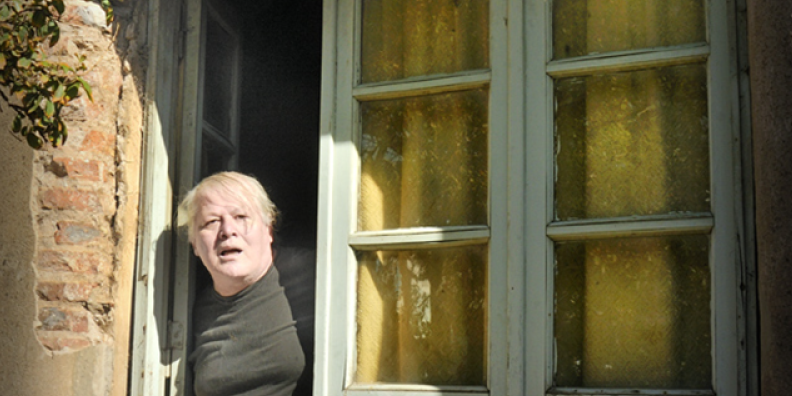
By Paula Bistagnino Photo: «Llegará la noche», feature film about the life of the poet from La Pampa, Juan José Sena. Over five days and in four venues in the City of Buenos Aires, the fourth edition of the Asterisco International LGBTIQ Film Festival will screen 115 films, documentaries, short films and works in progress with one objective: to focus on sexual diversity, to celebrate the multiple ways of being, loving and existing in the world; of relating and forming families, of living together in equality and respect for differences. This is how the Festival's new director, Diego Trerotola, explains it: “But in addition to that diversity—the diversity of creating and telling the stories of LGBTQ+ people—we want the perspective on those worlds to be different from the usual one, to break away from the established norms in order to tell the story of sexual and gender diversity. A diverse perspective on diversity,” he says, playing with words. He now takes over from Albertina Carri, although it's more a change of titles than of roles, because the two worked and continue to work very collaboratively in a creative and executive triad completed by Fernando Martín Peña; both before and now.
“We want an aberrant diversity”
Asterisco's proposal takes another turn. “As a film festival, its programming is key, and what we want most is for cinema to challenge us through cinema itself, we also have productions and works in the program that aren't about or from the LGBT perspective, but rather question us from other angles,” says Trerotola. Among this year's highlights is a retrospective of the work of Argentine filmmaker Viktoria Martin, who makes abstract and experimental films not necessarily focused on sexual diversity. There's also a section of pornographic films in the vein of “post-porn”—feminist, with a gendered perspective, non-industrial—which isn't something you see much at festivals and, of course, never receives commercial or institutional support. “We also want to break with a model of LGBTQ festivals that are very stifling because they work with a model of sexual diversity: they show how one should be gay, lesbian, or trans. And we are an anarchist festival: we want there to be no models, we want to distance ourselves from disciplines and rules. We want an aberrant diversity,” he explains.Guests and sections
One of this year's notable international guests is French queer cinema pioneer Lionel Soukaz, who, in addition to serving on the Jury for the Argentine Feature Film Competition, will present a retrospective of his work. There will also be a focus on the young German actor and filmmaker Axel Ranisch, who made his first short film in 2002 and by 2009 had filmed eighty shorts—often participating as an actor, screenwriter, composer, or editor—and has worked with convicts in prisons and in anti-racist seminars. Regarding more local events, there will be a section dedicated to journalist Enrique Raab, who disappeared in 1977 along with his boyfriend and is considered a queer pioneer. The selection of films in his honor includes A butterfly in the night, by Armando Bo (1977), The brunette, by Ralph Pappier (1958), and The truceSergio Renán's (1974) film, among others. The festival's backbone, titled "The Skin I Live In," includes Japanese, Austrian, Mexican, Chilean, Uruguayan, Dutch, and German-Canadian cinema. The jewel is Eastern BoysA 2013 French feature film by director Robin Campillo, who surprised audiences at Cannes this year, and starring Argentinian actor Nahuel Pérez Biscayart. In addition, as in every edition, the festivities will continue outside the cinemas with musical shows, exhibitions, performances, and a grand closing party at Casa Brandon.More and better #LGBT Cinema in Argentina
In the first two editions of the Festival, the directors and programmers found it difficult to find an Argentine film for the feature film competition that represented the diverse and groundbreaking cinema they were looking for. But last year, that changed: “In 2016, we had so many excellent national submissions that we ended up opening a competition exclusively for Argentine films. It was fantastic, but honestly, we thought it was just a coincidence that it happened. And we were surprised again in 2017: the same thing happened, which confirms that more and better films are being produced,” says Trerotola. Among the seven Argentine films in competition, six are documentaries. And that's also a noteworthy trend. Especially because they aren't in the classic format of the genre with direct interviews, but rather have the style of a television reality show: the camera delves into the intimacy of the story and shows its protagonists. “But the interesting thing is that, unlike reality TV, what's emerging is a 'counter-reality,' because they don't seek the sensationalism of identity but rather its portrayal: it's not about a camera that watches but a camera that participates and generates an intimacy that gives political voice and doesn't turn intimacy into a show.” For the director, this is avant-garde cinema: “If we have avant-garde LGBTQ cinema, it’s not by chance. This is because we previously had two groundbreaking laws: the Equal Marriage Law and the Gender Identity Law.”The four venues where the Festival will take place are:
Malba Cinema (Av. Figueroa Alcorta 3415) / Admission: 60 pesos Cine.ar Gaumont (Av. Rivadavia 1635) / Admission: 30 pesos ENERC (Moreno 1199) / Free admission Universidad del Cine (Pasaje Giuffra 330) / Free admission Download the schedule here: bit.ly/2yNm8XW]]>We are present
We are committed to journalism that delves into the territories and conducts thorough investigations, combined with new technologies and narrative formats. We want the protagonists, their stories, and their struggles to be present.
SUPPORT US

FOLLOW US
Related notes
We are present
This and other stories are not usually on the media agenda. Together we can bring them to light.