

Why is it news that a trans model appears in Playboy?
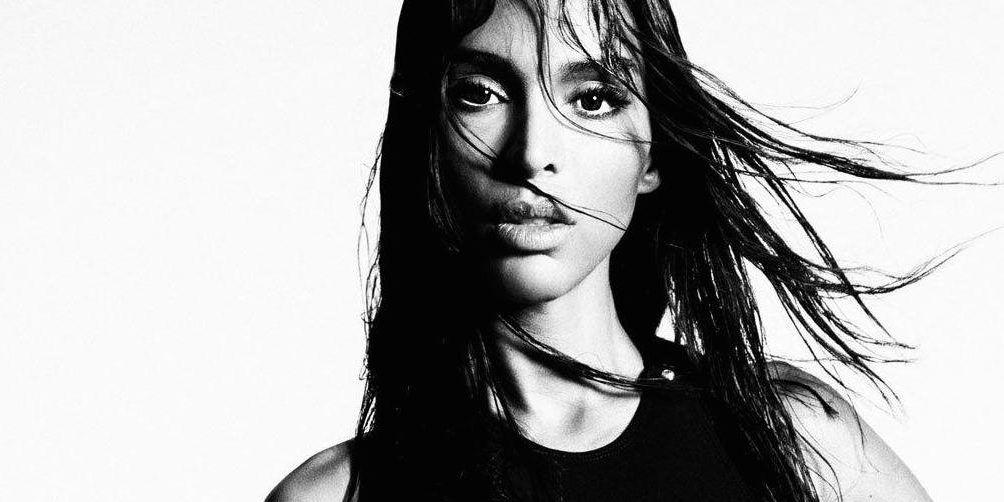
Although she's not the first and doesn't appear on the cover, the media reported as news that French trans model Inés Rau graces the centerfold of the new issue of Playboy magazine. Inclusion, objectification, or sensationalism?

Share

Although it's not her first time and she's not on the cover, the media reported as news that French trans model Inés Rau graces the centerfold of the new issue of Playboy magazine. Inclusion, objectification, or sensationalism? Inés Rau is 26 years old and a haute couture star. The fashion world has embraced her with a certain degree of ease, and in that sense, her presence is a gain for LGBTQ+ rights and inclusion. She had previously appeared in Playboy, in a 2014 issue dedicated to non-binary genders. This is the first time she has appeared as a Playmate in a prominent position.
Feminism has been divided regarding Playboy magazine. In the 1970s, some saw it as a space for emancipation and liberation from moral dictates, while others considered the publication a bastion of machismo—its audience being heterosexual men—that objectifies women.
In that sense, do you gain rights by occupying pages of the magazine? Is it progress? For model Rau, it's a matter of visibility.
“I lived for a long time without saying I was transgender,” Rau said in an interview with Vogue magazine, confessing that she lived in fear of never finding a boyfriend. She was afraid of being seen “as something strange.”
“Replaceable objects”
According to Argentine activist and researcher Violeta Alegre, many heterosexual men are attracted to trans and travesti bodies but then struggle to act on their desires. “They can’t keep us from being consumed and ‘catalog models,’ as they see us on websites offering ourselves as escorts, for sexual services, in porn videos. There we are ‘the queens,’ ‘the forbidden loves.’ But there, too, we are easily replaceable by a few centimeters,”
she says in this essay. Model Rau graces the centerfold of the magazine, but in an issue whose cover is dedicated to Hugh Hefner, the magazine’s founder and editor, who died on September 27 at the age of 91.
This event, described as “unprecedented” by the press, occurs within a context of growing hatred toward the trans population in the United States. Donald Trump's inauguration and his statements against LGBTQ+ people have unleashed hate groups and rhetoric. So far this year, 21 murders of trans people have been recorded. The most recent to receive media attention was that of 17-year-old Ally Lee Steinfeld. Although the level of brutality was extreme , the justice system does not consider it a hate crime.
The questions arise: Are Playboy readers (representatives of a patriarchal culture) part of these transphobic groups? Where do desire and hatred intersect?
A precursor
The first transgender model to grace the cover of Playboy was Caroline "Tula" Cossey in 1981, though she didn't openly acknowledge her identity. Her "secret" was revealed the following year, and her world crumbled. Journalists and television producers mocked her on live television or offered her impossible roles.
In that sense, does occupying pages of the magazine grant any rights? Is it progress? For model Rau, it's a matter of visibility.
"I lived for a long time without saying I was transgender," Rau said in an interview with Vogue magazine, confessing that she lived in fear of never finding a boyfriend. She was afraid of being seen "as something strange."
“Replaceable objects”
According to Argentine activist and researcher Violeta Alegre, many heterosexual men are attracted to trans and transvestite bodies but then struggle to act on their desires. “They can’t keep us from being consumed and ‘catalog models,’ as they see us on websites offering ourselves as escorts, for sexual services, in porn videos. There we are ‘the queens,’ ‘the forbidden loves.’ But there, too, we are easily replaceable by a few centimeters,” she says in this essay.
Model Rau graces the centerfold of the magazine, but in an issue whose cover is dedicated to Hugh Hefner, the magazine’s founder and editor, who died on September 27 at the age of 91.
This event, described as “unprecedented” by the press, occurs within a context of growing hatred toward the trans population in the United States. Donald Trump’s presidency and his statements against LGBTQ+ people have unleashed hate groups and rhetoric. So far this year, 21 transgender people have been murdered. The most recent case to make headlines was that of 17-year-old Ally Lee Steinfeld. Although the level of brutality was extreme , the justice system does not consider it a hate crime.
This raises several questions: Are Playboy readers (representatives of a patriarchal culture) part of these transphobic groups? Where do desire and hatred intersect?
Faced with this adversity, and after suffering the physical and psychological consequences of a painful operation (she underwent gender reassignment surgery in the 1970s), she became an activist and confronted the European Commission to get it to recognize a third gender. “ Your gender doesn’t depend on what you have between your legs . I know that many transsexuals are in a hurry to get rid of genitals they are not happy with, but that is not who they are,” she said in her autobiography, “My Story,” published in 1991.
That same year, Playboy magazine called her again to pose, this time as an openly trans person.
“Everything had changed. I wanted to do it because I wanted to show all the straight people who read Playboy that trans people can be sexy and attractive; it was my way of helping to break down prejudices,” she said in an interview with Vogue.
Share
We are present
We are committed to journalism that delves into the territories and conducts thorough investigations, combined with new technologies and narrative formats. We want the protagonists, their stories, and their struggles to be present.
SUPPORT US

FOLLOW US
We are present
This and other stories are not usually on the media agenda. Together we can bring them to light.