

Shelter, health and dignity for Noemí: the court ruled in favor of a trans woman
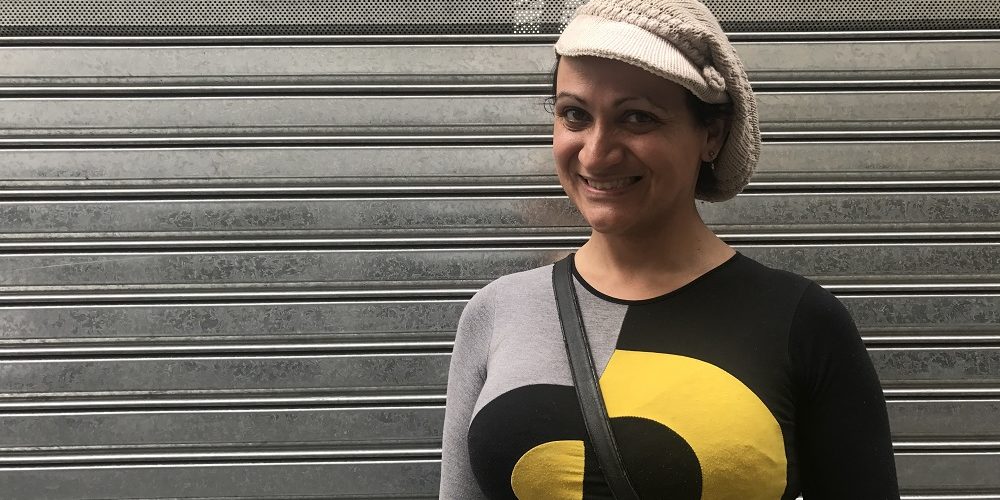
Noemí Echaniz lived on the streets for several years. She was on the verge of becoming homeless again when the Buenos Aires City government cut off her housing subsidy. At 41 years old and with a health problem, this trans woman filed a lawsuit. The judge ordered the city government to provide her with “housing that guarantees her constitutional rights to housing, health, and dignity.”

Share

Born and Lived Under Discrimination: Noemí's biography contains the most diverse forms of discrimination. It began within her own family. Noemí is the daughter of a military officer. She was born during one of Argentina's darkest periods, in the very place where crimes against humanity were perpetrated: the Campo de Mayo hospital, on February 10, 1977. “My birth certificate is being held against its will because it's part of the Campo de Mayo case, related to the appropriation of babies and children that occurred there during the dictatorship. Changing my name was complicated,” she said. At age 10, she began to feel excluded from her family. She lived in Mendoza and in the greater Buenos Aires area. “I spent years on the streets and had to resort to prostitution out of necessity,” she told Presentes.
[READ MORE: To provide reparations to trans and travesti victims of police violence]
With enormous effort, she studied and graduated as an Electromechanical Technician. She only needs one more subject to graduate as a Safety and Hygiene Technician. “I used to be a welder, I earned good money. Then I couldn't find another job. Since I can't find work, I live in uncertainty. I feel trapped.” Noemí lived on the streets for years in the Constitución neighborhood. “A parish group helped me get off the streets. I learned there were subsidies for trans women experiencing homelessness.” Noemí thus obtained a housing subsidy (Decree No. 690/06 of the City Government). A year ago, her health deteriorated due to complications from gender reassignment surgery. When the subsidy expired, she still couldn't work and it wasn't renewed. Accompanied by her lawyer, Pablo De Giovanni (Public Defender's Office of the City), she filed a legal petition explaining her situation. “I went to the Public Defender's Office and we filed a request for an injunction.” “The City government appealed and they took it away from me, after I had surgery,” Noemí said. Her lawyer explained: “The City of Buenos Aires government said she wasn’t entitled to the subsidy because she’s a woman of working age. The court accepted that argument without mentioning her gender identity.”The ruling: housing, health, and dignity
Then came the ruling in Noemí's favor. Judge Furchi considered that "reasons remain that justify her reinstatement within the framework of the assistance provided." He cited a report from the Gender Observatory of the Buenos Aires City Justice System on the difficulties faced by the trans community, "extremely vulnerable due to the structural conditions in which they are forced to live." Furthermore, he confirmed that Noemí "is in a vulnerable situation." The ruling highlighted that the Buenos Aires City Government, by including her in the program, considered her a single person experiencing homelessness. Even though she completed a technical degree, she is unable to obtain the necessary resources due to the social exclusion she suffers as part of the trans community. The judge also emphasized that Noemí's health is delicate due to the surgery she underwent. "She requires care that demands privacy and comfort, and she cannot exert herself. Furthermore, she must undergo psychiatric treatment due to the effects of her hormonal changes."Buenos Aires City: 65% of trans women live in precarious conditions
Noemí's story speaks volumes about the urgent housing crisis in Buenos Aires. In the city, 65% of trans women live in precarious conditions and 5% in critically overcrowded housing, according to the latest Annual Household Survey (EAH) from the city's Ministry of Finance.[READ MORE: A key book to understand how transvestites and trans people live in Buenos Aires]
“Trans women face worse housing conditions. The justice system considers them men of working age. Legal protections are 'successful' if they have an illness or disability. But there is no sensitivity on the part of the justice system regarding the life stories of trans women and their unique needs,” explained Josefina Fernández, head of the Gender and Diversity Program at the Public Defender's Office. “It's not about playing the victim, but we wake up not knowing if we're going to be able to pay the rent, if we're going to have food. We're insulted from the moment we leave our homes until we arrive somewhere. Every single day. It happens to a woman once, but it happens to us every single day, and we don't know if we'll make it home alive,” says Noemí.We are present
We are committed to journalism that delves into the territories and conducts thorough investigations, combined with new technologies and narrative formats. We want the protagonists, their stories, and their struggles to be present.
SUPPORT US

FOLLOW US
Related notes

We are present
This and other stories are not usually on the media agenda. Together we can bring them to light.