

Discrimination in a bowling alley: "This place is not for you"
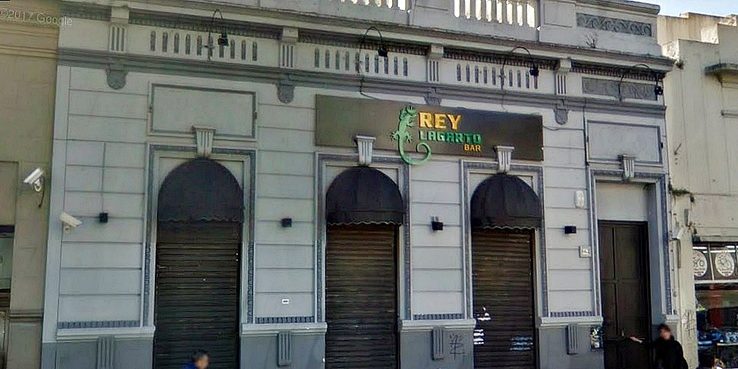
Two social communication students and members of the LGBTI Organizations Front reported being discriminated against because of their sexual orientation at the Rey Lagarto bar in La Plata. They said they were insulted and pushed out onto the street. The bar denied that the expulsion was based on the sexual orientation of those involved.

Share

Report by Gabriela Zampedri: Two social communication students and activists with the LGBTI (transvestite, lesbian, gay, bisexual, and intersex) Organizations Front of La Plata, Berisso, and Ensenada filed a complaint with the National Institute Against Discrimination, Racism, and Xenophobia (INADI) alleging that they were discriminated against because of their sexual orientation at the Rey Lagarto bar in La Plata. They reported being insulted and pushed out onto the street. The bar denied that the expulsion was based “on the sexual orientation of those involved.” On Friday, September 8, Martín (21) and Toni (23) went with friends to the Rey Lagarto bar on 45th Street in downtown La Plata. “We went in and bought a beer. When I went to return the bottle to the bar, I ended up chatting with a guy. We had a drink and kissed a couple of times,” Toni told Presentes . Afterward, he went to the bathroom with his friend Martín. “That’s when we suffered the first attack: the bouncer who was in the bathroom started yelling that we had to leave. We didn’t know if he was talking to us or to everyone there. Then he grabbed our arms tightly and warned us: ‘I told you you had to leave. This place isn’t for you.’ By then he was speaking in a more violent tone.” The kids say they went back to the bar to tell their friends what had happened. “We ordered a beer, and the person working at the bar told me I couldn’t be yelling at him. He started making a big deal out of nothing, like he was telling me I was being disrespectful. That’s when we realized we were surrounded. Four bouncers started insulting us and pushing us toward the street,” Toni recalls. “In a matter of seconds,” Martín says, “one of the security guards grabbed me and took me to the door. Then a bigger one stopped me at the door, shoved me hard, and made me fall to the ground.” When they asked what the problem was, “the bouncer said they’d seen me making out. That it was all good, but if I wanted to do it, I should go to the bar next door, which is supposedly for LGBTQ+ people.” He adds: “A group of kids who were watching what was happening started following the security guard. They were asking him to let us go. When they got to the sidewalk, before he closed the door, the bouncer told us: ‘You fucking faggots, you have to go next door,’” Martín recounted. Presentes contacted the owners of Rey Lagarto Bar. They said they didn’t want to make any statements “regarding what happened.”
[READ MORE: Trans woman accused of discrimination at a nightclub in Mar del Plata]
The complaint before INADI
They chose not to file a report at the police station. “We know that the police are a large, bureaucratic system that only succeeds in revictimizing and stigmatizing the victim and doesn't solve anything.” On Monday, September 11, they filed a complaint with INADI (National Institute Against Discrimination, Xenophobia and Racism).
"Being a faggot is a political identity"
Toni and Martín met while working in the LGBTI Organizations Front. Toni was born in Tres Algarrobos, in the northwest of Buenos Aires province. Four years ago, she moved to La Plata, where she studies Social Communication and works in the Sexual Diversity Department of the Faculty of Journalism and Social Communication at the National University of La Plata. “I define myself as f*** Because it's a political identity. For me, being gay refers to a neoliberal understanding of homosexuality. f*** It's a class issue. Because the f*** He is black, poor, and, above all, because being so is an insult.” Martín also studies communication. He says: “I am homosexual, I am gay, I am proudly f*** And "faggot," two words commonly used to insult us. I am proudly gay and a faggot because as Carlos Jáuregui said, for me Pride is a political response.”[READ MORE: She was banned from entering a bowling alley because her hair wasn't "feminine"]
The statements
“This is not an isolated incident. It is part of a series of discriminatory acts in several cities across the country since this government took office. We are organizing a protest at the entrance of the establishment, which will consist of a kiss-in and the distribution of informational pamphlets to raise awareness of our diverse identities,” stated the LGBTI Organizations Front of La Plata, Berisso, and Ensenada in a statement of condemnation. That same day, on its Facebook page, Bar Lagarto published a statement saying that “the events that occurred on Friday are not based on the sexual orientation of those involved. Rey Lagarto Bar supports the fight for the rights of the LGBTI community and condemns the violence and violation of those rights. These accusations discredit a cultural space in the city that is committed to promoting and respecting the rights of all sexual expressions and identities.” The statement from Rey Lagarto Bar sparked controversy. Among the comments responding to the post were testimonies from people who said they had been subjected to violence by the bar's security staff for various reasons, including sexual orientation and gender. Some, however, supported the statement and said that the bar "breathes freedom" and is a place where the public is treated with respect. Others commented that they had never experienced discrimination and doubted Martín and Toni's version of events. In some cases, they were referred to in a discriminatory manner. "I think the statement doesn't clarify anything; on the contrary, it opened the door to much more discrimination. Many people who go to the bar associate our words with madness, prostitution, or drugs. People were saying that if we were kicked out, it was probably because we were having sex in the bathroom, because we were doing drugs, that we were crazy, or that we had caused some kind of trouble. Our word is always delegitimized by the construction of these narratives that reinforce violence," said Tony.
We are present
We are committed to journalism that delves into the territories and conducts thorough investigations, combined with new technologies and narrative formats. We want the protagonists, their stories, and their struggles to be present.
SUPPORT US

FOLLOW US
Related notes


We are present
This and other stories are not usually on the media agenda. Together we can bring them to light.