

The Chilean “Che of the gays” turns 20
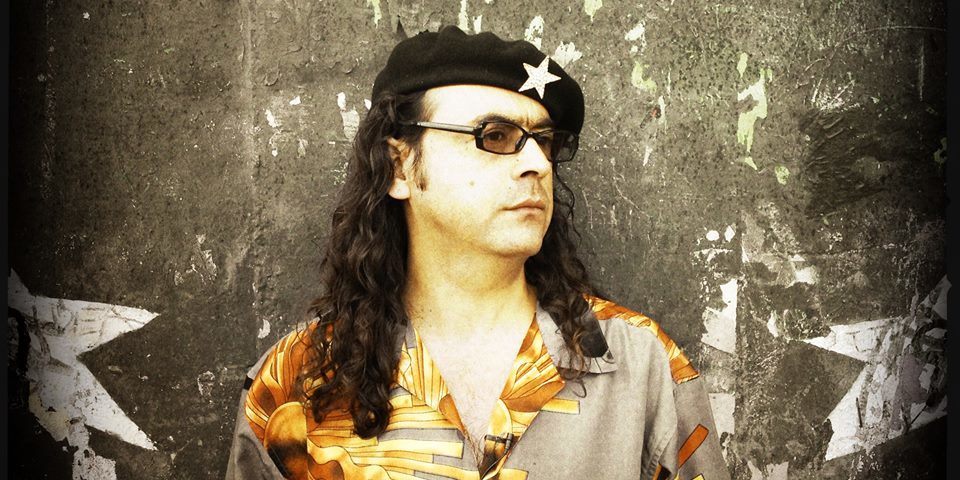
Victor Hugo Robles is a renowned Chilean journalist and a long-time activist for sexual diversity. In 1997, after news broke of the recovery of Che Guevara's body, Robles decided to appropriate that body and imprint upon it his own revolution: a libertarian, dissident, and sexual one. Thus was born a figure who continues to question and challenge the established order through the struggle for human rights.

Share

Victor Hugo Robles is a renowned Chilean journalist and a long-time activist for sexual diversity. In 1997, after news broke of the recovery of Che Guevara's body, Robles decided to appropriate that body and imprint upon it his own revolution: a libertarian, dissident, and sexual one. Thus was born a figure who continues to question and challenge the established order through the struggle for human rights.
1. Who is the 'Che of the Gays' and how did he come to be?
“The Gay Che” is a metaphor; it can be an interpellation, sometimes a contamination, often a provocation. I didn't choose to be a contemporary gay Che; I maintain that Che chose me as a libertarian, emancipated, and indomitable body. “The Gay Che” emerged as a cultural, symbolic, and poetic creation after the discovery of Che's own body. I remember that Che's body lay hidden and missing for 30 years beneath an airstrip in Valle Grande, Bolivia. After years of searching and investigation, a group of Bolivian, Cuban, and Argentinian scientists discovered the grave with his body on June 28, 1997, exactly on International Gay/Lesbian/Trans Pride Day. At that time, I was studying journalism at ARCIS University (the Arcis of Noah, as Pedro Lemebel called it), and the school was covered in Che Guevara graffiti, interventions made in the context of the historic discovery of Che's body in Bolivia. My initial idea was I intervened in those graffiti by painting Che's lips with furious red lipstick, but nobody said anything; perhaps it didn't matter. Faced with that indifference, I decided to transform myself into Che. That happened on September 4, 1997, when I participated in an anti-censorship event organized by theater director Vicente Ruiz. In a crazy and irreverent gesture, provoking the provocateur, I ended up throwing water at the renowned theater and television actress Patricia Rivadeneira, getting myself expelled from the venue, censored in an act against censorship. “The Gay Che” was born in the midst of a ghostly, baptismal, controversial, defiant night.
2- How much of the character is in the person?
“The Gay Che” is not precisely Ernesto Guevara. It is not a linear reading and performance, nor a conventional biography. “The Gay Che” is a form of resistance, a cultural counter-reading. I have often been criticized for Che's homophobia and his responsibility for executing homosexuals in Cuba. I acknowledge that nefarious history, just as I believe that Ernesto Guevara was a prisoner of the sexual prejudices of the political and cultural structures of his time. In that context, I read, interpret, and reinterpret Che, infusing the historical struggles of the Latin American left with new utopian visions and provoking discussions around sexual freedoms and the right to be different. The figure of Che often takes over the person as an activist who seeks to draw attention to the demands of sexual diversity through cultural, aesthetic, and political presentations and interventions.
3- How has your activism evolved and what do you think of the figure of 'Che'?
This September 4th marks the 20th anniversary of the creation of "El Che de los Gays" (The Gay Che), but my activism began long before that in the Historical Movement of Homosexual Liberation (Movilh Histórico), where I created and hosted "Triángulo Abierto" (Open Triangle), the first radio program for gays, lesbians, and trans people in Chile in 1993. From this platform, we engaged with and challenged national and international politics, art, and culture to repeal the punishment for consensual sodomy in our country, a victory finally achieved in 1999. Later, outside of Movilh Histórico, from a more libertarian and independent activism, the gay Che was born. The public interventions of "El Che de los Gays" have sought to intertwine homosexuality with sexual politics and civic activism, problematizing the urgent needs and challenges of postmodern societies, confronting the historical violence of class, gender, and identities, and showcasing bodies scarred by intolerance, discrimination, stigma, and the urgent needs of HIV/AIDS. My counter-cultural reading of Che challenges the neoliberal market's view of meaning, which trivializes Che's revolutionary utopias by profiting from his multinational image. I speak of a Che who remains active in today's social struggles, not as a printed t-shirt or just another symbol to be bought and sold, but a Che embodied in gay, lesbian, and trans liberationist bodies, enjoying, desiring, and fighting for political, sexual, cultural, and identity rights.
4- What is the "diverse Chile" of today like? Does it exist?

5- What does Che want to do in the next 20 years?
The most important thing is to live, breathe, listen, communicate, learn, and survive the HIV/AIDS crisis that affects us now and that has placed Chile as the country with the highest rates of positive cases in Latin America, particularly among young people, many of them from our LGBTI communities. Che Guevara wanted to live to continue fighting, persisting, and insisting on the transformation of capitalist society because, as Ernesto Guevara himself said, “The only fight that is lost is the one that is abandoned.”We are present
We are committed to journalism that delves into the territories and conducts thorough investigations, combined with new technologies and narrative formats. We want the protagonists, their stories, and their struggles to be present.
SUPPORT US

FOLLOW US
Related notes
We are present
This and other stories are not usually on the media agenda. Together we can bring them to light.