

Transvesticide in Tucumán: Ayelén Gómez was found at the Lawn Tennis Club
Ayelén Gómez was murdered. She was found under a grandstand at the Lawn Tennis Club in Tucumán. Her mother identified her body, which was beaten and showed signs of asphyxiation. In 2012, she had filed a police report. Afterward, she moved to Buenos Aires, where she studied at the Mocha Celis Transgender Popular High School. She returned to her home province last year.

Share

Ayelén Gómez was murdered. She was found under a bleacher at the Lawn Tennis Club in Tucumán. Her mother identified her body, which was beaten and showed signs of asphyxiation. In 2012, she had filed a police report. Afterward, she moved to Buenos Aires, where she studied at the Mocha Celis Trans Popular High School. She returned to her home province last year. By María Eugenia Ludueña and Ana Fornaro. Ayelén Gómez was 31 years old. Her body was found yesterday under the bleachers at the Lawn Tennis Club in Tucumán, with bruises and signs of asphyxiation. She had returned to her province last year to reunite with her mother, with whom she lived, after spending several years in Buenos Aires. In Buenos Aires, trans and travesti activists are calling for people to join the Mothers of Plaza de Mayo march on Thursday, August 17, starting at 3:30 p.m. Afterward, they will hold a vigil demanding justice for Ayelén . On Wednesday, August 16, at 10:00 a.m. at the Casa de Tucumán in Buenos Aires (Suipacha 140), two employees of the club, located in Parque 9 de Julio in the provincial capital, found her under the south grandstand of the Lawn Tennis Club. They were hanging advertising posters before a rugby match when they discovered the body. Ayelén was lying naked. The local press initially referred as "a person" and later as "a trans woman." After several hours and following identification by her mother, it was learned that the victim was Ayelén Gómez, a trans woman from Ranchillos, a town 24 kilometers from San Miguel de Tucumán. The police report, which Presentes obtained, does not respect her gender identity. According to this report, the police were notified, and then the prosecutor Adriana Reinoso Cuello, acting head of Prosecutor's Office X, was contacted. The prosecutor took charge of the investigation and went to the site where the body was found.
He had filed a complaint against the Tucumán police.
Ayelén had returned to her native Tucumán last year after spending some time in Buenos Aires. In Tucumán, on April 19, 2012, while returning from a nightclub in a taxi, she and the driver were arrested by the police. Both were taken to the second police station in San Miguel. Ayelén reported that while she was detained in inhumane conditions, one police officer raped her and another forced her to perform oral sex. They also threatened her ("Faggot, when I see you in the street I'm going to beat you up") and demanded a bribe to resolve her situation. Ayelén reported these events as soon as she was released.[READ MORE: Tucumán, without justice for Celeste]
“I had to do it so it wouldn’t happen to other women. Why should I be afraid to go out on the street if I didn’t do anything wrong?” Her lawyer, Carlos Garmendia, said that these situations were not exceptional: “It’s constant. I frequently hear about abuses by a sector of the police against the most vulnerable people in society,” Garmendia told local media at the time."The State did nothing"
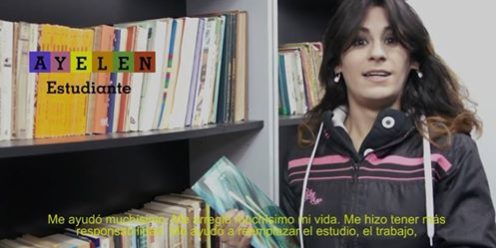
Upon arriving in Buenos Aires, he contacted the Trans Mocha Celis High School And there she was able to resume her studies for a year, despite still being homeless and working as a prostitute. “She came from a very difficult situation, like almost all of her classmates. Prostitution, police harassment. Here in Buenos Aires, she lived in a tent in the Palermo Woods, and they kept moving her. The government did nothing. She was very excited to get to school, she made a lot of effort, she was very determined to finish her studies. And she was very cheerful and supportive of her classmates,” she tells us. Present Francisco Quiñones, director of the Mocha Celis Trans High School. Although she was able to study and find shelter at Mocha Celis between 2014 and 2015, her situation of vulnerability—housing and employment—remained unresolved. Her friends and classmates helped her return to Tucumán, reunite with her mother, and continue her studies at the Puertas Abiert Trans Educational Center.ace (Cetrans). “She said she wanted to go back to her mother, whom she hadn't seen for a long time, and she was having a very hard time here. The idea was for her to continue studying at Cetrans, but she didn't have time,” Quiñones adds.“To demand justice”
Mahia Moyano had known Ayelén for thirteen years. The first time she saw her was at a nightclub in Tucumán. She says she was struck by her beauty. Years later, she ran into her again in Buenos Aires, at the Mocha Celis nightclub, but didn't recognize her. “She had been the most beautiful, but then she suffered a lot of violence, and the body feels it. I was very shocked when she told me everything that had happened to her. That's when we rekindled our friendship. Later, I went back to Tucumán. I knew she had also returned, but we lost touch. I think she was living with her mother,” Mahia, who studies and volunteers at Cetrans, told Presentes. “Here in Tucumán, there's a trafficking ring, and everyone knows it. I ask my fellow feminists to also stand up for trans women. You don't have to be trans to fight for our rights, because they are human rights. Now we're looking into organizing a demonstration to demand justice,” Mahia added. In Buenos Aires, the gathering is scheduled for Wednesday, August 14th. "For Ayelén Gomez, who fills our souls with fury, because she is all of us, and it is inevitable that each death of a comrade slowly kills us ALL. That is why we come together, we condemn, we shout, we cry, but with a clear understanding of who is responsible, and it is for them that we march."“Another social transvesticide”
When Francisco Quiñones speaks about Ayelén's murder, he emphasizes the neglect and violence she suffered at the hands of the state. “We speak of social transvesticideBecause it is this lifelong violence, these deprivations, this violation of rights that culminates in these violent deaths. Ayelén had not been able to change her gender marker on her ID. “This means she will be buried as someone else, that the justice system will not respect her gender identity. The violence will continue after her death,” Quiñones adds.[READ MORE: “Transvesticide, the final link in the chain of daily violence against transvestites and trans people”]
]]>We are present
We are committed to journalism that delves into the territories and conducts thorough investigations, combined with new technologies and narrative formats. We want the protagonists, their stories, and their struggles to be present.
SUPPORT US

FOLLOW US
Related notes


We are present
This and other stories are not usually on the media agenda. Together we can bring them to light.