

Kary Chamorro, the Chilean trans activist who creates community
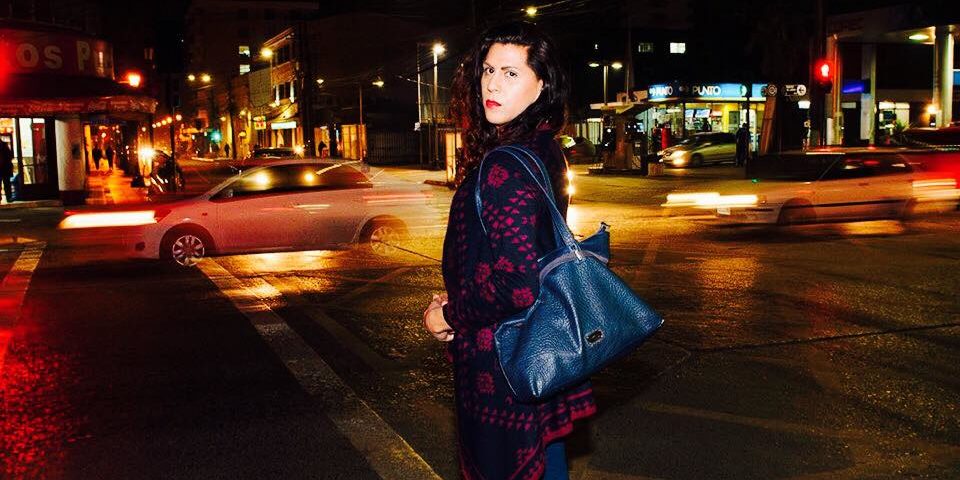
She is 35 years old and a spokesperson for Transgender Women for Change, one of the first trans and travesti organizations in the country, located in the city of Talca (central Chile). An activist, she conducts workshops on HIV/AIDS and the rights of the trans population. She is the first trans public servant hired by the government nationwide, working in the Regional Ministerial Secretariat (Seremi) of the Maule Region.

Share

She is 35 years old and a spokesperson for Transgender Women for Change, one of the first trans and travesti organizations in the country, located in the city of Talca (central Chile). An activist, she conducts workshops on HIV/AIDS and the rights of the trans population. She is the first trans public servant hired by the government nationwide, working in the Regional Ministerial Secretariat (Seremi) of the Maule Region. By Niki Raveau*
– When was the organization Transgender for Change created and what need arose from it?
-Transgéneras por el Cambio was legally created on January 8, 2002. On that date, legal personality was obtained, although we had already been meeting since 1997 and 1998, due to the violation and violence we experienced from the police in Talca.– What work does Transgéneras por el Cambio do?
Our work is to educate on trans issues and promote the human rights of trans people. We participate in various government forums on sexuality issues, including those related to prevention and treatment. We want comprehensive healthcare, to be treated for all the problems we may have. For this, the Talca Hospital needs professionals and specialists who understand trans issues; this is a long-overdue requirement. It is also very important that in clinics and hospitals we are called by our chosen names; this requires education and staff who respect us.– You are the first trans public official that the Government has hired directly at the national level.
– I started as a civil servant, which has opened doors for me to work and develop my activism. The quality of life for a trans woman changes considerably when she has a salary and the security of being able to plan for the future, both materially and emotionally, for us and our families, who painfully witness us having to work on the streets with all that entails. Little by little, opportunities have opened up for me as a trans spokesperson and also as a public servant, allowing me to raise awareness and educate on issues of diversity. I've been given the opportunity to speak directly in that space, as a trans voice, giving talks and advocating for public services.– Moving on to another topic, you were telling me that several trans women live as neighbors in a village in Talca.
– After pursuing that dream for a long time, 12 of us managed to obtain housing in Villa Parque 4 in Talca, which allows us to have a place to come and continue fighting for more.– Did they organize themselves to obtain the homes together?
– That's right. Tatiana, the founder, had already paved the way years before, when we were discriminated against by an NGO in Talca, because people started saying we were going to create a red-light district when they saw our colleagues arrive at the meetings. We were discouraged by that reaction, that discrimination, and we kind of dropped the idea, we abandoned the dream of owning our own home.– What year did this happen?
– Around 2007. But, after the earthquake it was like a bonus to get the houses, because we lived in a red neighborhood, where the buildings were made of adobe, and everything collapsed on February 27, 2010 after the earthquake.– What happened next regarding the housing issue? Did they reorganize?
– After the earthquake, Soraya Sánchez, president of Transgéneras por el Cambio (Transgender Women for Change), made contact with the CRATE Foundation, a Catholic foundation, which took us in. This was thanks to the person leading the registration process for the shelters, whose efforts paid off. We are still in contact with that person.– In the absence of better public policies… How did they run that second time?
– We applied as a couple. I applied with a trans friend because we were seen as a family: since our legal names aren't recognized, we're seen as "single men." Other girls applied with their mothers or grandmothers, or they found a guy who would lend his ID to apply. Twelve of us applied, and all twelve of us got a house. I've had my house for three years now.– Does a community form among trans neighbors?
– I live next door to one of them, and two more live across the street, because they had the option of choosing each other as neighbors. So, obviously, to avoid any prejudice or gossip, we chose each other as friends, because we've known each other for years, since I was a sex worker. We look out for each other; if one of us goes out, she lets the other know, things like that.– Feminism in practice.
We look out for each other, we protect each other; that family bond never fades. Even though we might occasionally have disagreements or disagreements, the spirit of supporting each other as colleagues never dies. I believe it never will.– What is the relationship like with the neighbors?
– They respect us a lot, nobody calls us faggots or anything like that, not even the little kids, they're very aware of it. Obviously, if the parents are aware, they can pass this on to the children, so I don't feel like I'm going to enter the neighborhood with fear. I walk happily and freely through the neighborhood, nobody says anything to me, the neighbors approach me, they talk to us, the neighbors too, they say hello… And they keep an eye on my house, because they know that with the activism I travel a lot and I don't spend much time at home.– Have you held workshops or meetings with neighbors?
– We owe it to them, because I approached the president of the neighborhood council of the village to do workshops on gender violence, which obviously women are afraid to report, and it would be very important for me as a trans woman that this be made visible, so that the aggressors are aware that we are working, that there are networks so that women feel safe and confident to deal with the problems.– When you talk about women, do you mean all types of women?
– To all kinds of women. At my house, some neighbors come by to pick up condoms. They know we give talks about HIV/AIDS and sexually transmitted disease prevention, so I always carry condoms, and those who know about them come to my house to get some. I take advantage of those moments to offer counseling.– What difference do you see in the possibilities of a regional space compared to those of the capital?
– I think it largely stems from the fact that all the authorities are based in Santiago. There isn't much access to the politicians. Only once a month do the authorities come down to the region—senators and representatives—so that's where we need to do our political advocacy, to be there when these people come to the region.– What project did Transgéneras por el Cambio submit through Fondo Alquimia?
– We will be holding educational talks in Talca about violence against women, especially trans women. Trans women are also victims of sexism and patriarchy. We will also be training our colleagues to become facilitators, empowering them to overcome violence in both social and institutional settings. This will help them learn to recognize these forms of violence and no longer remain silent about these violations. *Researcher at Transitar and activist ]]>We are present
We are committed to journalism that delves into the territories and conducts thorough investigations, combined with new technologies and narrative formats. We want the protagonists, their stories, and their struggles to be present.
SUPPORT US

FOLLOW US
Related notes
We are present
This and other stories are not usually on the media agenda. Together we can bring them to light.