

LGBT memories persecuted and silenced under dictatorship
Using fictional names, real details, and settings, Fichados: Crónicas de amores clandestinos (Spotted: Chronicles of Clandestine Loves) recovers silenced stories and recounts the brutal persecution of the Buenos Aires police intelligence services against sexual diversity. It raises further debates about LGBT memory and repression.

Share

By María Mansilla.
Photos: by the author, Manuela Pez/ Cover image: Helen Zout and Cristian Prieto. Samples: L*s Otr*s, Provincial Commission for Memory .
Cristian Prieto is a journalist and, in 2017, when this article was written, he worked for the Provincial Commission for Memory . This organization, created in 2000, was assigned to safeguard the files of the Intelligence Division of the Buenos Aires Provincial Police (DIPBA), which operated between 1957 and 1998. Although these materials have not been fully declassified and digitized in these 17 years due to their volume, they have served as evidence to demonstrate—among many other things—that the last dictatorship spied on and persecuted people not only for their student, social, political, and union activities, but also for their private lives and sexual orientation.
“I would find situations, characters, spaces, and from there, I’d get carried away,” says Prieto. Because of this wealth of material, his activism within the LGBT community, and also influenced by the revelations he found in * Fiestas, baños y exilios. Los gays porteños en la última dictadura* (Sudamericana, 2001), by Alejandro Modarelli and Flavio Rapisardi, he wanted to delve deeper into the subject. *Fichados, Crónicas de amores clandestinos * (Editorial Pixel, Perfectos atentados series) is his undergraduate thesis in Social Communication, which he completed at the National University of La Plata (UNLP).

His research sought to explore the police and institutional narrative that claimed gays, lesbians, and trans people had not been persecuted. To his surprise—Prieto writes in the prologue—he found pages upon pages linking sexual orientation with morality.
[READ MORE: “The LGBTI struggle is also part of Memory, Truth and Justice”]
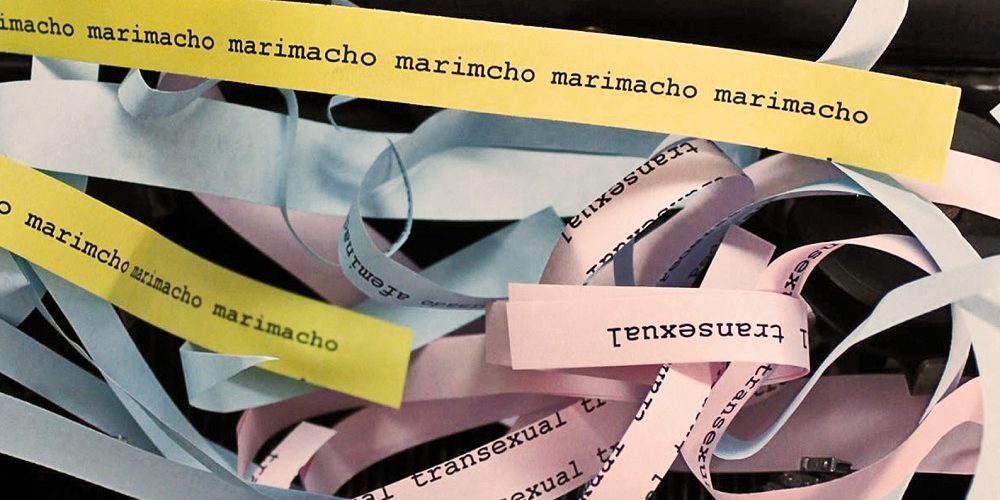
"We are labeled sexually immoral, pedophiles, homosexuals, effeminate, haughty, transsexuals, and butch women. Persecution, espionage, and surveillance were also verbs used to target 'crazy' people throughout the entire period of intelligence service existence (1957-1998). Clearly, we were not the primary target of the last military dictatorship's extermination efforts, but we were spied on from the very beginning to the very end of the intelligence service's activity . Under democratic governments, under dictatorships, with or without edicts penalizing us: solely to straighten us out or to prevent us from being the rotten fruit that would invite others to rot with us."
Fantasy names, real-life settings
"Fichados" consists of three fictionalized stories that explore the brutality of state terrorism against people because of their sexual orientation. The names are fictional, says Prieto. But the La Plata settings, the atmosphere, the mannerisms, the shadows, are not. One of these stories takes place in the 1960s, before the enactment of the contravention edict. Another, during the last military dictatorship. And the third in the 1980s.
At times, "Fichados" is breathtaking, like any good love story. Even more so when it's about love interrupted by informers, police, and neighbors acting as spies. Cristian Prieto's commentary cools the mood, pulls readers out of their idyll, and reminds them that this is non-fiction when the police transcripts appear.

– Fichados intersperses love stories with direct, unequivocal quotes from police files. Why did you choose this style that combines narrative with denunciation?
When we were debating how to build an LGBT collective memory, we wondered if we should follow the same path as traditional human rights organizations. But in our cases, who would speak out for the trans women raped in clandestine detention centers? Or for the gay men arrested by police edicts? No one. Because there was always so much shame about having these sons and daughters. We also wouldn't have had almost any sources. Nor any kind of support from the State. That's why we understood that the path had to go hand in hand with art, with literature. Just as we've also built diversity through humor.
Unresolved debates and disappearances that do not cease
Prieto says the sexual dissidence movement owes itself "more interesting" debates. And that one of them involves "deconstructing the Nunca Más report." "
One piece of evidence we have is the interview Carlos Jáuregui conducted with Rabbi Marshall Meyer, who was part of the National Commission on the Disappearance of Persons (CONADEP). The rabbi tells him that there were 400 missing homosexuals, but that due to pressure from the Church, which was part of CONADEP, it was decided not to publish that section. We also think that many of those cases are included in other chapters of Nunca Más. Because: how can we report that there were 400, if there is an impossibility not only of finding sources but also of obtaining testimonies? How can we know if someone was disappeared because of an edict or because of their political activism? On this point, we owe ourselves a more interesting discussion. The issue remains relevant because trans women continue to disappear, and hate crimes are commonplace."
Confessional: "I don't believe in coming out of the closet"
In his research, Prieto also found himself mentioned in the Buenos Aires Provincial Police intelligence files. He was born in Bahía Blanca, where he spent his childhood and adolescence. It wasn't until he was 16 that he learned his Chilean parents hadn't come to that city seeking a better life, but as exiles. His father had been detained in the National Stadium of Chile. After finishing high school, he moved to La Plata to study Communication at the Faculty of Journalism.
"I never sat my parents down and told them I was gay. For me, the obvious isn't something you ask about. I did tell them at some point that I was moving in with Leo, for example, and that maybe if they called, he'd answer. I tried to keep my sexuality as just that, and not a confessional. And for me, coming from a Salesian school and being involved in Christian activism since adolescence, everything felt like a confessional. I don't believe in this whole 'coming out of the closet' thing; I don't agree with the term. There's a compulsive feeling that says you absolutely have to come out," he says.
, August 4th at the Centro Cultural de la Cooperación (Buenos Aires). It will soon be a free book and available for anyone to download.
We are present
We are committed to journalism that delves into the territories and conducts thorough investigations, combined with new technologies and narrative formats. We want the protagonists, their stories, and their struggles to be present.
SUPPORT US

FOLLOW US
Related notes
We are present
This and other stories are not usually on the media agenda. Together we can bring them to light.