

Transvesticide in Rosario: “Pamela Tabares always asked for help”
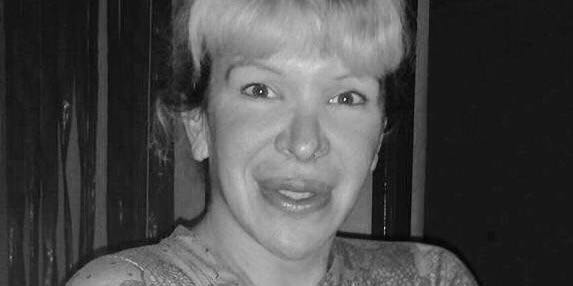
Pamela Tabares was 35 years old and lived in extremely vulnerable conditions. On Tuesday night, she went to work in the red-light district and never returned: she was murdered with at least five gunshots. The Prosecutor's Office is investigating the motive. It is known that she had unsuccessfully sought state assistance. Friends and activists remember her.

Share

Pamela Tabares was 35 years old and lived in extremely vulnerable conditions. On Tuesday night, she went to work in the red-light district and never returned: she was murdered with at least five gunshots. The Prosecutor's Office is investigating the motive. It is known that she had unsuccessfully sought state assistance. Friends and activists remember her. By Laura Hintze, from Rosario. Pamela Tabares was found murdered yesterday , with at least five gunshot wounds, in a rural area of Rosario. She had spent the last two weeks at the home of her friend J, who chose to remain anonymous for this article. It wasn't the first time they had lived together. The two had known each other since they were 19, since they began frequenting the red-light district of Rosario, their first boarding houses, and their first teenage dreams. Last Tuesday, Pamela and J went out around 9 p.m. to work for a while, to earn the few pesos they didn't have. “She came out all dressed up, showered, and made up. We were like two showgirls. We got ready listening to music, Despacito of course, and we were saying we were going on Dancing with the Stars,” her friend recalled, a few hours later, laughing and crying. When she returned, Pamela was gone. “I waited for her for a while, but then I went back home. I figured she was out on tour, with some guy.” J found out from the news that her friend had been murdered.
Stories of abandonment
Pamela's life was no different from the stories that seem destined for a trans woman. She was 35 years old, almost the average lifespan for the trans population, and she carried the weight of a history of marginalization. Her friends and the women who knew her through activism agreed: Pamela Tabares lived in a state of extreme vulnerability, never able to find stable employment, and never receiving the government assistance she repeatedly sought from the municipality. The stories of her life are tales of abandonment, of moving back and forth to other cities, of violent relationships, and above all, of extreme poverty. “She was a good person. She wasn't bad at all, she never went out to hurt anyone. But that's the life of trans women; we're led to this kind of life,” recalled Karla Ojeda, a long-time trans activist from Rosario. Karla met Pamela in the late 1990s, when members of the Arco Iris Collective—the first LGBTQ+ collective in the city—would go out into the workplaces and invite women to meetings to discuss the issues they faced. Pamela participated in several of these meetings. “What I feel now, years later, is that we’re still in the same situation. We’re completely unprotected. We can be killed simply for being trans,” Ojeda emphasized.“We had the same dreams”
J and Pamela met when they were 19. “We became friends on the street, and then she moved into my boarding house. We ate together, went shopping. We were happy. We both had the same dreams: a house, a job. We also wanted to travel to Spain; it was like a goal. But life throws curveballs, and neither of us made it,” J told PresentAbout two weeks ago, J found Pamela on the street. She had been evicted from a boarding house and had nowhere to live. “I helped her with what I could, a roof over her head and food. She was suffering a lot financially, because of her damn addiction and having to go out to work. She was really down.” In their final days, J and Pamela continued to share dreams: a house, a job, any help they could get. “It’s not that we’re lazy. It’s that we’ve been like this for almost forty years,” J summarized. Michelle Mendoza, a leader in the trans community in Rosario, met Pamela through her activism. “We always ran into her in the area, and she was always asking for help, shouting for help. Once we met up, and she told me: ‘I’m almost 40 years old, and I still haven’t started to live,’” Mendoza emphasized. The news of Pamela’s murder prompted many activists and friends to denounce the situation on social media, highlighting that the trans woman had gone to more than one government agency seeking help. The response, Michelle maintained, was subsidies or courses that ultimately amounted to nothing. “If we've reached this point, it's due to the absence of the State,” she emphasized. Tomorrow there will be a demonstration in front of the Prosecutor's Office at 10:00 AM at Montevideo 2200.We are present
We are committed to journalism that delves into the territories and conducts thorough investigations, combined with new technologies and narrative formats. We want the protagonists, their stories, and their struggles to be present.
SUPPORT US

FOLLOW US
Related notes


We are present
This and other stories are not usually on the media agenda. Together we can bring them to light.
1 Comment