

Being trans and living on the street: a reality that multiplies violence
Yahajaira Falcón is a human rights activist and, for the past two years, an official in the Public Defender's Office of the City of Buenos Aires. She tells us about her experience holding a public office, analyzes the reality of trans and travesti people at risk of homelessness, and how the community is reorganizing itself in the face of increased police repression.


Share

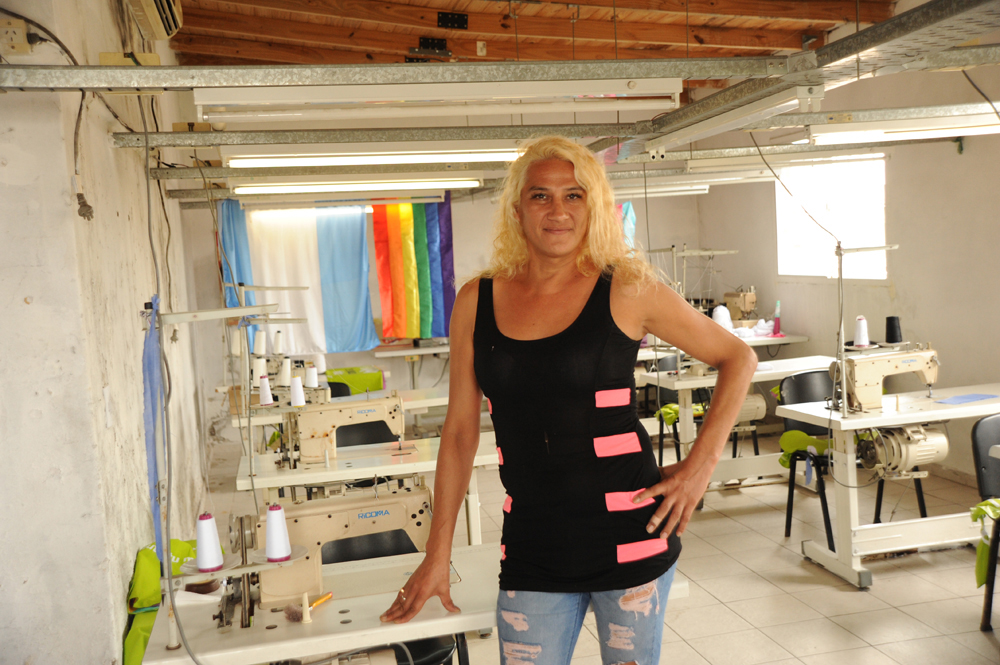
Yahajaira Falcón is a human rights activist and, for the past two years, an official with the Public Defender's Office of the City of Buenos Aires. She tells us about her experience holding public office, analyzes the reality of trans and travesti people at risk of homelessness, and how the community is regrouping in the face of increased police repression. By María Mansilla. Photos: Ariel Gutraich . Yhajaira Falcón says that she doesn't feel right if she's not out on the streets. This activist drive gives even more meaning to her work as an official with the Public Defender's Office of the City of Buenos Aires , an agency that seeks to facilitate access to justice for the most vulnerable members of the population. Together with her teammates, they receive each case—processing ID cards, requesting housing subsidies, reports of violence—they look at each other and know what diagnosis each need warrants, how to intervene, and the responsibility and redress that comes with acting on behalf of the State. They listen to cases that give substance to complaints like those filed with CEDAW, regarding the situation of trans and travesti people in Argentina, and with the UN Committee Against Torture, which calls police abuses against this group torture. She is Venezuelan and has lived in Argentina since 2004. She was one of the 431 collaborators who carried out the first People's Census of Homeless People , a project undertaken by the organization where she works in conjunction with some 40 social organizations.

– According to the Census, 1% of homeless people are transvestites and trans people.
– I can assure you there are more. I see it. I walk around the city every day because I'm an activist. The days I don't walk, I don't feel well, I'm uncomfortable with myself. Right now, the women who were living in the Santa Cruz Hotel are out on the street: the police threw 50 bags of cocaine at them. Where are they going to go? Today it seems like all trans women are drug dealers because, since it's not a minor offense, the police fabricate charges to get us off the streets. In all these years I've been here, I've been arrested three times. I've been so dangerous to the police that they've framed me and sent me to the maximum-security prison in Ezeiza. I'm a dangerous trans woman for the State because what suits them is for us not to fight for our rights. They say that if there are people on the streets, it's because they want to be. Let's not be ignorant… Hotels can charge $220 a day and they don't have hot water, they don't have electricity, and that's how our sisters have to live. If you go to a real estate agency, they won't rent to you either because you don't have pay stubs or a guarantee.“I DISCUSS WITH THE POLICE IN LEGAL TERMS”
Yhajaira Falcón keeps a paper backup: three or four notebooks and journals with worn pages from constant urgent browsing. There she treasures the phone numbers of her trans network. She has good eyesight: from her office, she can spot who's hesitating to come in. Then she approaches the glass door, opens it, and invites them in. "Different people come here every day, a new problem arises," she says. Falcón always keeps this backup plan in her purse because not all inquiries come during office hours. It's not that she's constantly losing her cell phone; it's just that the police often steal it. And she's never been one to run away, nor has she ever had any reason to. – The popular census also confirmed that the violence that is most exacerbated in street situations is institutional, exercised by the security forces. – I know all the laws of this country; any law you mention, I know by heart. And I argue with the police using legal terms. They hate it when I argue with them… They insult me, they say You miserable migrant who comes here to eat my country's food. And I tell them, “I’m not eating anything, article such-and-such states that I have the same rights as you.” And I record it with my cell phone and send it to people, and by the time they manage to take my phone, I’ve already sent everything. They do it to keep the 2.50 you managed to scrape together that night. So you have to endure the cold, the mistreatment, sleep with someone you don’t like and who doesn’t make you feel anything, just to pay a fee to a police officer. It’s physical and psychological abuse, because don’t think they just try to scare you; when the women don’t comply, they beat the crap out of them.
“WE RUN WHERE NEEDED”
She began her activism in her home country of Venezuela. With her comrades from the Transgender organization, she would meet in Plaza Miranda in Caracas to discuss how to survive. During those years, she was shot 13 times ("Being shot at was already part of my life. Every now and then I'd say, 'How strange that I haven't been shot at this month!'"). She came to Argentina in 2004 on a scholarship to participate in a human rights workshop and ended up staying. She continued her activism—she was involved with Queer Peronists and organizations advocating for legal, safe, and free abortion. She was able to stop working as a prostitute because she felt that was it, that she never liked it, that it was a "completely burned-out" phase. She is statuesque, charming, feisty, a fighter, resourceful, beautiful, and resolute. She handles each case with deep understanding, as if it were the only one. "Some of my comrades even come to ask for a copy of the National Constitution; I underline the articles they need to know." For the past two years, Yhajaira has occupied this desk, which has the pride flag behind it and public service forms on top, a magnet from a neighborhood bakery (Constitución), her pack of Viceroy cigarettes, and a party favor magic wand that she uses at the end of each procedure as a sign of good luck to the windmills.– You conduct self-care workshops. What tools do you share?
– Together with AMMAR (Association of Sex Workers of Argentina), we set up a network with numbers to call in emergencies, and we also rush to wherever needed. We have organizations like Diversity in Action, the Gender Department of this Ministry, and our colleague who always lends a hand is Luis D'Elia. Any time, anywhere, I'll go. Many police officers still don't know I work here. They say all sorts of things to me, and when I show them my ID, they start calling me "Miss."– Are you going to the National Women's Meeting in Chaco? Do you think it's a good event?
Yes, we go whenever we can. This year I don't know how we'll manage to afford the trip, since most of my friends can barely afford a room and decent food. If it's nearby, yes, many of us go.
– Is there a Mercosur for the LGBT community, despite the different realities?
Yes, they approach Argentina, they consult us, because we have pioneering experiences here. Even so, the situation is complicated, and it's not just us who are having our rights taken away. Something common throughout the region is that many organizations look out for their own interests and have very little interest in the collective. It's that simple.– You work in a public institution, so you have access to state social security. Do you receive the care guaranteed by the Gender Identity Law?
– Ha! I get my medical care in hospitals. With public health insurance, it's difficult; many people struggle to understand why I'm sitting here. In their minds, this position should belong to one of them. But I'm sure they wouldn't know what to do. It's a position with a lot of nightgowns for Petra because to be here you have to have lived through this cruel reality that we all live through, because it's not easy at all. We've always been mistreated. Even to study you have to go to Travestilandia, because they set up schools for trans people. Being a trans woman isn't easy at all, but I'm happy to be one, and if they told me I could be reborn, I want to be exactly the same person I am today.We are present
We are committed to journalism that delves into the territories and conducts thorough investigations, combined with new technologies and narrative formats. We want the protagonists, their stories, and their struggles to be present.
SUPPORT US

FOLLOW US
Related notes
We are present
This and other stories are not usually on the media agenda. Together we can bring them to light.