

The struggle of a lesbian couple who managed to register their baby as the child of two mothers
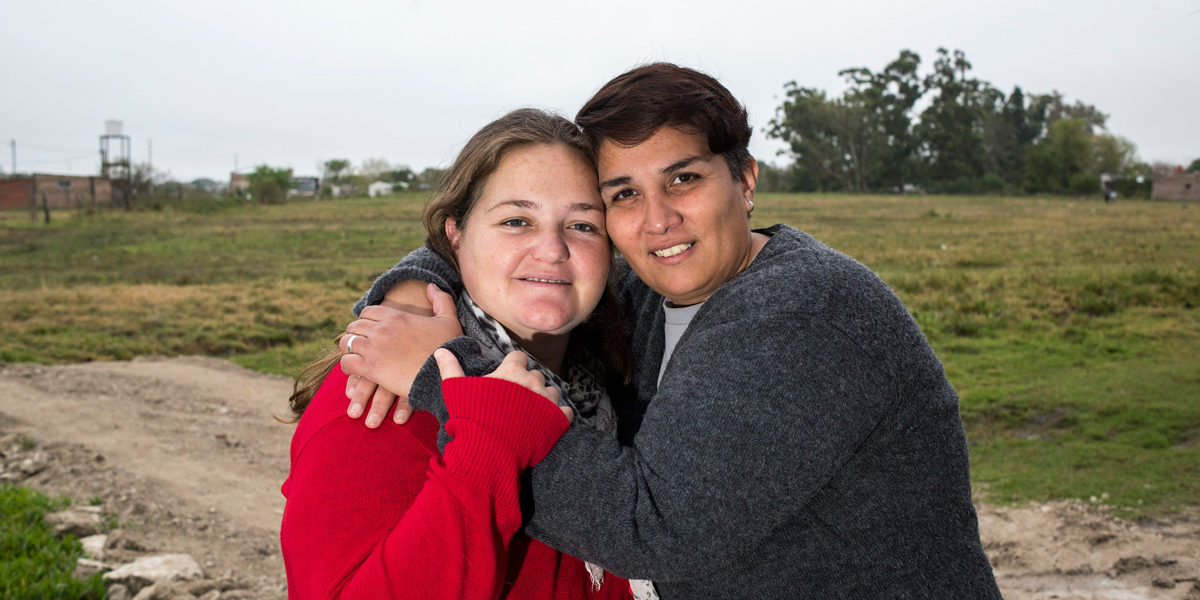
Agustina Brunetto and Valeria Tavecchio live in Santa Elena, Entre Ríos. They wanted to be mothers, found a sperm donor, and underwent insemination. Agustina became pregnant, and on June 27, Ciro was born. When they went to register him at the civil registry with both their surnames, they were unable to. They were required to be married or have a document proving assisted reproduction. "We want to register our son properly so we can give him his identity," said one of the mothers. Abosex maintains that co-maternity "is the law in Argentina."

Share

Agustina Brunetto and Valeria Tavecchio wanted to be mothers and found a sperm donor. Agustina became pregnant through insemination, and on June 27th, Ciro was born. When they went to register him at the civil registry with both their last names, they couldn't. They were required to be married or have a document proving assisted reproduction. After a struggle that lasted months, they managed to register their baby as the son of two mothers. "It's a joy, a source of pride that many more couples will come forward and that this won't happen again," said Valeria.
[Note updated on 09.10.2017]
By GAR
Photos: Pablo Merlo Agustina Brunetto (31 years old, teacher) and Valeria Tavecchio (42 years old, installs damp-proofing in houses) live in Santa Elena, Entre Ríos province. They have been a couple for four years and wanted to be mothers. Last October, they found a sperm donor, and Agustina became pregnant with Ciro, who was born on June 27th at San Roque Hospital in Paraná, 150 kilometers from their hometown. Hours after giving birth, the women went to the civil registry office located within the hospital to register him with both their last names: they were unable to. They were required to be married or have informed consent from a healthcare facility that certified the assisted reproduction. Agustina and Valeria met neither of these requirements. The couple had to register Ciro with Agustina's last name in order to leave the hospital after being discharged. From that moment on, they began the process of having their co-maternity recognized on equal terms. On October 9th, they received the best news: they were called by the civil registry to pick up Ciro's birth certificate, where he is listed as the son of both of them. “It’s a joy, a source of pride that many more couples are coming forward and that this won’t happen again,” Valeria told Presentes. “The option they offered us was adoption, but that doesn’t reflect our son’s identity. I didn’t come into Ciro’s life when he was already Agustina’s son; I came into his life because we both carried him as a surrogate, as part of our shared project. Ciro has two mothers,” Valeria told Presentes . While in her third month of pregnancy, Valeria recounted that they went to the Santa Elena civil registry office to inquire about registering the baby. There, an employee assured them that they didn’t need to be married to register him with both their last names. They left feeling relieved.
"It's not fair that a father can recognize a child at his own discretion and a mother cannot."
The team of Lawyers for Sexual Rights (Abosex), which is advising the lesbian couple, believes that the procreational wishes of mothers must be respected, as established by the Civil and Commercial Code of the Nation.Co-motherhood is the law in Argentina, and it is unheard of that it is not respected.especially if they did not obtain correct information when requesting it. It is also unacceptable that, because of marriage after the birth of the baby, the legal treatment should be different; that is discriminatory. Failure to grant their request would create unequal treatment between unmarried couples of different sexes and unmarried couples of the same sex. It is unjust that a father can legally recognize a child at will, while in this case a mother cannot do the same. explained from Abosex to Present. The Director General of the Civil Registry and Capacity of Persons of Entre Ríos, Vanesa Visconti, explained the agency's decision to Presentes: “The child was registered with the surname of the mother who gave birth to him for purely legal reasons, not due to discrimination.” The current Civil and Commercial Code of the Nation establishes three legal relationships regarding kinship: adoption, biological parentage, and assisted reproductive technology. The argument of the Civil Registry
“When assisted reproductive technology is used, same-sex or heterosexual couples must provide free, prior, and informed consent, which the healthcare facility grants each time a treatment is performed. Therefore, without this consent, we cannot register the child with two mothers, two fathers, or a mother and a father,” Visconti said. She added, “Furthermore, the law also establishes that every child born within a marriage is presumed to be the child of the marriage. The answer is there. Parents always have the obligation to legally establish the child's biological identity. However, if the child is presumed to be born within a heterosexual or same-sex marriage, the Civil Registry cannot require free, prior, and informed consent. In this case, the women are not married.”
The argument of the Civil Registry
“When assisted reproductive technology is used, same-sex or heterosexual couples must provide free, prior, and informed consent, which the healthcare facility grants each time a treatment is performed. Therefore, without this consent, we cannot register the child with two mothers, two fathers, or a mother and a father,” Visconti said. She added, “Furthermore, the law also establishes that every child born within a marriage is presumed to be the child of the marriage. The answer is there. Parents always have the obligation to legally establish the child's biological identity. However, if the child is presumed to be born within a heterosexual or same-sex marriage, the Civil Registry cannot require free, prior, and informed consent. In this case, the women are not married.”
“The rights of children and mothers are affected”
“Today we have in this world a child with only one parent, as if his birth were a consequence of the love and desire of only one person, and it is not so. Two mothers dreamed, consented, planned, and brought this life project to fruition, and above all, it is unjust for this baby to be deprived of the rights that come with the legal registration of his other parentage. Ultimately, The rights of children and mothers are being violated, and the equal mandate of our Constitution and laws is not being respected. There are no first-class and second-class families, there are only families.” Abosex's lawyers said. They added: “As you can see, for many reasons we can conclude that an administrative resolution of this case is the legal way to resolve it. This family cannot be required to continue dedicating time and resources and enduring anguish; a prompt solution is imperative, and that is what we are proposing.” The desire to be mothers
Valeria and Agustina met in October 2013. At the time, Valeria lived in Venado Tuerto and was studying nursing. Agustina was studying to become a primary school teacher and lived with her mother and great-aunt in her childhood home in Santa Elena. They met through a dating website, met up, and stayed in touch. Six months later, Valeria joined the daughter, mother, and aunt, until they were able to move into their own house. They both longed to be mothers, and seeing how well they complemented each other strengthened that desire. In October of last year, they underwent artificial insemination, and Agustina became pregnant on the first attempt. She had her prenatal checkups in Santa Elena, and in the final days, they traveled to the capital of Entre Ríos province to give birth. On June 27, at 10:25 a.m., Ciro was born via cesarean section. Valeria was present in the operating room during the delivery. The couple said that the doctors and nurses knew their story and were "surprised and happy."

Tell the story so it doesn't happen to anyone else
“Ciro was born healthy, Agus’s recovery was fantastic, and the problem arose when we went to register him at the Civil Registry office. We know this is a new issue, that there are new articles in the Civil Code, and that, moreover, we were given incorrect information by a public agency, which has resulted in us now having to consult with lawyers and notaries. Everyone is helping us, and we are grateful. But we wanted to share our story because we want to register our son properly so we can give him his identity, and so that this doesn’t happen to anyone else,” said Valeria.Messenger for the same-sex parent family
Now, the family is adjusting to the new routine. “We often find ourselves taking naps while eating the first hot meal of the day, and what we feel most is sleepiness,” the women say, adding that “the rest is pure enjoyment. We’ve discovered we’re in love with a new life.” We are very happy. All that's missing is for Ciro to be registered with both his mothers' last names.” Valeria adds. Agustina, as a teacher, knows that in “some” schools they have begun to talk about diverse families. Both hope that one day Ciro will proudly say that he has two mothers, that both of them wanted him and that he chose them, “and that he can be a messenger of what it is like to be born and raised in a same-sex parent family.”]]>

We are present
We are committed to journalism that delves into the territories and conducts thorough investigations, combined with new technologies and narrative formats. We want the protagonists, their stories, and their struggles to be present.
SUPPORT US

FOLLOW US
Related notes


We are present
This and other stories are not usually on the media agenda. Together we can bring them to light.
1 Comment