

This is how one of the first inclusive clinics in Argentina works
The inclusive clinic at Castro Rendon Hospital in Neuquén provides free surgical procedures and hormone treatments, without requiring health insurance. In addition to guaranteeing rights established in the gender identity law, for many transgender people it is their first access to healthcare.

Share

The inclusive clinic at Castro Rendon Hospital in Neuquén provides free surgical procedures and hormone treatments, without requiring health insurance. In addition to guaranteeing rights established in the Gender Identity Law, for many transgender people, this is their first access to healthcare. By Laura Loncopan Berti, from Neuquén.
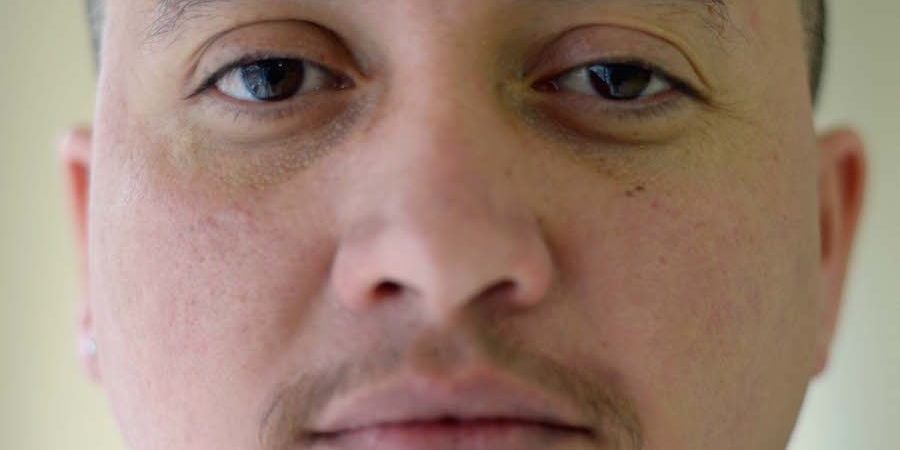
Photos: Matías Subat. Five months after the passage of the Gender Identity Law in Argentina (May 9, 2012), and 1,163.7 kilometers from Congress, Benjamín Génova, a transgender man, walked the halls of Castro Rendon Hospital in Neuquén to begin his hormone therapy. The law establishes, in addition to enabling legal gender recognition on official documents, the right to access surgical procedures and comprehensive hormone treatments without requiring judicial or administrative authorization. “I had already been able to tell everyone that I was Benjamín. I’ve always been Benjamín. After the law was passed, there was more discussion on social media, and that’s how I approached the Castro Hospital in October 2012. I had no health insurance and an unregistered job,” he tells Presentes . The treatment was the first step. Three years later, on October 23, 2015, came the chest masculinization surgery, which involves the removal of the mammary gland and the reimplantation of the areola and nipple in a size and position adapted to a male chest. “No one was going to insist on my behalf.” “At that time, without health insurance, if I didn’t insist, no one was going to insist on my behalf. I was the one who had to work every day at the carpentry shop, I was the one who couldn’t take off my shirt when I went to the river in the summer. My comrades from the Equality Committee accompanied me.” We wrote the letter in February 2015 and they responded two weeks later. We were thrilled. We went to that meeting and raised many issues, down to the smallest details, we raised everything related to diversity,” he recalls. In 2015, the trans clinic at the Castro Rendon Provincial Hospital received 90 patients. The following year, 212, and from January to April of this year, 72. The team is composed of two endocrinologists, Daniela Boccazzi and Amalia Ghiglioni, and a surgeon, Ignacio Del Pin, who participated in Benjamín's thoracic masculinization.
Accessing healthcare for the first time
“We receive first-time patients who have never had a medical check-up, much less with an endocrinologist. These are patients who are new to hormone therapy or patients who were already on treatment and were managing it on their own and now want supervised hormone therapy,” Boccazzi told PresentThe professionals see patients in office 8 every Tuesday from 8 a.m. to noon. No referral is needed; appointments can be made directly at the window. The hospital provides medication to those without health insurance. “After the (gender identity) law was passed, we needed to have this office, and we not only wanted to implement the law but also wanted to have an office with the real capacity to care for patients. So we went to train for a whole year at Durand Hospital, a leading hospital in the care of trans patients,” the doctor emphasizes.[READ ALSO: Five young trans people died in one week due to lack of access to healthcare]
She adds: “Even though we are endocrinologists and have been trained in hormone therapy, no one trained us to perform cross-sex hormone therapy in trans patients. Very few people in Buenos Aires were actually doing it.” Regarding her experience in almost four years of practice, she maintains: “The best thing is being able to provide care to patients who didn't have that opportunity before, because previously you might have to refer a patient and say, ‘No, I don't do this, I wasn't trained to.’ The fact that this doesn't happen anymore, and that we can treat a patient who comes in with thyroid cancer or a trans patient, broadens our perspective as professionals.”
To operate or not
Benjamin is the father of two children, ages 16 and 11, and currently works at the Provincial Directorate of Diversity in Neuquén. Last year, now with health insurance, he underwent a hysterectomy (removal of the uterus and its associated structures, fallopian tubes and ovaries) and is now on the path to phalloplasty: the surgical technique that allows for the reconstruction of a penis of anatomical dimensions.[READ ALSO: Why I had surgery: a trans activist tells her story]
How crucial is the transformation of the body in this process? Benjamin answers: “For me, yes, because that’s how I feel, but I wouldn’t be able to convey this to another partner. I’m not doing this to be more of a man. I’ve been a man since I was old enough to understand; having a penis doesn’t make me a man, but I will feel happy with my body.” “Trans men, at least the group I belong to, believe that masculinity is a social construct, that we don't want to be the patriarchal male who harms society, and specifically women. In fact, that same patriarchy has harmed us before this entire transition, this change that each of us decides for our lives.”
We are present
We are committed to journalism that delves into the territories and conducts thorough investigations, combined with new technologies and narrative formats. We want the protagonists, their stories, and their struggles to be present.
SUPPORT US

FOLLOW US
Related notes
We are present
This and other stories are not usually on the media agenda. Together we can bring them to light.
1 Comment