

Five young trans people died in one week due to lack of access to healthcare
The same week as the #StopTransMurders movement, five trans women and transvestites died due to a lack of access to comprehensive healthcare. Three of them died in less than 24 hours. They were between 29 and 40 years old; three were Argentinian, one Ecuadorian, and one Dominican. We tell you who they were.

Share

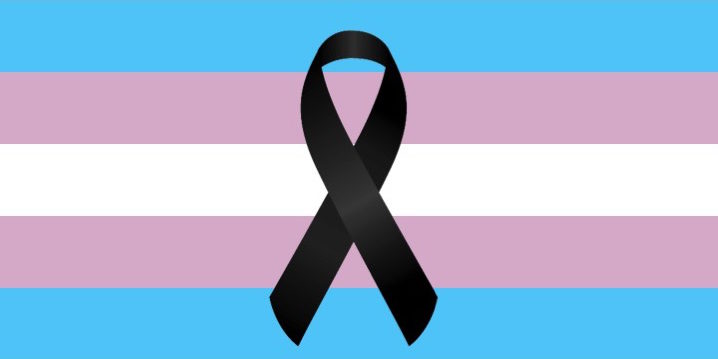
The same week as the second national march #StopTransMurders, five trans women and transvestites died due to a lack of comprehensive access to the healthcare system. Three of them died in less than 24 hours. They were between 29 and 40 years old; three were Argentinian, one Ecuadorian, and one Dominican. We tell you who they were. By Paula Bistagnino. This time they weren't shot, stabbed, or beaten. Romina, Tania, Ana Laura, Cindy, and Karla died because of the absence of public policies that guaranteed them dignified living conditions and access to the healthcare system. They were activists; they knew their rights, they knew they were being denied, and they fought for them. They were trans women and transvestites. They died in different parts of Argentina, all five within six days: between June 25 and July 1, in the cities of Buenos Aires, González Catán, Mendoza, La Plata, and Reconquista. That same week, on the 28th, International LGBT Pride Day, two thousand people mobilized in the country's capital under the slogan #StopTransvesticides.
Romina Kataleya
She was 29 years old and Ecuadorian. She had arrived in Argentina two years earlier seeking a better life. She settled in La Plata, the capital of Buenos Aires province, and quickly became active in the Otrans organization. Just a few months prior, she had married a trans man she met through her activism. She was working as a sex worker. She was living with HIV and had previously been hospitalized at San Roque Hospital in Gonnet. She died on June 25 at Argerich Hospital in Buenos Aires.
Tania Barrionuevo
She was 35 years old and had been a member of the Anti-Discrimination Liberation Movement (MAL) since its inception. She was a health promoter for the organization. She was living with HIV and died due to difficulty accessing the healthcare system. She was studying art and working on a comic strip with Sasha Sacayán to raise awareness of the trans struggle. She had already completed several drawings. She died on June 27 at her mother's house in González Catán.
Ana Laura Portillo Navarro
She was 26 years old and from Mendoza, Argentina. She was the provincial coordinator of Red Diversa Positiva, an organization she had been active in for several years. As an activist, her fight focused on access to healthcare for her fellow trans women and for herself, as she had suffered from a lack of timely care. She was one of those who presented the #transjobquota in Mendoza and was fighting to prevent changes to essential articles of her contract. She died on Thursday, June 29, after being unable to receive cancer treatment for a tumor.
Cindy Martinez
She was 34 years old and from the Dominican Republic. She had lived permanently in Argentina since 2011. In Buenos Aires, she had undergone surgery, gotten married, and become active in the Otrans CABA union. She died on Thursday night, the 29th, at her home in Buenos Aires due to health problems.
Karla Martinez
She was 40 years old and Argentinian, from the city of Reconquista, in the province of Santa Fe. She was a collaborator with the organization Red Diversa Positiva. She lived with HIV and had to cope with the lack of access to regular treatment and the absence of support policies at the local hospital. She died there on Friday, June 30.
“This is a social transvesticide”
There are no official figures on the number of deaths—not homicides—of trans women in the country. It is known, based on estimates, that the average age is between 35 and 40. And it is also known that the main reason is the lack of full access to the healthcare system, as well as to other conditions for a dignified life: education, work, and housing. “All these cases are due to a lack of access to healthcare, and that has two clear reasons: the necessary public policies don't exist, or the existing ones aren't being implemented. This happens both because of discrimination against trans people and because of self-discrimination by trans people, which is obviously related to mistreatment. All of this causes the doctor-patient relationship to break down,” says Jackeline Romero, from the organization Red Diversa Positiva, who knew four of the five trans women who died. “It is necessary that we make ourselves visible as trans people and as patients living with HIV. Although we have been making progress, most of our sisters are in prostitution, which leaves them with no alternative but to hide their HIV status. This kills them earlier: the average age of death today is 35-40 years. This is a social transvesticide. It cannot be called anything else.”Absent state
It is a perverse and deadly cycle of exclusion. Claudia Vásquez Haro, president of Otrans Argentina, defines it this way: “From a young age, we are expelled from our homes, from education, from work, from the healthcare system. The State is absent at every stage of our lives and only appears through its punitive arm to criminalize us. This cycle is what ends our lives at 22, 25, 30. Now, with the cold, the winter, the crisis, girls are dropping dead like flies.”"A government decision"
Just two weeks ago, announcing the #StopTransMurders mobilization, Sasha Sacayán denounced in Presents The increase in social transvesticide through persecution, discrimination, repression, and abandonment of transvestites and trans people in Argentina. The trans activist, a member of the Anti-Discrimination Liberation Movement (MAL) and brother of Diana Sacayán, asserts that violence against the transvestite/trans community has intensified in recent months and that “social transvesticide has entered a new stage, where structural conditions of poverty and exclusion are increasing due to cuts in social programs, the deepening of economic austerity measures, and systematic repression. This is not accidental: it is a deliberate decision by the Argentine government.”We are present
We are committed to journalism that delves into the territories and conducts thorough investigations, combined with new technologies and narrative formats. We want the protagonists, their stories, and their struggles to be present.
SUPPORT US

FOLLOW US
Related notes
We are present
This and other stories are not usually on the media agenda. Together we can bring them to light.