

#Paraguay: The LGBTQ film festival that fights against prejudice and stereotypes
Until July 15, the Lesbigaytrans Film Festival is showcasing more than 47 titles in Asunción: feature films, short films, and documentaries with LGBTQ+ themes. Two of the filmmakers from the new generation participating in the festival, Sonia Moura and Bruno A. Comas, told Presentes why they seek to build a Paraguayan LGBTQ+ film scene free of stereotypes. "With film, we can gradually break down barriers."

Share

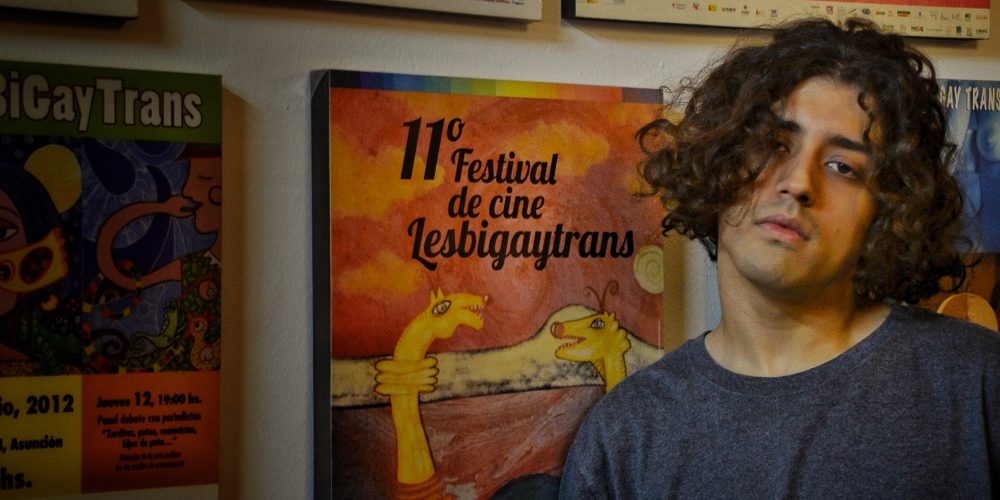
The Lesbigaytrans Film Festival in Asunción is showcasing more than 47 titles: feature films, short films, and documentaries with LGBTQ+ themes. Two of the filmmakers from the new generation participating in the festival, Sonia Moura and Bruno A. Comas , told Presentes why they seek to build a Paraguayan LGBTQ+ film scene free of stereotypes. " With film, we can gradually break down barriers." By María Sanz Domínguez, from Asunción. Photos: Jess Insfrán Pérez. The 13th edition of the Lesbigaytrans Film Festival of Paraguay opened on July 10 with a show by Paraguayan drag queen Envidia Metenés and the screening of three international short films: Wherever You Are ( United Kingdom), Tras la Piel (Spain), and Io e Il (Italy). The Festival is the only one with LGBTQ+ ( lesbian, gay, trans, bisexual, intersex, queer ) themes in Paraguay. It was founded in 2005 by Aireana. The theater was full from the very first screening, perhaps because even back then there was a need for such a space. Since then, it has grown in both audience numbers and the number of films shown: short films, documentaries, and feature films from all over the world.
"To generate a change in the consciousness of the spectators"
The goal, the members of Aireana tell us, is "to provide, through art and culture, a contribution that builds and generates changes in the consciousness of its spectators." On Thursday the 13th, the Festival will be dedicated to Paraguayan production, with six national films competing for the jury prize: It's me, by Sandra Flecha; Chacope, by Manuel Díaz; Transferees, by Stélio Barboza and the collective Mansion 108; Lucia/o, by Sonia Moura; Voracious, by Bruno A. Comas, and Chromosomes, produced by Women on the EdgeThe two youngest Paraguayan authors at this year's festival, Sonia Moura and Bruno A. Comas, spoke with Presentes about cinema, stereotypes, and untold LGBTI stories in the emerging Paraguayan audiovisual scene.
"In film, being gay is associated with being narcissistic and super beautiful."
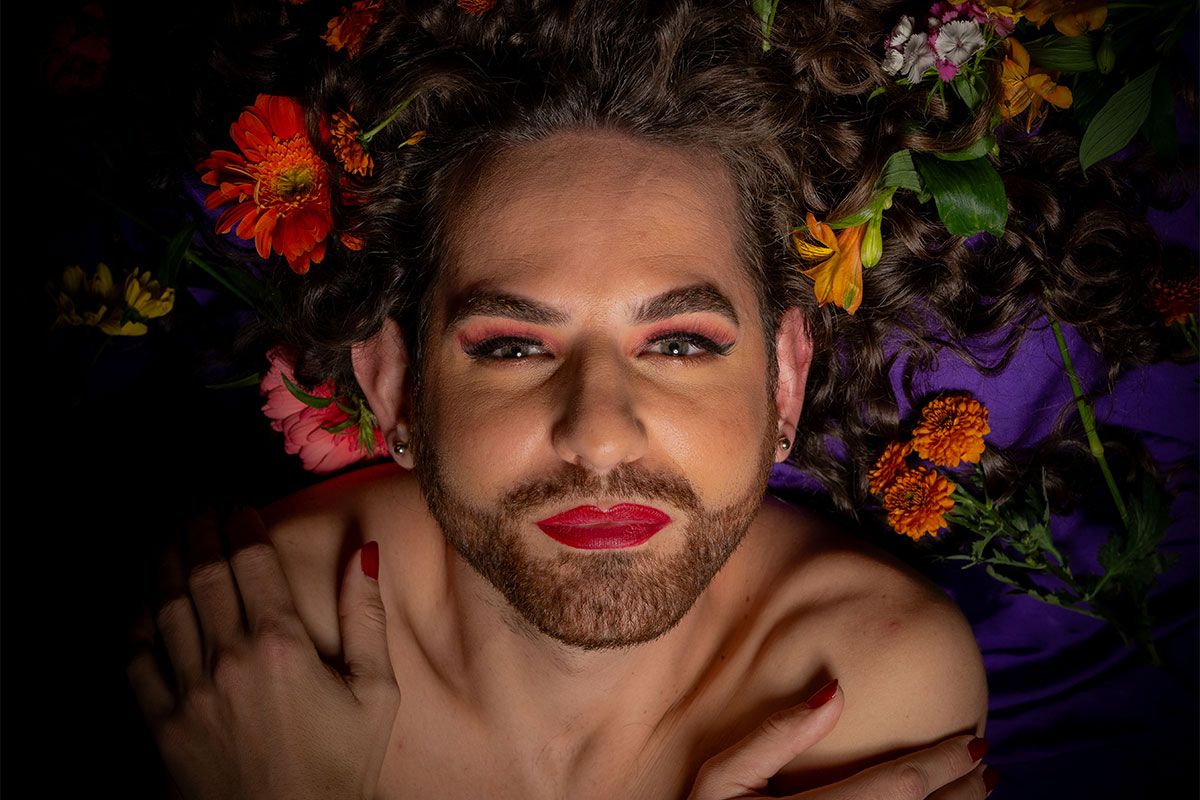
Voracious It is the first short film by Paraguayan filmmaker and performer Bruno A. Comas, 25, who lives in Buenos Aires. He shot it with a Handycamwhich gives it a similar aesthetic to that of videotapes of the nineties. In Comas's words, Voracious She uses the character of a transvestite to explore themes like loneliness, psychology, and the intersections of love and friendship, moving away from the drama that often accompanies stories of trans people. “I wanted to discard the pain of Paraguayan trans people, who walk down the street and are yelled at, to tell a different story. I wanted to show a naturalness that I believe exists in Buenos Aires, of a trans character who is cosmopolitan and liberated, who walks down the street naturally. But at the same time, I wanted it to resonate in Paraguay, because it opens up a whole imaginary world that doesn't exist here,” she explained. Comas says she seeks to break free from the cliché of happy endings and stories of heroes and heroines. She tries to present honest characters who are “crazy, perverse, a little like everyone else.” In film, she says, “Gay is always associated with narcissism, with what is super beautiful,” in order to target an LGBTI commercial niche, which exists in film, tourism, fashion, and porn. “There is a kind of adaptation that copies heteronormative models, such as marriage (…). The market knows how to turn social phenomena into something profitable, and that's how capitalism can penetrate everywhere.“,” he says. In contrast to this commercial vision, Comas intends to “show the heart of things,” through audiovisuals and performances of your project Broken veinIn Paraguay, he points to some directors who deal with “less conventional themes”, such as Miguel Agüero (author of short films like Antolina either Rebel Kurusú), or Ángel Molina (author of the trans-themed short film) ZulemaBut he doesn't believe there is yet an LGBTI film scene in Paraguay, as he does believe there is in Buenos Aires."For there to be a national LGBTQ film scene, there should be people willing to talk about these issues."
“Here, cinema is in its infancy and somewhat sluggish, like almost everything else. It wasn't until 2006, with Paraguayan hammock, Paraguayan cinema has entered the international scene. But for there to be a national LGBTQ+ film scene, there have to be people willing to talk about these issues. "The day a Paraguayan film with gay themes sells 30,000 tickets in theaters, we can say that a scene has been created," he says.Made in Paraguay, awarded worldwide
Paraguayan hammockThe film by Paz Encina put Paraguay on the international stage in 2006, thanks to the FIPRESCI prize it received at the Cannes Film Festival that year. Six years later came the other great international success of Paraguayan cinema: 7 boxes, by filmmakers Juan Carlos Maneglia and Tana Schémbori, the highest-grossing film in Paraguayan history, nominated for a Goya Award in Spain. And more recently, Paraguayan filmmaker Marcelo Martinessi won the Orizzonti Award at the 2016 Venice Film Festival for his short film The Lost VoiceIf we talk about Paraguayan LGBT cinema, the most internationally outstanding title is 108 Wooden knife, by filmmaker Renate Costa. It premiered at the Berlin International Film Festival in 2010. It is a documentary about the persecution, torture, and detentions of the LGBTI community in Paraguay during the dictatorship of Alfredo Stroessner (1954-1989). The film won the Human Rights Award at the Buenos Aires International Independent Film Festival (BAFICI) in 2010. And more recently, the short film Zulema, presented in 2015 at the Lesbigaytrans Film Festival, won international awards at the Film Festival on Sexual and Gender Diversity 24 Hours Queer from La Plata (Argentina) in 2015, and the Christian Peterman Special Prize at the 1st International Festival of Sexual and Gender Diversity of Goiás (Brazil) in 2016. Its author, Ángel Molina, 26, has received a scholarship to the renowned International Film School of San Antonio de los Baños (Cuba). Beyond these outstanding films, Paraguayan film production is still scarce and depends on foreign funding. The Paraguayan Academy of Cinematographic Arts and Sciences was only created in 2013. And professionals in the sector are calling for the establishment of an Audiovisual Institute in the country. Also, the approval of a law that regulates work in this industry and promotes greater economic independence for national production.LGBTQ+ cinema against fears
Despite the obstacles, 24-year-old Paraguayan filmmaker Sonia Moura believes that LGBTQ+ cinema is gradually taking root in Paraguay, especially among younger generations. “There are several interesting female filmmakers, such as Sandra Flecha (an actress in Cicada Moon and director of short films such as It's me, who will present at the Festival), Alexandra Vázquez (Me too) or Ximena Barba (The fall of the closet). Almost half of my classmates wrote or filmed short films with LGBTQ+ themes. But some are afraid to submit them for fear of their families' reactions.“,” she says. Moura premieres her short film at the Lesbigaytrans Film Festival Lucia/oIn this story, the fears and pressure of an ultraconservative family play a fundamental role in the love story between two lesbian teenagers. So much so that Lucía, the protagonist, decides her only escape is to dress as a man so she can present herself to the family of Cami, her partner. In Lucia/oMoura wrote the screenplay, based on a personal experience, and also directs and plays the lead role. The filmmaker uses comedy to ridicule male privilege and parody that part of Paraguayan society that, as she says, “still thinks that the ultimate goal of a woman’s life is to find a husband.”[READ MORE: Paraguay marches for diverse families and against discrimination]
 In the short film, Moura denounces the obstacles many lesbian teenagers face when they decide to come out in Paraguay. “In my personal story, my partner was 17 when she came out as a lesbian. As a result, her parents took away her cell phone, removed her from the acting school where we met… She was a minor, her parents paid for everything, and she didn't have many options. The only place they didn't kick her out of was the music conservatory. I learned her recess schedule, her class dismissal times… and that way I could see her once or twice a week,” she recalled.
"Many queer topics are not discussed, and bisexuality is invisible."
Moura believes that, in the context of a country that represses LGBTI people and is as “backward and narrow-minded” as Paraguay, Films with this theme are still seen as something "offensive"“There are still people who are bothered when films like [film title] win an Oscar. The Danish Girl either Moonlight“Even though it’s commercial cinema that still uses Hollywood standards,” he observed. Faced with these attitudes, Moura is betting on Paraguayan films as a tool to give visibility to the LGBTQ+ community and tell untold stories. “There are many issues queer that don't touch each other. And bisexuality, for example, is frowned upon, or invisible, because there are still those who are confused by the existence of bi people. Through film we can gradually break down barriers“,” he stated.Susy Shock and other must-sees at the Lesbigaytrans Film Festival
Throughout this week, titles such as Places of fear and hate (Brazil), A piece for Julia (Mexico) or The day Marty McFly arrived in the future (Spain) will be presented on the screens of Juan de Salazar Cultural Center of Spain (CCEJS) from Asunción. There will also be notable documentaries such as Deconstruction. Chronicles of Susy Shock, A film about the Argentinian trans artist directed by Sofía Bianco. And feature films like You're a faggot, by the Spanish author Ismael Núñez.We are present
We are committed to journalism that delves into the territories and conducts thorough investigations, combined with new technologies and narrative formats. We want the protagonists, their stories, and their struggles to be present.
SUPPORT US

FOLLOW US
Related notes
We are present
This and other stories are not usually on the media agenda. Together we can bring them to light.