

#CHILE: One year later, Nicole's hate crime remains unjustified
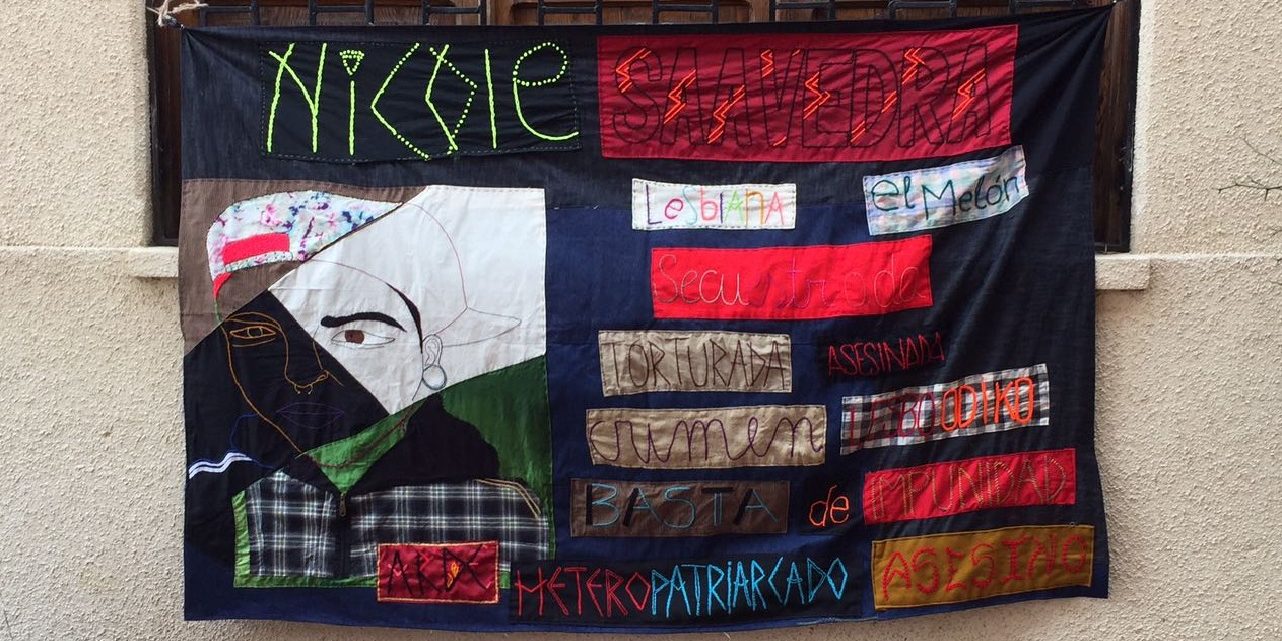
On the first anniversary of Nicole Saavedra Bahamondes' murder, her family and lawyer maintain their theory that she was killed because she was a lesbian. They denounce the lack of progress in the case. A demonstration was held on June 25th to demand justice.

Share

On the first anniversary of Nicole Saavedra Bahamondes' murder, her family and lawyer maintain the theory that she was killed for being a lesbian. They denounce the lack of progress in the case. A demonstration was held on June 25th to demand justice. By Airam Fernández. The investigation being conducted by the Limache (Chile) Local Prosecutor's Office into the murder of Nicole Saavedra Bahamondes is at a standstill, according to the family's lawyer, Silvana del Valle. On June 25th, the first anniversary of the crime, her family organized a march. There are still no official hypotheses or suspects, beyond what the family says, who believe Nicole was killed for being a lesbian. "The theory that it was a hate crime is the one we continue to pursue along with her family. I know the Prosecutor's Office could prove it, or at least come close, if they had the will," says the lawyer. This lawyer, who is also the coordinator of the Chilean Network Against Violence Against Women, says the case involves a series of episodes characteristic of institutional violence. On Saturday, June 25, the first anniversary of Nicole's murder, her family and friends organized a march to the communities of Quillota and Limache, more than 120 kilometers from Santiago. Not even the rain stopped the march. They stayed in a plaza until nightfall. Nicole was 23 years old when she was last seen alive, on June 18, 2016. She was missing for a week, until she was found murdered. The autopsy revealed that she died from multiple traumas to her skull and face.
[READ MORE: What is known so far about Nicole's murder]
"If we had the resources, justice would have already been served."
The previous Tuesday, the lawyer told Presentes, she and the family received copies of the court files. But they are not up-to-date, as they should be. What worries and upsets them most is that the prosecutor did not attend the second hearing in person, which took place on June 21. “Juan Emilio Gatica stood us up, sent a substitute, and excused himself due to a scheduling conflict. It’s clear he has no interest,” says Silvana del Valle. She took over the case at the beginning of this year. That second hearing lasted twenty minutes. According to the lawyer, the time was spent updating the assistant attorney, Iván Morales Rojas, sent by Prosecutor Gatica. “We spent the whole time explaining what we knew, because he didn’t know anything. It was a disgrace,” the lawyer says. María Bahamondes, the victim’s cousin, was also there. She left very disappointed: “It was a mockery, a blunder by the prosecutor's office. I've always thought that if we had resources, justice would have been served by now. But we're poor and they don't pay us any attention.”
"I want them to tell me why there's no progress."
In the “new” files, the lawyer says, there are no current documents. Nothing from January to the present day, she asserts. In April, she made the same request for a copy of the case file. Now she has found the papers she had already reviewed: “It means these months have passed without a single step forward. The little that has been done, at the investigative level, is because I have requested it. And the prosecutor won't show his face. I want him to tell me why there is no progress.” Of the investigative steps she has requested, there is one in particular that she considers crucial and has yet to receive a response: the request for security camera footage from the road leading to the mountainous area where Nicole was found, lifeless and badly beaten, on June 25, 2016. To date, there is no record in the files that those recordings have been received.
"We must continue fighting for her and for those who are no longer with us."
In April, prosecutor Gatica told Presentes that, due to a lack of witnesses, he could not confirm the family members' and lawyer's theory that it was a hate crime. Attempts were made to contact him again this time, but there was no response. In that meeting, in his office at the prosecutor's office, he said that the crime was «a very confusing case, without witnesses, one of the most complex I have ever had to investigate.”She couldn't answer any of the basic questions: How did Nicole end up in Limache, a place so far from where she lived? Where was she and with whom hours before she died? What happened during the week before her death, while she was missing? Was she tortured during that time or only before she was murdered? How was she taken to Los Aromos hill in Limache, where her body was found? These are the same questions her family asks. Especially María, Nicole's cousin. "If we also have to fight to get the prosecutor to work on the case, I can't imagine when the answers we're looking for will come," she laments. She's exhausted, but she promises not to give up until she gets justice. "It's a promise I made to her when they killed her. We have to keep fighting for her, but also for all those who are no longer with us."We are present
We are committed to journalism that delves into the territories and conducts thorough investigations, combined with new technologies and narrative formats. We want the protagonists, their stories, and their struggles to be present.
SUPPORT US

FOLLOW US
Related notes


We are present
This and other stories are not usually on the media agenda. Together we can bring them to light.