

#JusticeForDianaSacayán: "This fight is to talk about the violence against trans women"
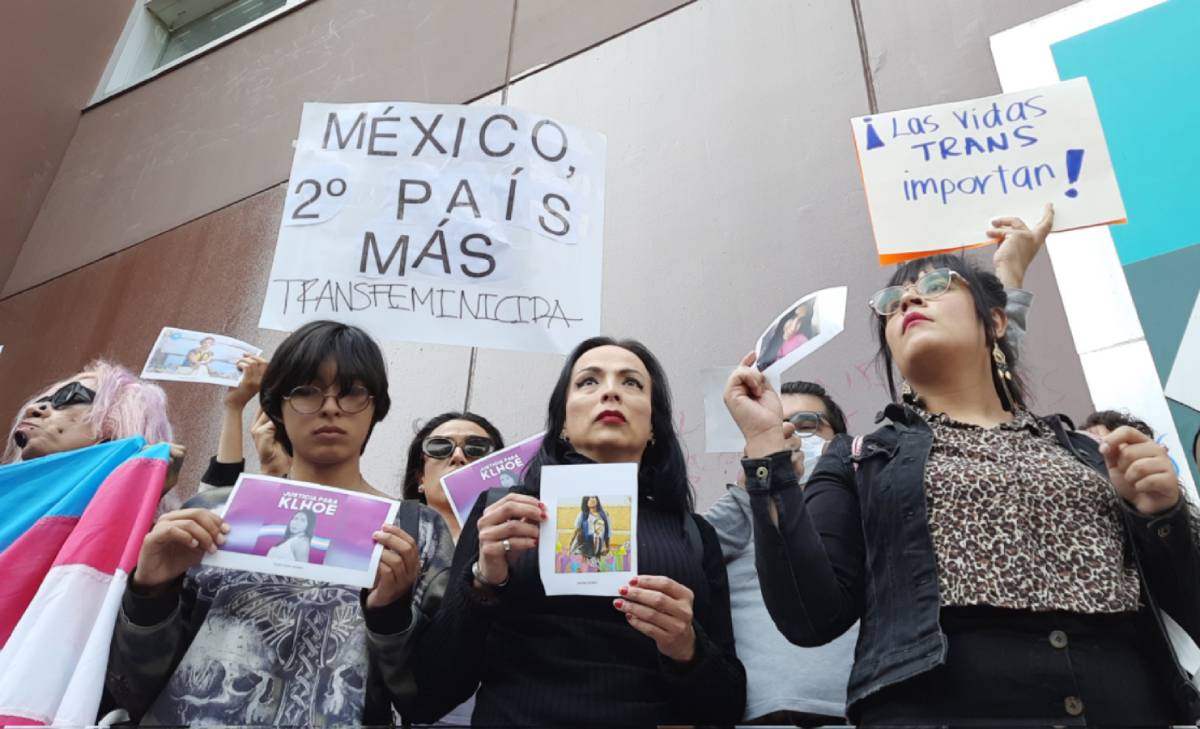
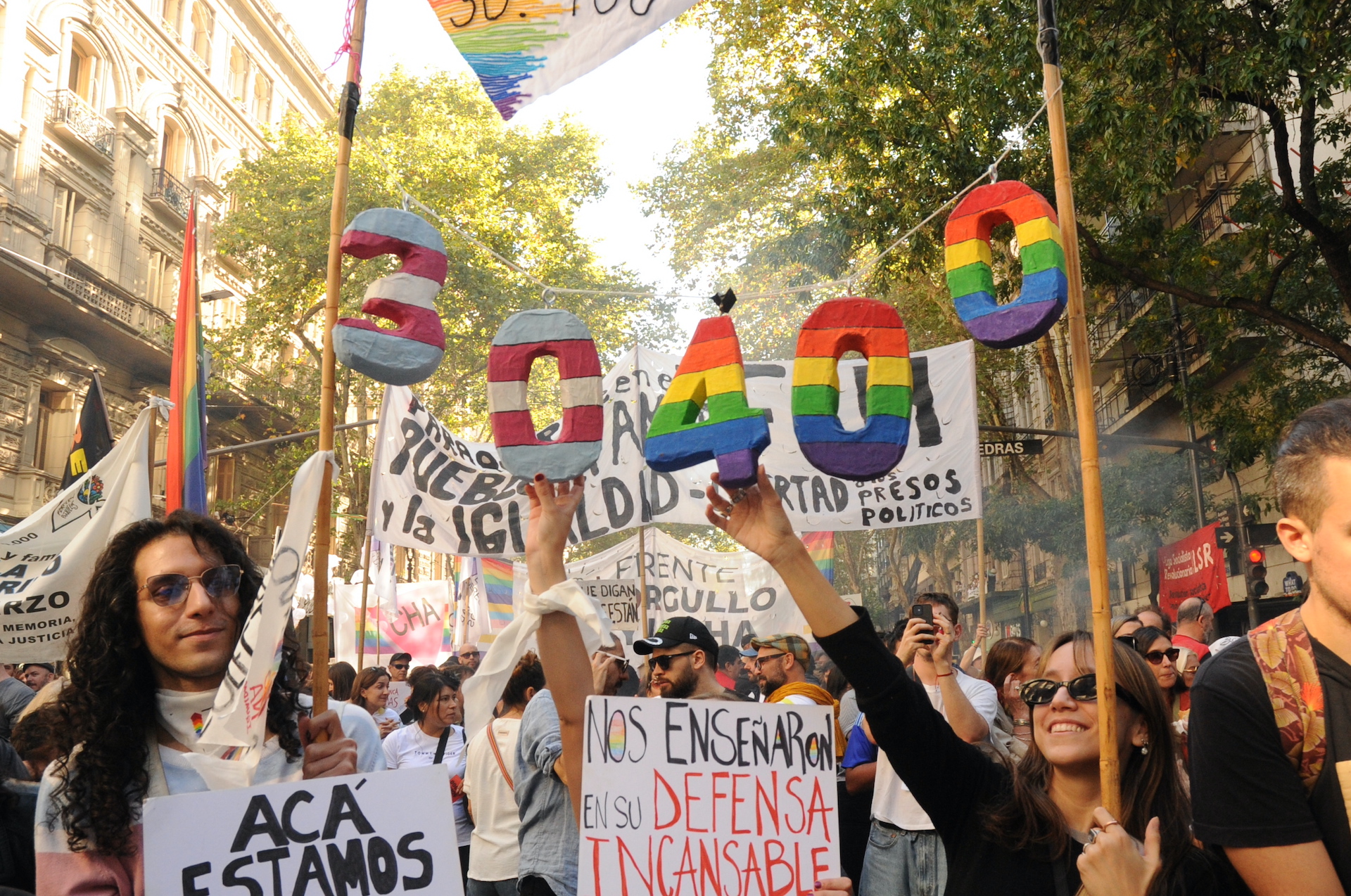
The campaign to demand justice was launched. Higui de Jesús was present. On Wednesday the 28th, there will be a march to say #StopTransMurders.


Share

The campaign to demand justice was launched. Higui de Jesús was present. It was her first public appearance since being released from prison on June 13. On Wednesday the 28th, there will be a march to say #StopTransphobicKilling. Ahead of the trial for the transphobic murder of Diana Sacayán—scheduled for October—the campaign to demand justice for the social activist's murder ( #JusticeForDianaSacayán ) was launched. On Saturday, June 25, more than 200 people gathered at the El Transformador cultural center in Haedo, Buenos Aires province. There, Higui de Jesús made her first public appearance since being released from prison on June 13. She had been detained for defending herself against an attempted corrective rape and fatally wounding one of her attackers. “It’s the first time I’ve been out in public with so many people. I feel good here, I don’t feel like an outsider ,” she told Presentes. Sasha Sacayán, Diana's brother and a leading figure in the Anti-Discrimination Liberation Movement (MAL), Darío Arias (activist for Conurbanos por la Diversidad), Alma Fernández (president of the student center of the Mocha Celis High School) and Luciana Sánchez (plaintiff's lawyer in the case), spoke about different aspects of the justice process for the murder of the trans leader.
"The trans quota law must be complied with."
“Launching this campaign means bringing the issue back into the public eye. This fight is about addressing the violence against trans people and transvestites. We have to make their struggle our own,” said Sasha. She pointed out that one of the demands of the march called for Wednesday, June 28th, is to say #StopTheMurdersOfTransvestitesWill the trans employment quota law be implemented? “We believe it’s an important step toward ending violence against the bodies of trans and travesti people. Once our sisters have genuine employment, they’ll be able to envision a different life because prostitution is part of the violence they experience,” added Diana’s brother. The trans quota law, named after Diana Sacayán in honor of its advocate, was passed a month before her murder: on September 17, 2015.To this day, the provincial Executive Branch of Buenos Aires has still not regulated the law.[READ MORE: Unpublished interview with Diana Sacayán]
#JusticeForDiana This is the spearhead of several activities planned to raise awareness of the demand for justice. Among them is the call to action for the march on Wednesday the 28th, to say #StopTransMurders. It will be the third mobilization with this slogan: the first was on June 28th of last year (coinciding with the commemoration of the Stonewall riots, which helped raise awareness about violence against LGBTI people). The second march was at the National Women's Meeting. All were encouraged by the commission demanding justice for the trans murder of Diana Sacayán. Sacayán was found dead on October 13, 2015, stabbed 13 times in her apartment at 6700 Rivadavia Street, in the Flores neighborhood of Buenos Aires, where she lived with a friend.[READ MORE: » The transvesticide of Diana Sacayán could go unpunished]
"A hate crime against a colleague who denounced institutional violence"
Jazmín Segovia was the author of the art-activism exhibit that was on display at El Transformador: “I am a survivor of prostitution and I believe in education to prevent further violence.”He stated. Darío Arias said that “Diana was not only an LGBTI activist. She was a social, political, and human rights activist. She framed each struggle within its context. She believed it was important to work with others who were experiencing the same injustices. Diana's transphobic murder was a hate crime against a comrade who denounced institutional violence.” Jazmín Segovia.
[READ MORE: Who is Saint Jean: the prosecutor removed for defending Etchecolaz]
The approach to crimes against humanity
Luciana Sánchez, after reviewing the main milestones of the legal case file, She said: “There is a lot of prejudice in the justice system; the fact that we are even talking about transphobic murder is a great achievement.” She explained that the legal case was decided to be approached as a crime against humanity. And she added: "It is important that there be justice for Diana, not only for her friends and family, but it is important for democracy." Then came the music, a theatrical performance, and the photo shoots for the campaign, covering their faces with a photo of Diana's face. Higui was the first to stand in front of the flashes. She continued speaking to Presentes: “I'm here thanks to the mobilization of the people. They weren't going to pay any attention to my family. As soon as I got out of jail, I told the girls: I'm here thanks to you. Now I'm waiting for my acquittal.” From left to right: Luciana Sánchez, Darío Arias, Sasha Sacayán and Jazmín Segovia.

"I'm going to raise everyone's flag."
When asked how she's coping with the first few days after being detained for almost eight months, she said that everything that happened to her changed her life, but that she feels respected and protected. "I don't feel alone," she said. "I don't understand much about all this. I was always with my family, my nephews, but I'm going to learn little by little. Just as they raised my flag, I'm going to raise everyone's flag. Wherever they call me, I'll be there," she said. Alma Fernández.]]>
We are present
We are committed to journalism that delves into the territories and conducts thorough investigations, combined with new technologies and narrative formats. We want the protagonists, their stories, and their struggles to be present.
SUPPORT US

FOLLOW US
Related notes

We are present
This and other stories are not usually on the media agenda. Together we can bring them to light.