

Another homophobic attack in Buenos Aires: two in 48 hours
In less than 48 hours, two young people were physically attacked because of their sexual orientation in very close proximity to each other in the City of Buenos Aires. Both incidents occurred in the early morning hours. Presentes consulted the records of the Buenos Aires LGBT Ombudsman's Office: reports of attacks and human rights violations based on sexual orientation and gender identity increased dramatically in 2016.

Share

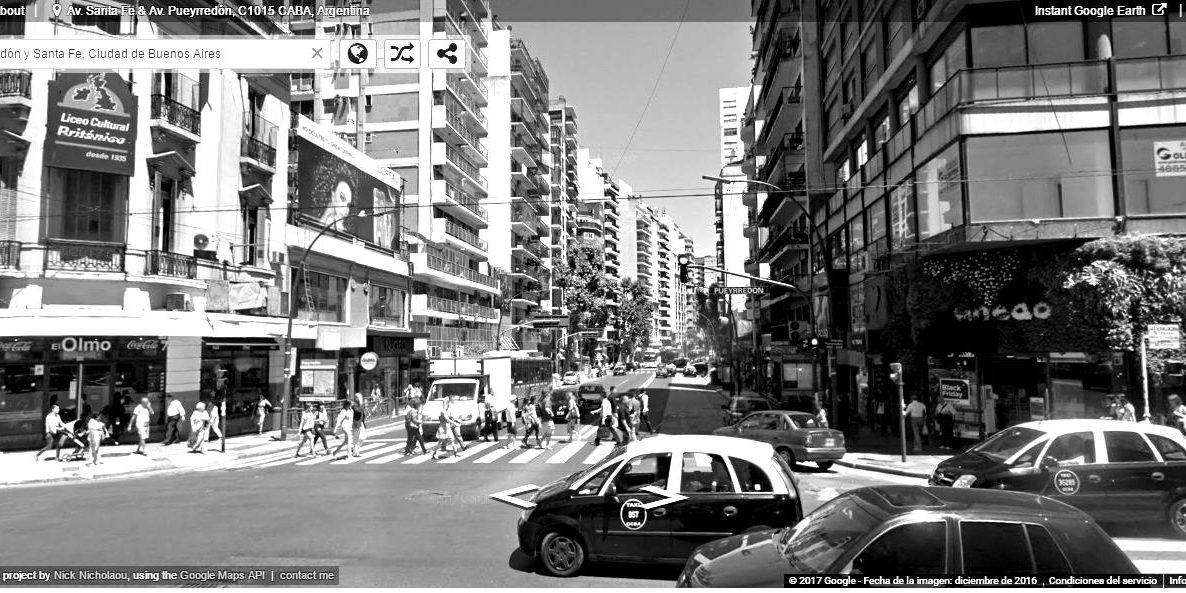
In less than 48 hours, two young men were physically attacked because of their sexual orientation in very close proximity to each other in the City of Buenos Aires. Both incidents occurred in the early morning hours. Presentes consulted the records of the Buenos Aires LGBT Ombudsman's Office: reports of attacks and human rights violations based on sexual orientation and gender identity increased dramatically in 2016. On Friday, June 16, at 3:30 a.m., two men beat Walter—a 20-year-old from Córdoba, a student and restaurant employee—because of his sexual orientation. The incident occurred just meters from the corner of Santa Fe and Pueyrredón (Autonomous City of Buenos Aires), an emblematic location in the fight for LGBTI rights . And less than 24 hours after another beating in the city, where sexual orientation was also the trigger for the attack against another gay man.
In 2016, reports of attacks against LGBTI people increased.
Present The LGBT Ombudsman's Office of the City of Buenos Aires was consulted regarding the number of complaints and violations against LGBTI people in recent years. According to the Ombudsman's Office records (which reports to the Ombudsman's Office), 28 cases of attacks and discrimination and 43 cases of rights violations against gay, lesbian, bisexual, transvestite, transgender, and intersex people were reported in 2015. In 2016, 58 attacks and 72 cases of rights violations were recorded. This means that reports of attacks motivated by sexual orientation and gender identity more than doubled in the last year, according to the records of the Buenos Aires LGBT Ombudsman's Office. The City Government's General Directorate for Coexistence in Diversity reported that the City's Justice and Security departments intervene in these cases. The Directorate's role "is related to training and awareness-raising. Sometimes they intervene in probation cases," they explained. As an example, they cited the training provided to the waiters at La Biela bar, who were accused of discrimination by a lesbian couple. The Directorate noted that cases of discriminatory attacks have decreased thanks to LGBTI laws and awareness campaigns.
"I thought they were going to kill me."
Walter told Presentes that he got off the bus on his way home from work at the corner of Santa Fe and Pueyrredón streets in the Recoleta neighborhood of Buenos Aires. The first thing he noticed was that he was being followed. After a few blocks, when he was almost home, Walter said that one of the men grabbed him by the neck and pushed him against a wall. The other was yelling at him, “Faggot, queer!” “They both started hitting me on the back of the head. I thought they were going to kill me. I offered them everything I had, but they replied, ‘We don’t want anything from you, you fucking faggot.’ I raised my head and started yelling for help, while they kept hitting me to shut me up.” The young man recounted that a taxi suddenly stopped and, seeing the beating, started honking its horn. “People came out onto their balconies and yelled for them to let me go.” Then they started running.” At that moment, Walter realized he didn’t have his wallet and began chasing them, yelling. Two police officers arrested the assailants at the corner of Pueyrredón and Beruti streets.[READ MORE: Two attacks on LGBTI people in the same day]
Walter says he recognized one of the men who attacked him: “I see him when I walk by because he lives on the street and knows about my situation. He saw me go into a bar on Santa Fe Avenue, near the entrance to the Line D subway.” The other man, he recalled, was “a tall, Black man, and judging by his accent, Brazilian.” Walter said that in front of the police, the tall man said that Walter had performed oral sex on him and hadn't paid him, that he was a male escort. “The police officer believed him and said I was lying. Then more officers arrived. They asked me if I had had any contact with him. They emphasized that there were many security cameras. I told them that seemed better to me, that way the whole incident would be recorded. Then they told me no, there weren't any cameras; they had told me that so I would tell them the truth.”"If you don't end up in the hospital, they don't take you seriously."
The City Police arrested the two men. “The first officers who intervened wanted to let them go,” said the young man, who filed the complaint at Police Station No. 19. “When I went to show them the injuries I had, the police doctor looked at me as if it was nothing.” It makes me feel helpless to know that because you didn't end up in a hospital, they don't take you seriously.They said they would call me to see how the complaint was progressing.” Walter says that since that day, he hasn't gone back to the area where he was attacked. “I'm afraid to go out on the street. Yesterday was my day off, and I didn't leave the house all day. It makes me feel powerless that you can't walk around safely. I live alone; my family is in Córdoba. What if I had ended up unconscious? It makes me angry that the police aren't acting the way they should.” Last week, another young man, Charly, reported a similar attack on social media. But he said he preferred not to file a formal complaint with a public agency so as not to relive the anguish of the attack. The attack occurred in the Monserrat area in the early hours of Saturday morning, when he was returning from a party and a group of people beat him up while bystanders remained silent and inactive.[READ MORE: "I haven't been beaten up for being gay since the '90s" ]
"We need an updated anti-discrimination law"
María Rachid, head of the Institute Against Discrimination of the City of Buenos Aires Ombudsman's Office, told Presentes that to address situations of discrimination and violence throughout the country, “we need an updated anti-discrimination law. The current law is very outdated. It doesn't include sexual orientation or gender identity, nor many groups vulnerable to discrimination. And it lacks effective measures to prevent, eradicate, or punish discrimination.” Rachid explained that the City Ombudsman's Office is working “to get a new anti-discrimination law approved that includes all groups vulnerable to discrimination. And also to equip it with effective measures to prevent, punish, and eradicate discrimination.”We are present
We are committed to journalism that delves into the territories and conducts thorough investigations, combined with new technologies and narrative formats. We want the protagonists, their stories, and their struggles to be present.
SUPPORT US

FOLLOW US
Related notes
We are present
This and other stories are not usually on the media agenda. Together we can bring them to light.