

He was attacked by a gang: “I haven’t been beaten up for being gay since the 90s”
In the heart of Buenos Aires, a group of twenty-somethings attacked Charly, 37, because of his sexual orientation. Charly declined to file a police report and told Presentes that it had been many years since he had experienced a homophobic attack on the street. Although there are laws protecting LGBTQ+ people, why are victims afraid to report these incidents?

Share

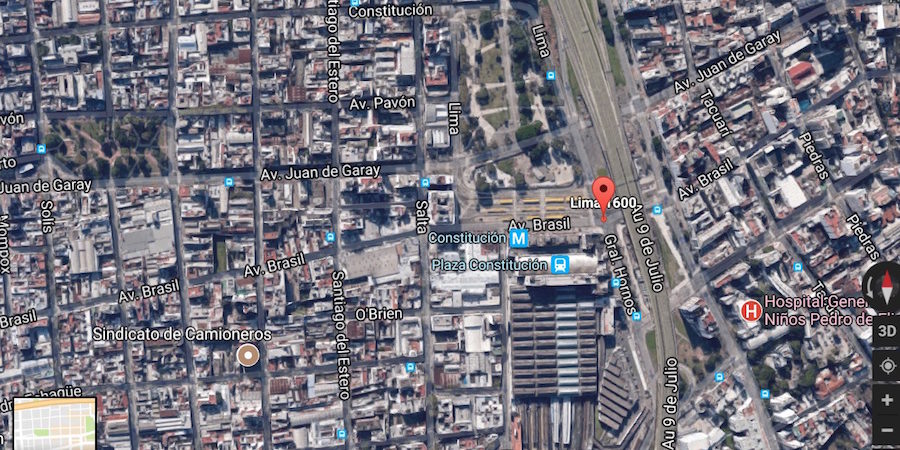
In the heart of Buenos Aires, a group of twenty-somethings attacked Charly, 37, because of his sexual orientation. Charly declined to file a police report and told Presentes that it had been many years since he had suffered a homophobic attack on the street. Although there are laws protecting LGBTQ+ people, why are victims afraid to report these incidents? On Saturday, June 17, in the early morning hours, Charly (37, a screenwriter for film and television) was returning home in Buenos Aires by taxi. He got out on Avenida 9 de Julio, on Lima Street, near Constitución. As soon as he stepped onto the sidewalk, a young man approached him, smiling. He smiled back. Charly is reluctant to reveal his identity but told Presentes about the attack he experienced that morning. "So you're a faggot? Do you know what I do to faggots?" he recounts the man saying before pushing him. Then he threw him to the ground and began hitting him. Charly says four or five more joined him. “I couldn’t see how many there were; from the ground, I could only see their feet. They were guys in their early twenties,” he told Presentes . “They were pressing my head against the ground so I couldn’t escape. It didn’t seem like they wanted to rob me. The first chance I had to get away, I crawled, ran, and asked some kids who were crossing the street to send a message to a friend.” According to Charly, they asked him who had hit him. “Tell us,” they demanded. “Those guys?” they insisted. He said yes and pointed to where they were. He just wanted someone to lend him a cell phone to send a text message. “'Come on, we’re going to beat the crap out of them. But you better be serious, because if you’re not, we’ll beat the crap out of you,'” they told him. “After what had happened to me, it seemed absurd to be hearing that threat. But I barely had time to reflect, because both sides were already clashing,” he says.
“Nobody helped me”
In the middle of the beating, they stole his wallet, cell phone, and jacket. He had a black eye and his clothes were torn. “I went into a kiosk to ask for help, but the guy working there told me he didn't have a cell phone. I walked past some girls waiting for the bus, and they laughed. I wanted to send a message, but no one would help me. I just sat there crying. I remembered that a friend lives three blocks away, but I was afraid to walk there,” he said. Charly wrote on his Facebook wall what had happened, but he has doubts about filing a police report: “The moment was distressing enough without getting involved in an even more distressing legal process,” he says.“Social media does not provide justice”
Emiliano Litardo, from Lawyers for Sexual Rights (ABOSEX), lists Present Litardo offers three reasons why she believes people don't report these cases: “There's a lack of faith in the judicial system, which is particularly acute for the LGBTI population; many people fear the authorities responsible for handling complaints. This fear of authority also stems from the history of LGBTI criminalization. Added to this is the dismantling of public agencies like INADI by this government, which hinders reporting.” According to Litardo, many people report abuse on social media rather than through state-run channels “because it's considered more effective in terms of social impact, and perhaps people feel more supported there. Perhaps there's a greater level of empathy, a more immediate response. Social media doesn't provide justice, but it may contribute to the anxiety of seeking it.”The cameras did not capture the incident.
Present He contacted the City Government's Ministry of Security to check the data and see if any of the more than 2,000 cameras monitoring the streets recorded the incident. After conducting the search, sources indicated that "the cameras in the area did not capture the event." The cameras did record an incident in that area at that time, on Lima Street at number 1600, in the Constitución neighborhood, but it's impossible to see what happened because it occurred under a tree.“The last time I was beaten up was in the '90s”
“I think the last time I was beaten up for being gay was in the '90s, in La Plata, during a very violent time. I had calmed down a bit. I don't think that's a coincidence. I don't feel hatred or a desire for revenge against those kids who attacked me. I feel a great deal of unease. I think these behaviors aren't isolated incidents and therefore reflect a societal mood. If the State publicly attacks teachers, in front of Congress and all the media, why wouldn't a kid raised in a violent, misogynistic, homophobic, lesbophobic, transphobic, and biphobic society feel entitled to attack those he perceives as different?” Charly reflects. What happened to him, he says, brought back a dark secret. “It stirred up a feeling of guilt that, after many years of internal struggle, accompanied by a popular struggle and the recognition of some rights, had disappeared. That feeling that makes you feel like a whore for giving a stranger the time of day in the middle of the street. That nagging question: didn't you deserve it for being dirty, for being shady, for being promiscuous? I hadn't felt that for at least 15 or 20 years. I know I don't deserve it and that nobody deserves to be beaten up for being attracted to someone else or for whatever reason; there are no excuses. However, the darkest shit of the collective unconscious always resurfaces in these historical moments, and particularly in events like this,” Charly concludes.Why file the complaint?
From the Litigation area of the Specialized Prosecutor's Unit for violence against women and LGBTI people (UFEM) from the Public Prosecutor's Office, they said Present They have received some reports of similar attacks. However, they admit that in most cases it is difficult to identify the perpetrators. They pointed out that there are no statistics on these cases, as the system struggles to recognize them as LGBTI violence. In most cases, they are registered as assaults or fights. The judicial body encourages people to file reports to bring these cases to light. “It’s a vicious cycle: the number of cases of violence is unknown because people don’t report them. And when they do, the incidents are often overlooked as LGBTI violence because they are treated as common crimes without specifying the context of violence they fall under,” Litardo noted. “The challenge is to work within the institutions where people first turn for justice, to provide gender education,” Litardo added.“We must not remain silent in the face of public intimidation.”
From 100% Diversity and Rights, Martín Canevaro, secretary of the organization, says: “We see an increase in institutional violence against the LGBTI population, which manifests itself in various areas, from the police to school principals who persecute students for their sexual orientation or gender identity.” He urges people to report these cases to the appropriate authorities, as well as to reach out to organizations. “We must not remain silent in the face of public intimidation because that will allow us to make the increase in discrimination visible and prosecute the aggressors.” Charly says: “I think it’s necessary to implement the comprehensive sex education law in schools and some kind of diversity education program, or whatever it is that confronts people with all that they don’t know so they don’t fear it. I think it’s, if not the only, the most appropriate way to prevent these brutal behaviors, and above all, to protect ourselves.”We are present
We are committed to journalism that delves into the territories and conducts thorough investigations, combined with new technologies and narrative formats. We want the protagonists, their stories, and their struggles to be present.
SUPPORT US

FOLLOW US
Related notes

We are present
This and other stories are not usually on the media agenda. Together we can bring them to light.