

Transvesticides: The Court included them for the first time in its femicide registry
The Argentine Supreme Court of Justice included the victim's sex/gender as a variable for the first time in order to bring visibility to transphobic and transphobic murders. The registry recorded 5 cases in 2016, a figure lower than those reported by LGBTQ+ organizations.


Share

The Argentine Supreme Court of Justice included the sex/gender variable of the victim for the first time in order to make transvesticide and transfemicide more visible. The registry counts 5 cases in 2016, a figure lower than those reported by LGBTQ+ organizations. Cover illustration: Florencia Capello.
Graphics: Femicide Registry. Three days before the #NiUnaMenos march against gender-based violence, the Women's Office and the Domestic Violence Office of the Argentine Supreme Court of Justice presented the 2016 Femicide Registry , counting a total of 254 victims nationwide. Five of these victims were trans women and transvestites. The inclusion of transvestite and trans victims was achieved through a joint effort between the Court, the Gender Observatory of the Judiciary of the City of Buenos Aires, and its LGBTQ+ division.
[READ ALSO: #Argentina: drastic increase in transvesticides in 2016 ]
“The head of the Observatory’s diversity area was Lohana Berkins, who passed away last year, and she said that just as there is a femicidal system, there is also a transphobic system that begins with expulsions from family homes and reaches its maximum expression in murders and deaths. The fact that the murder of activist Diana Sacayán in 2015 was classified and investigated as a femicide was decisive in integrating transfemicides and travesticides into the Registry, a task we undertook with Alejandra Sardá and Blas Radi,” she told Present Diana Maffía, Head of the Gender Observatory of the Judiciary of the City of Buenos Aires. The five transvesticide and transfemicide cases recorded in the Supreme Court Registry occurred in Jujuy, Formosa, Río Negro, Mendoza, and Misiones. This figure is significantly lower than the victims recorded by LGBTQ+ organizations, who counted at least 16. [READ ALSO: Demands for justice for the death of a trans woman detained in Florencio Varela ] For its part, the Adriana Marisel Zambrano Observatory of Femicides in Argentina, coordinated by La Casa del Encuentro, and the Observatory of Women of the Latin American Motherland (MuMaLá) had registered 11 transvesticides in 2016. [READ ALSO: A #Shout declares a state of emergency for transvestites and trans people ]
“This numerical difference is related to the way cases are prosecuted. Because this registry is based on case files, and transvesticide and transfemicide are not classified or investigated as such and often go unpunished. Judges and prosecutors label them as they see fit,” Maffía said.

The Provincial Courts
The Supreme Court's Femicide Registry is compiled from records kept by the gender offices of provincial courts, which send the information. “Judicial officials should be trained and educated. In the case of transvestite and trans people, there are additional contexts of violence and death that are not taken into account by the justice system and go unpunished,” Maffía added.
[READ ALSO: Investigation: How the Justice System Acted in the Face of Hate Crimes 2015 ]
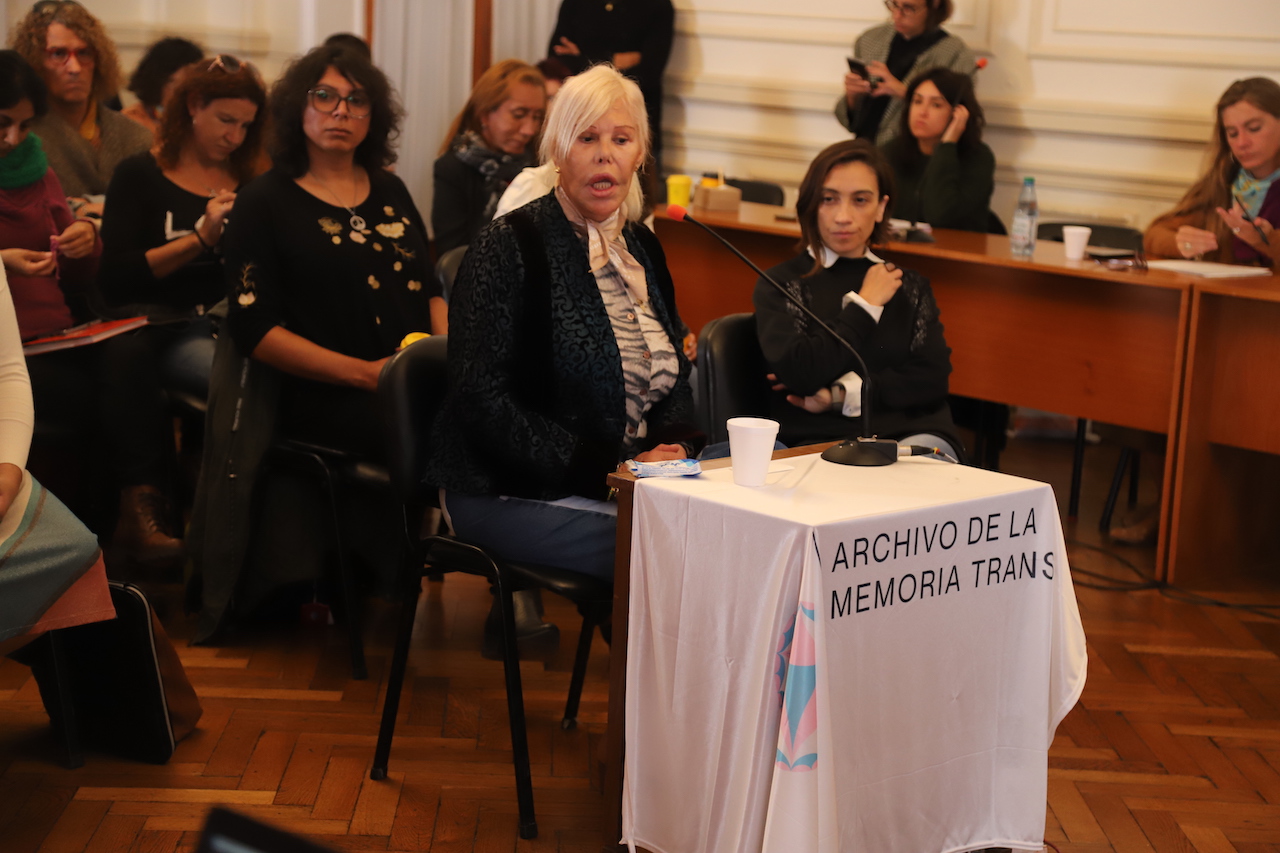
For her part, Claudia Vazquez Haro, the representative of OTRANS Argentina, who comes reporting before the courts the deaths of her companions and suffered a attempted murder Less than a month ago, she said that the registry is a step forward but “it is far from the reality in which transvestites and trans people live and die daily. This speaks of a judicial system that is deeply patriarchal, heteronormative and discriminatory.”An observatory
The Supreme Court also announced the creation of an Observatory for femicide cases, which will be managed by the high court's Women's Office and will include transvesticide and transfemicide cases. The Convention on the Elimination of All Forms of Discrimination against Women (CEDAW) and the Inter-American Convention on the Prevention, Punishment, and Eradication of Violence against Women (Convention of Belém do Pará) impose on their States Parties the duty to implement public policies to eliminate all manifestations of discrimination and violence against women.We are present
We are committed to journalism that delves into the territories and conducts thorough investigations, combined with new technologies and narrative formats. We want the protagonists, their stories, and their struggles to be present.
SUPPORT US

FOLLOW US
Related notes
We are present
This and other stories are not usually on the media agenda. Together we can bring them to light.
I'm so glad to know that something is being done for the trans community in Argentina, since I had to emigrate because of the lack of legal protection and everything else. At least after many years, something has finally happened. Congratulations, girls!