

The story behind a viral tweet: "I'm having a 12-year-old son"
A father shared his experience of his youngest son's transition on Twitter, and his words quickly went viral. This is the family behind that story: how a mother, a father, and a sister are supporting a child who, three months ago, told them, "I'm a trans boy, and I want you to accept me for who I am."

Share

A father decided to share his youngest son's transition experience on Twitter. His words went viral on social media. This is the family behind that story: how a mother, a father, and a sister support a child who, three months ago, told them, "I'm a trans boy, and I want you to accept me for who I am." By Lucila Rolón. Photos: Ariel Gutraich. "I'm being reborn as a 12-year-old son," Mauro wrote on Twitter. Mauro—a 42-year-old computer technician from La Plata—rarely tweeted. He had only recently created an account on the social network, but that afternoon he was in the car waiting for María—a 37-year-old teacher and luthier—his partner of 20 years, and he decided to try it. "I needed to learn how to say that I have a trans son, to put it into words," he tells Presentes. That day, as they drove back to their home in La Plata, Mauro and María debated whether it had been the right thing to tweet. Whether it was madness or something worse, an irreversible mistake, a decision that would make their son unhappy. They then asked Gonzalo. He replied that he thought the tweet was great. They were educating other parents, he said without hesitation. Behind the tweet that went viral was his story. And the story of his family's transition. Three months ago, at a family gathering, the 12-year-old son—who until then had been the youngest child—finally told his parents, María and Mauro, why he felt so sad. After many weeks of not being able to sleep well, he had started therapy. In sixth grade, he had asked to change schools. Until then, Gonzalo had the name his parents had chosen for him at birth, long hair, and a somewhat dull gaze. Under the loving care of his 17-year-old sister, Abril, at that family gathering three months ago, he looked his parents in the eyes and explained: he perceives himself differently than what his physical body expresses. María and Mauro stammered incoherently. He continued: “ I’m a trans boy and I want to be called Gonzalo. I want to be accepted as I am .” María and Mauro didn’t understand a word they heard. Now they say that’s why the conversation didn’t go much further. “You consider yourself progressive, but when he brought this up, it was like the voices of the cavemen came to speak for us,” María tells Presentes in her living room.

"I read the Gender Identity Law and I was blown away."
Gonzalo knows Argentina's Gender Identity Law 26.743 almost by heart. "I read it and was blown away! I didn't know I had half the rights it states!" he says. Passed on May 9, 2012, the law is a pioneer worldwide for being the only one that does not pathologize trans identity. According to the National Registry of Persons, to date more than 5,500 citizens have processed new national identity cards (DNI). More than 700 of those have been issued this year alone. Minors are not excluded from the law, in accordance with the International Convention on the Rights of the Child (and with the latest changes to the Civil Code). It's a step that Gonzalo has ahead of him.[READ MORE: Lucas, the boy from Entre Ríos who asked to change his ID card]
“A child may not be ready to sign checks, but they know perfectly well who they are,” says Valeria Paván, vice president and coordinator of the Health Program of the Argentine Homosexual Community (CHA). She also points out: Most boys who have expressed their trans identity from an early age have not changed their self-perception of who they are.[READ MORE: CHA turned 33 and presented a book on trans childhoods ]
"I am having a child where my daughter lived for 12 years."
After the first tweet, Mauro added: "I'm having a child in the exact spot where my daughter was for 12 years." "And despite being progressive, hippie, and geeky, my legs go weak just thinking about it." "I'm educating myself, of course. With YouTube videos, TED Talks, FTM trans songs, Judith Butler, and so on. And I still have no idea how difficult his life is going to be." “The first thing that broke my heart was that he had chosen a name alone, without involving me in the decision. I know it’s silly, but I couldn’t help feeling that initial reaction. You think you’re giving your children their identity,” says María. And she explains that she started therapy three weeks ago.
"My son explains to me: he wasn't born in the wrong body."
She and Mauro walk across a frozen lake: “Our children’s identity is theirs, but they are in our care because they are minors. It’s up to the parents which path to take: there are doctors who pathologize trans identity. And others who support it. Nobody in our circle knew what to tell us; other people helped us through the internet.”My son explains to me that he wasn't born in the wrong body. That he's not going to become a man, but that he's a trans boy. He understands things much more clearly than we do and he's constantly educating us. These binary ideas are structural, which is why the law helps us so much: the world has to adapt to this.“Our benchmark is Gonzalo’s happiness,” says Mauro. “No matter how much you think about it, in the end, that’s the key,” says his mother. Paván explains it from her experience with so many stories: “The transition isn’t just done by the child, but by their entire environment. The family, the school, and all the institutions they must interact with throughout their lives. The childhood expressions of trans people who are now over 40 were silenced by repressive methods imposed by their surroundings, even to the point of suicide.” There isn’t a new generation of trans children; there’s a new generation of parents who listen to their sons and daughters and give voice to their expressions. In the first stage, parents grieve the loss of who their son or daughter was: “But they get through it quickly, because it’s about…” to create the conditions so that your son or daughter can be who they truly are“What do we do with our memories?” María wondered several times. “I’m not asking you to change your memories,” Gonzalo replies aloud now, looking up at the ceiling with that annoying expression typical of teenagers, as if he had to state the obvious once again. His sister—a crucial support—looks at her parents with the same expression but says nothing, as if she knows that all that’s left is to wait for them. María and Mauro laugh and say that when they make those faces it’s because they’ve said something stupid. “People think there’s suffering in this, but there isn’t. I’m having a good time; before I was unhappy. I understand that you’re doing the best you can,” Gonzalo tells them. Gonzalo and his sister.
Transitioning in school
Mauro believes his son was always who he wanted to be and that the problem began when gender segregation emerged, for example, at school, where boys and girls were separated for different activities. On his first day of school, Gonzalo introduced himself in a letter: "My name is (his girl's name) but my friends call me Gonzalo." The principal called him in and privately told him that from that moment on, everyone at the school would call him what he wanted. They would correct it in the records, and they did. Later, he called his parents to tell them that he was the first trans student at the school and that they had been studying the law to implement it. He also told them that the school works with the students' values, and that gender is not a value. The parents' fear of the social cost of being trans gradually dissipated with gestures like these and the support they receive from other parents. But they also say that sometimes their son comes home from school angry. He complains because the kids his age don't make the effort to call him "he." Maria and Mauro ask him for patience, or to start referring to them in the feminine to see if they can put themselves in his place.[READ MORE: Schools ordered to respect trans identities ]
Being parents today
Bárbara Magarelli is the mother of Facha, a 12-year-old trans boy who, when he was four, told her, "The stork made a mistake, I'm a boy." In 2014, Facha was the first trans child to have his gender marker changed on his national identity document without legal challenges. A year earlier, Lulú had become a pioneer worldwide by achieving this thanks to the law. Bárbara, Facha's mother, is in charge of the Secretariat for Trans Children and Adolescents and their Families at FALGBT (Argentine Federation of Lesbians, Gays, Bisexuals, and Transgender People), where more than 30 families meet every Tuesday at six in the evening.[READ MORE: Selenna, the Chilean trans girl who became a symbol of pride]
"We tend to offer more support to parents over 40. Younger parents have a different perspective. In fact, We are receiving cases of increasingly younger children"Together with a group of doctors from the Pedro de Elizalde Hospital, they created a specialized sector for transgender children: 'There are psychologists, psychiatrists, endocrinologists, and nutritionists who have formed a support network for four years. We're missing the legal support to help us.' Bárbara and María want to replicate the model in La Plata.""The future is genderless"
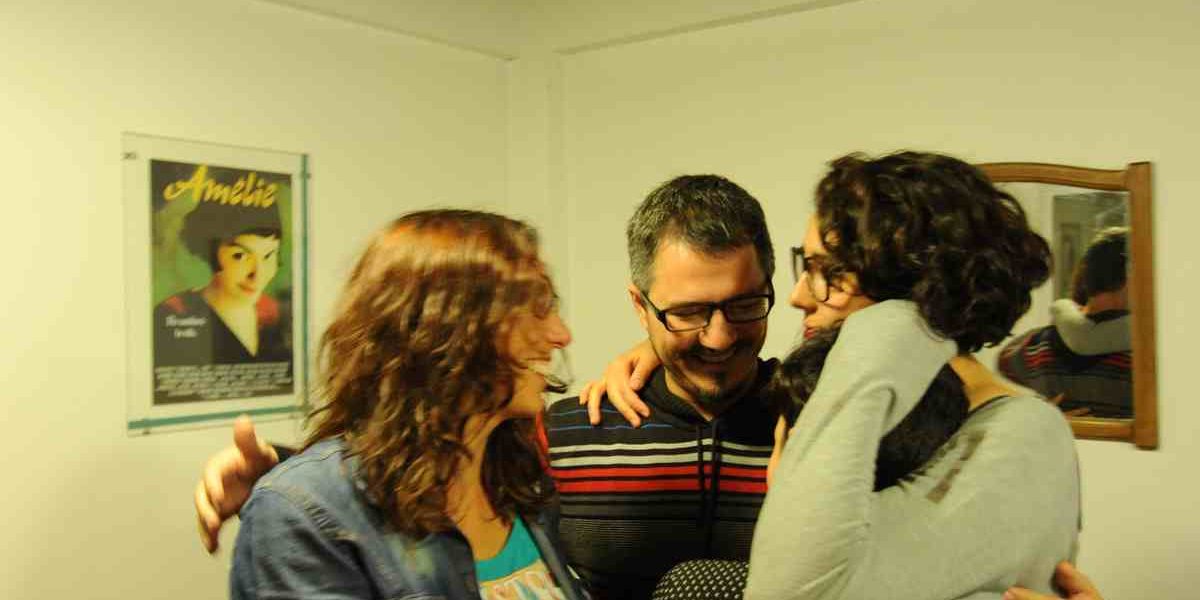
La Plata, Sunday, outside winter is in full swing. In this dining room, the final stretch of another afternoon snack together. A song by Tom Henrik is playing, a 25-year-old YouTuber who put lyrics and music to his transition. Perhaps it was the hug the four of them had just shared, or Maria's laughter, Mauro's intensity as he sang, Abril's relaxed dance with her kitten in her arms. Gonzalo says something he had never told them before:Gender is a spectrumIf I have to define myself, I feel closer to what a man would be, and that's not a problem for me. It's not a problem if you have the most important thing, which is the acceptance of your family. I don't want to confuse you, but the future is genderless"And he hugs them again."
Useful information:
Trans Children and Adolescents, Argentine Federation of Lesbians, Gays, Trans and Bisexuals (FALGBT ): phone: +54 (11) 4331-1237
Transgender Care Group of Durand Hospital: 54 (11): 4982-5555 / 5655
Argentine Homosexual Community Health Program (CHA): +54 (11) 4361-6382
]]>We are present
We are committed to journalism that delves into the territories and conducts thorough investigations, combined with new technologies and narrative formats. We want the protagonists, their stories, and their struggles to be present.
SUPPORT US

FOLLOW US
Related notes


We are present
This and other stories are not usually on the media agenda. Together we can bring them to light.