

Mariela Muñoz, trans mother and pioneer of the identity struggle in Argentina
In the '90s she was in the public eye when the courts tried to take custody of her three children, but she managed to adopt them.


Share

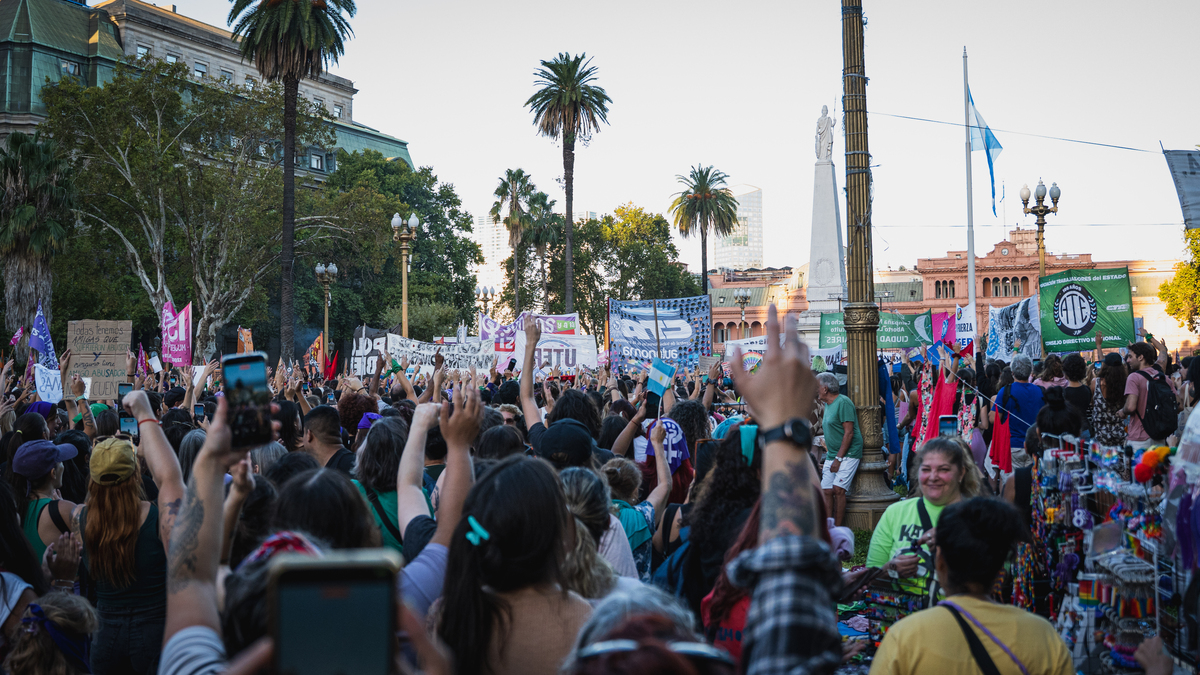
“Children need love, security, and availability. Nothing more,” said trans activist Mariela Muñoz in 2010 to a crowd in Plaza de los Dos Congresos, during the celebration of the legalization of same-sex marriage. The crowd erupted in applause. She was reiterating something that had always been her cause: the right of LGBT people to be mothers and fathers, to have a family, to give love and raise children.
She did it with 23 children throughout her life, which ended on May 5, 2017. She was 74 years old. Although she had reached an advanced age (the life expectancy of a trans person is 35 years), she spent her last years very ill, after suffering a stroke and losing several motor functions.
“She was the transvestite figure who linked gender with care and love for children. I remember children and grandchildren talking about Mariela as a mother and grandmother. For many of us, it meant ceasing to think of ourselves as people without parental rights and breaking the stigma that LGBT people couldn't raise children,” Humberto Edgardo Corts, a leader of the Mayores en la Diversidad (Seniors in Diversity) group Presentes
Advanced and emblematic
Muñoz was born in Lules, Tucumán, and came to public attention in 1993 when a juvenile court judge in Quilmes removed her from custody of three children she was raising as her own and sentenced her to a one-year suspended prison term. Four years later, she became the first transgender person to obtain a national identity document reflecting her gender identity.
Based on several psychological evaluations, Judge Jorge Dreyer of Court No. 8 in Quilmes ordered the Civil Registry to change her legal gender. Among his arguments, he maintained that her psychological sex had been female since childhood, prior to the surgery she had undergone in Chile in the 1980s. This case set a legal precedent and was used as a basis for several transgender people to request legal gender changes. “ I hope there are more transgender people after me and that they can do it legally,” she said when she was a guest on Mirtha Legrand's program .
“Her life was an example of struggle for many of us, as through her visibility she managed to bring the discussion of gender identity into the media. She was a fighter who helped write the history of the fight for gender identity. We need a Comprehensive Trans Law that repairs the suffering we endured for many years of our lives and allows us to live our old age fully,” said the Association of Transvestites, Transsexuals, and Transgender People of Argentina (ATTTA).
Social indifference
In addition to serving as an advisor to the National Institute Against Discrimination (INADI), she was a pre-candidate for Mayor of Quilmes in 1997. In the 2003 elections, she ran for provincial deputy for the Justicialist Party with the slogan "A Different Woman," and later in 2009 for the Renewal Party.
Following legal actions filed by the Argentine LGBT Federation (FALGBT) and the Association of Transvestites, Transsexuals, and Transgender People of Argentina (ATTTA), in 2013 Judge María Elena Liberatori ordered the Buenos Aires city government to grant her and four other elderly trans women “extraordinary and reparative subsidies,” a pension recognizing her as a survivor. However, activists pointed out that she never received it and died in poverty.
“Until victory always, dear Mariela Muñoz! A great fighter and historical figure of the #LGBTI who will accompany us forever in our struggle and activism,” said the Argentine Homosexual Community (CHA).
We are present
We are committed to journalism that delves into the territories and conducts thorough investigations, combined with new technologies and narrative formats. We want the protagonists, their stories, and their struggles to be present.
SUPPORT US

FOLLOW US
Related notes
We are present
This and other stories are not usually on the media agenda. Together we can bring them to light.