

Vanesa Zabala's transvesticide: four sisters seek justice
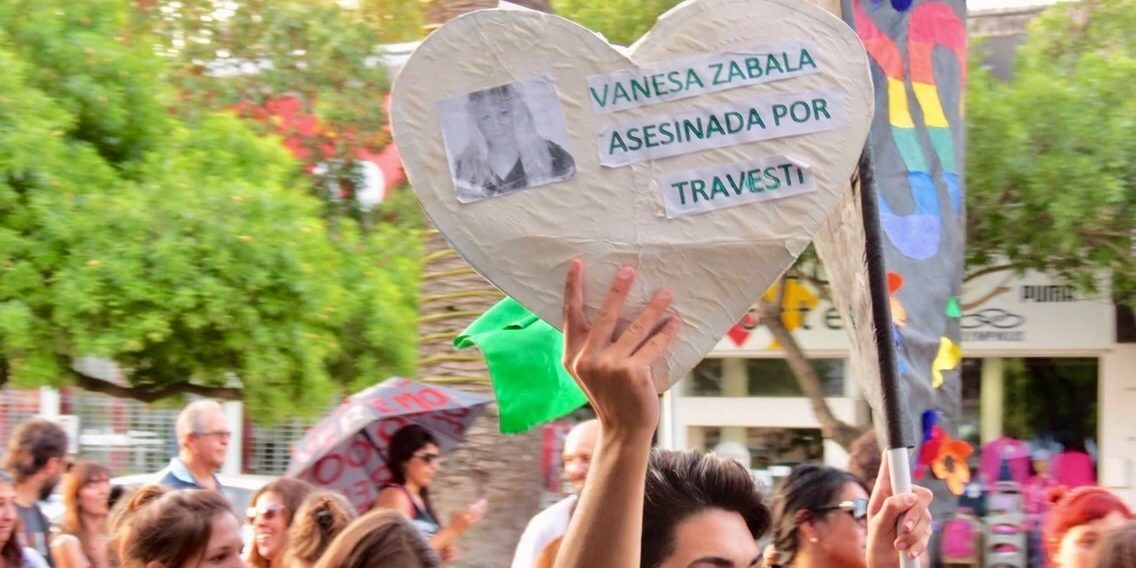
Four years after the crime and following several irregularities in the case, the Santa Fe court granted the request of the family of Vanesa Zabala, the young trans woman who was brutally murdered in Reconquista, Santa Fe province: her four sisters will be allowed to join the case as plaintiffs. A date for the trial has not yet been set.

Share

Four years after the crime and following several irregularities in the case, the Santa Fe court granted the request of the family of Vanesa Zabala, the young trans woman who was brutally murdered in Reconquista, Santa Fe province: her four sisters will be able to join the case as plaintiffs. A date for the oral trial has not yet been set. By Laura Hintze, from Rosario. Photos: Courtesy of Ammar. “May God forgive me, but I have to go out because I don’t have a penny,” Vanesa Zabala said on March 29, 2013. Her family was gathered celebrating a niece’s birthday. Sandra, her sister, asked her to stay. “Don’t go out, today is Holy Thursday. Don’t go out, the devils are out,” she told her. That night, Vanesa sent two messages. One asking them to save her some food, the other responding to her family’s plea to come home sooner. “I’m working, I’m coming,” she wrote. But she never returned. A neighbor informed them that there had been an “accident.” When the family arrived at the scene, the police and an ambulance were already there. Vanesa had been beaten, strangled, and impaled. She was 32 years old and died in the hospital. “I had a feeling something bad was going to happen, but I never imagined anything like this,” Sandra, who will now be able to file a lawsuit along with her sisters Angela, Celia, and Marisa, with the support of the Center for Legal Assistance (CAJ), told Presentes . This was decided last Friday by the Criminal Court of Appeals in the city of Vera, with the signature of Judge Carlos Damián Renna. It is a significant step forward given the numerous irregularities that plagued the case from the beginning.
[READ ALSO: #Argentina: drastic increase in transvesticides in 2016 ]
Over these four years, the criminal justice system in the province changed, Vanesa's parents died, and the legitimacy of her family members to act as plaintiffs was questioned. Furthermore, the judge in the case, Nicolás Muse Chemes, was recused. The substitute judges who remained in charge, Aníbal Marchetti, Julio D. Thomas, and Gustavo Ocaño, have a pending recusal motion against them. The lawyers from the CAJ (Center for Legal Assistance) believe they have delayed the case. "We are witnessing a case of institutional judicial violence," they told [the press]. Present Federico Lombardi, lawyer for the Zabala family.The defendants
Four people have been charged in the case, and were arrested in April 2013 under the orders of Judge Virgilio Palud. José Daniel Villasboas, Ana Virginia Abasto, José Luis Petroni, and Gustavo Daniel Vallejos are being prosecuted as co-perpetrators on charges of “aggravated homicide with cruelty and premeditation, and due to the participation of minors.” According to the investigation led by Vera Prosecutor José Antonio Mántaras, skin, blood, and fingerprints belonging to the accused were found on Vanesa's body. The object used to beat her—a fan pipe—was also recovered.[READ ALSO: Investigation: How the Justice System Acted in the Face of Hate Crimes 2015 ]
The defendants were held in pretrial detention until March 2016, when the procedural deadlines expired and they were released. Two minors were also detained but not charged; they were placed in the care of the Undersecretariat for Children and their families. They are now adults.Travelling on a bus with the alleged murderer
Sandra Zabala is 52 years old and lives in the Guadalupe neighborhood. She says that sometimes she goes out to forget everything, to clear her head, but she can't. Her neighbors keep asking her how the case is progressing. Although she sounds confident at first, she breaks down when she talks about her sister Vanesa. “I haven't been able to get over the loss. She will always be my little sister,” she says. PresentAnd she remembers her as cheerful, flirtatious, dreaming of opening her own hair salon, and the affection she showed her nieces. She also remembers the carnivals, when the house was filled with joy and Vanesa would sew the costumes and do everyone's makeup. That same house where she still lives today. Last Friday, when Sandra had to go to the hearing, she took a bus. A young man got on who seemed familiar, although she had never met him in person. He was one of her sister's alleged murderers. They traveled together to the courthouse. "I had only seen him in a video, but I felt something. Something very similar to what I felt the night Vanesa was killed," she told Present.A city that does not forget
Vanesa and her eight siblings were born in Reconquista, a city of 70,500 inhabitants, located 350 kilometers north of the provincial capital. Martín Caballero, a member of the Justice for Vanesa Zabala Collective, considers the response from the public and the media to the demonstrations demanding justice for Vanesa to be positive. “Vanesa’s transphobic murder had a strong social impact, both because of the horrific nature of the crime and because, days later, two highly publicized marches were held demanding justice. In that sense, we believe that what is happening here surpasses the reaction to similar cases in Santa Fe and Rosario,” he told PresentThe province of Santa Fe is the only one in the country with a sub-secretariat for Sexual Diversity, created in 2015. “We assume the responsibility of the State. Vanesa was murdered because the State was not present with policies that generate social and political change,” she told Present Esteban Paulón, Undersecretary of Diversity for Santa Fe, added: “As a government, we recognize and acknowledge this murder as a hate crime, a transphobic hate crime. It is an emblematic case that deserves justice.”[READ ALSO: Transgender job quota in Rosario: registration closed and 62 people signed up ]
Paulón highlighted the role of the Executive Branch in this case and its commitment to ensuring the case does not fall apart. The change in the criminal justice system has allowed state lawyers, through the Center for Legal Assistance (CAJ), to support Vanesa's family from the moment they file the complaint. Emmanuel Theumer, an LGBT activist in the province, pointed to Present The case of Vanesa Zabala serves to discuss the scope of integrationist discourses. “In Santa Fe, there is progress in public policies on diversity in a process of soft institutionalization. We know it is a process and we must not lose sight of that. But in the province, the stigma towards trans women—and even more so if they are poor and sex workers—remains rampant,” she said.We are present
We are committed to journalism that delves into the territories and conducts thorough investigations, combined with new technologies and narrative formats. We want the protagonists, their stories, and their struggles to be present.
SUPPORT US

FOLLOW US
Related notes


We are present
This and other stories are not usually on the media agenda. Together we can bring them to light.