

A priest washed the feet of a trans person: from inclusion to controversy
During an Easter ceremony, a priest in Trelew washed the feet of twelve people, including a trans woman. Brenda Manchot, a trans woman who lives in that city, questions the act performed in the name of inclusion in this opinion piece.

Share

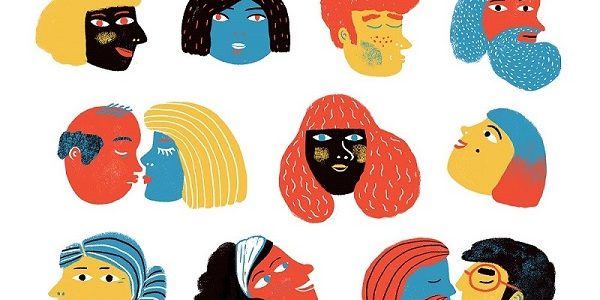
In a Holy Week ceremony, a priest in Trelew washed the feet of twelve people, including a trans person. Brenda Manchot lives in that city, is a trans activist, and in this opinion piece questions the act performed in the name of inclusion. "It is intended to publicly redress the humiliations and neglect to which some institutions have subjected and continue to subject minorities like the one I belong to." By Brenda Manchot* Illustration: Florencia Capella This week I learned through the media that in the city where I live, Trelew (Chubut), a priest from the Mary Help of Christians Church would wash the feet of a group of people. The ceremony would be part of the Holy Thursday Mass, in a gesture inspired by Jesus washing the feet of his disciples at the Last Supper. In Italy, Pope Francis washed the feet of twelve people deprived of their liberty. In the church in Trelew, the priest from Mary Help of Christians washed the feet of twelve people. Among them were a teacher, a nurse, a firefighter, a judge, a police officer, a person deprived of their liberty, and also a trans person. “The message is that we must be inclusive,” Father Fabián García, the parish priest in charge of the ceremony, told local media a few days prior. As a member of the trans community, I perceive it less as an act of inclusion and more as a gesture of social hypocrisy. Not only because this gesture comes from an institution that throughout history has considered those of us who make up this community to be little more than freaks. Historically, the Catholic Church has placed us in a marginal position, without giving us space or considering us as people capable of developing as part of society. The washing of feet at the Church of Trelew—the most important in the city—was a public and very well-promoted event. It is at least curious that the trans woman whose feet the priest washed was, years ago, a priest, but could no longer practice the priesthood for reasons related to her gender identity. She still—and at this point, from a personal perspective, I begin to differ with my fellow trans woman, because it contradicts gender—refers to herself. as a "priest".
[READ MORE: Why Francis' successor wants to expel the Scouts of Argentina from the Church]
 Returning to the Catholic Church: If the washing of feet is an act of inclusion, love, and sincere acceptance, would that same parish priest be willing to celebrate my wedding within his church? I know he wouldn't. They expect us to be celibate because they consider our sexuality an abomination. And because they have fought and continue to fight against our right to form families and adopt children.
If I have an ID card and the laws consider me a woman: why can I marry the man I'm in a relationship with at a civil registry but not in a church? What's the problem? In some discussions about this, I've been told, "Those are the laws of men; God's law is different." In my personal experience with this issue, I've received many negative responses, absurd excuses, and evasive answers, which leave me with a feeling of sadness and discrimination. But it should also be mentioned that it was this same priest who, in that same Catholic church, during the Ni Una Menos march, confronted protesters who were walking in front of the church building because we were carrying signs he didn't agree with. As a result of that situation, the Church called a small meeting with a minimal number of trans women and all available resources. And those of us who marched that afternoon chanting Ni Una Menos reacted with pain and indignation upon seeing that they were once again trying to underestimate us by using us as a promotional tool to give the impression that they are inclusive, tolerant, and capable of supporting and accepting vulnerable minorities like the trans community. I respect every person and institution, political and religious ideology, but I also express my disagreement with the aforementioned actions. I consider them a strategy. It is intended to publicly whitewash the humiliations and neglect to which some institutions have subjected and continue to subject minorities like mine. Regarding my fellow trans woman, I will simply say that she does not represent me. Nevertheless, I respect her actions and ideology, and I hope she does not take this personally. I am simply expressing my opinion in this piece, which is not intended to offend or hurt anyone's feelings. I speak from my personal experience and perspective. I do not speak on behalf of this publication. I speak as a trans woman; I speak because I feel humiliated and objectified once again. I believe that it would be more Christian for the Church—to use its own terms—to offer a sincere and public apology for its historical actions. True inclusion would mean opening up spaces for us to participate in its congregations and public discourse, sharing messages of love, peace, and empathy. So that public opinion understands that trans people are people with virtues and defects, like anyone else, also capable of loving and with the need to belong and assume the responsibility of forming and sustaining an inclusive society, with values and justice.
Brenda Manchot is an LGBTI rights activist. Born in Puerto Madryn, she lives in Trelew. She was one of the first trans people in Patagonia to have a national identity document (DNI) that recognizes her gender identity. This was before the law was passed, on December 7, 2011, when Judge Alejandro Defranco granted her injunction and gave the State 48 hours to correct her DNI.
]]>
Returning to the Catholic Church: If the washing of feet is an act of inclusion, love, and sincere acceptance, would that same parish priest be willing to celebrate my wedding within his church? I know he wouldn't. They expect us to be celibate because they consider our sexuality an abomination. And because they have fought and continue to fight against our right to form families and adopt children.
If I have an ID card and the laws consider me a woman: why can I marry the man I'm in a relationship with at a civil registry but not in a church? What's the problem? In some discussions about this, I've been told, "Those are the laws of men; God's law is different." In my personal experience with this issue, I've received many negative responses, absurd excuses, and evasive answers, which leave me with a feeling of sadness and discrimination. But it should also be mentioned that it was this same priest who, in that same Catholic church, during the Ni Una Menos march, confronted protesters who were walking in front of the church building because we were carrying signs he didn't agree with. As a result of that situation, the Church called a small meeting with a minimal number of trans women and all available resources. And those of us who marched that afternoon chanting Ni Una Menos reacted with pain and indignation upon seeing that they were once again trying to underestimate us by using us as a promotional tool to give the impression that they are inclusive, tolerant, and capable of supporting and accepting vulnerable minorities like the trans community. I respect every person and institution, political and religious ideology, but I also express my disagreement with the aforementioned actions. I consider them a strategy. It is intended to publicly whitewash the humiliations and neglect to which some institutions have subjected and continue to subject minorities like mine. Regarding my fellow trans woman, I will simply say that she does not represent me. Nevertheless, I respect her actions and ideology, and I hope she does not take this personally. I am simply expressing my opinion in this piece, which is not intended to offend or hurt anyone's feelings. I speak from my personal experience and perspective. I do not speak on behalf of this publication. I speak as a trans woman; I speak because I feel humiliated and objectified once again. I believe that it would be more Christian for the Church—to use its own terms—to offer a sincere and public apology for its historical actions. True inclusion would mean opening up spaces for us to participate in its congregations and public discourse, sharing messages of love, peace, and empathy. So that public opinion understands that trans people are people with virtues and defects, like anyone else, also capable of loving and with the need to belong and assume the responsibility of forming and sustaining an inclusive society, with values and justice.
Brenda Manchot is an LGBTI rights activist. Born in Puerto Madryn, she lives in Trelew. She was one of the first trans people in Patagonia to have a national identity document (DNI) that recognizes her gender identity. This was before the law was passed, on December 7, 2011, when Judge Alejandro Defranco granted her injunction and gave the State 48 hours to correct her DNI.
]]>
We are present
We are committed to journalism that delves into the territories and conducts thorough investigations, combined with new technologies and narrative formats. We want the protagonists, their stories, and their struggles to be present.
SUPPORT US

FOLLOW US
Related notes
We are present
This and other stories are not usually on the media agenda. Together we can bring them to light.