

Drag Kings against sexism and gender stereotypes
Dressing in men's clothing was one of the strategies many lesbians and women used for years to access forbidden spaces. Today, those who transform into Drag Kings represent masculine bodies to fight against gender-based violence in educational workshops, plays, marches, and everyday life scenes.


Share

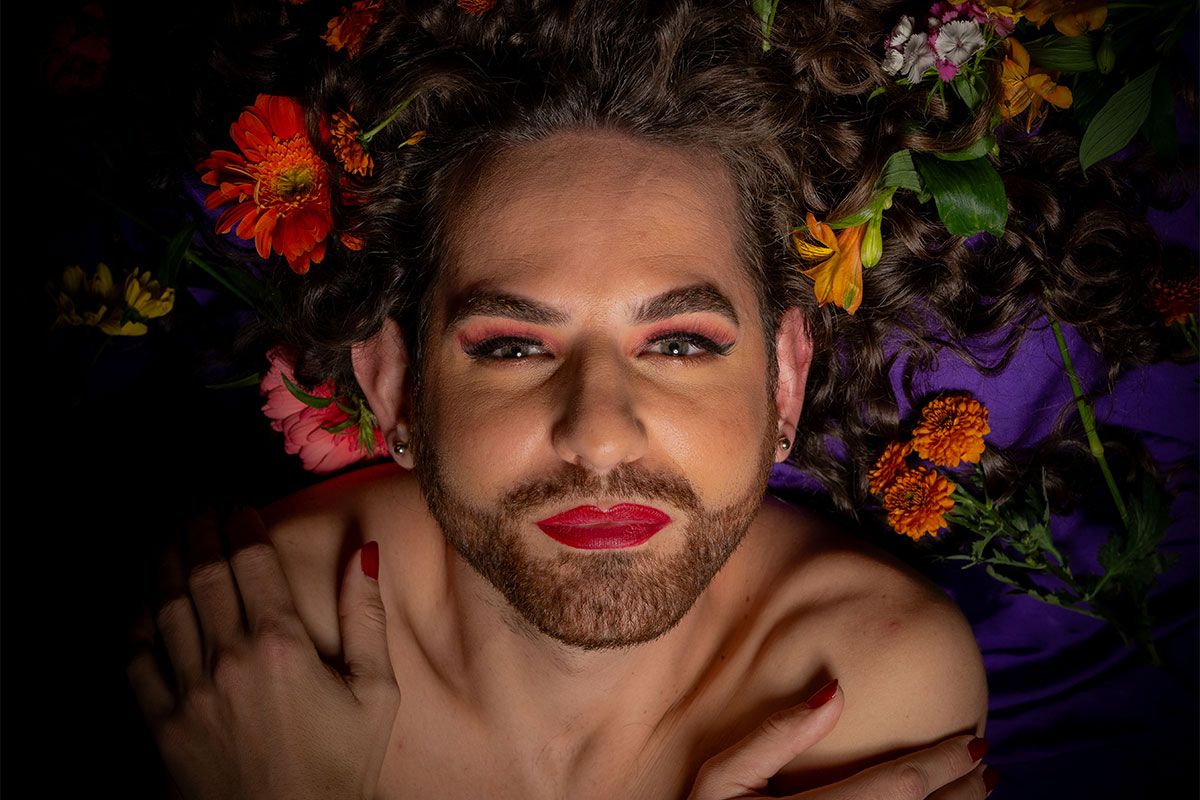
Dressing in men's clothing was one of the strategies many lesbians and women used for years to access forbidden spaces. Today, those who transform into Drag Kings represent masculine bodies to challenge the mandates of patriarchy and fight against male violence in educational workshops, plays, marches, and everyday life scenes. By Amanda Alma. Photos: Courtesy of the interviewees' personal albums. Many lesbians, outside the art scene, choose to represent masculine bodies to critique the mandates imposed by patriarchy. They are Drag Kings : performance artists who often portray exaggeratedly masculine characters or imitate celebrities like Elvis Presley or James Dean. They parody the macho superstar and transform conventional forms of sexism and misogyny into comedy. They revisit what Drag Queens —men dressed as women—using grotesque and ironic humor. Classic film scenes have shown women dressed as men. Marlene Dietrich, Barbra Streisand, and even Susana Giménez portrayed men in some films to highlight male privilege. A mustache and a small artificial beard, altered posture and gait are some of the strategies adopted by drag kings who walk the streets in everyday life. They politically reclaim theatrical techniques to subvert the traditional classification of bodies and dismantle the dominant heterosexual regime .
“Playing on the edge with gender binarism”
Ana Clara Benabente is a teacher in Buenos Aires Province and the City of Buenos Aires. She teaches at the secondary level, in private schools in the northern suburbs, and in adult education programs. She is one of the many openly lesbian teachers and is a staunch advocate for public education. Two years ago, she participated in a drag workshop where she dressed as a man and performed in public. She walked amidst the fears, prejudices, and discomfort that the unexpected body generates in heterosexual society.The experience, she recounts, was “playing on the edge of the gender binary, experiencing other bodily movements, another image in the mirror.” Beyond the “perfection” in the characterization that Ana Clara achieved, she says: “Visiting the everyday from another identity, even if momentarily, was both complicated and liberating.” As a result of the impact it had on her own body, she decided to replicate, along with a group of colleagues, a workshop in the classroom as a tool for working on Comprehensive Sexuality Education (CSE) content. The idea: to dismantle the rules of heterosexual “normality” and “challenge identity boundaries.” Using everyday stories, they work with stereotypes and characteristics associated with each gender, and with the roles that society imposes on men and women to guarantee social reproduction. But the key to Drag The key is for the experience to be felt physically, to learn how to move through space. It's a big challenge. They are taking it on within the context of the dismantling of mainstreaming policies, which the law guarantees for educational content in Comprehensive Sexuality Education (CSE) and which various sectors have been denouncing.
Drag King, artistic and political expression
Dressing in men's clothing was one of the strategies many lesbians and women adopted throughout history to access male privileges. Late entry into the formal education system, as well as the relatively recent recognition of access to rights previously reserved for men, led many of our ancestors to resort to cross-dressing to circumvent these barriers. But the Drag King As an artistic/political expression, it emerged in the late 1980s in Europe and the United States, and generated multiple reappropriations worldwide. It appropriated the forms in which the Drag Queens, male artists who were characterized as divas from the golden years of Hollywood. He focused on the stereotypes of masculinities, to expose them.While the performance was barely accepted on stage, the challenge deepened when they began to break into the streets and everyday life.Pioneers on stage
Marcela Díaz and Patricia Roncarolo are actresses and participated in the first workshop of Drag Kings in the City of Buenos Aires, which was taught in 2004 by Susana Cook, an Argentine lesbian actress who has lived in the United States since the late 1980s. Cook went through the under He was a Buenos Aires native at the Parakultural and landed in the Bronx, where he became intertwined with the culture Drag that was emerging in that territory. With the turn of the century, and while passing through Argentina, she invited a group of lesbian feminists to experience transforming themselves into the very men they so harshly criticized. One of the key moments of that workshop, Marcela notes, was learning to move like a man: “pelvis forward, legs wide open, walking while taking up space.” The impact of those classes was so profound that they created two plays. They brought masculine stereotypes to the stage in their most extreme form.
From playback to denouncing gender violence
The most common thing at the beginning was to imitate music stars, to do playbackMarlon Brando and Sandro were role models. But political critique seeped in through their bodies. Marcela and Patricia portrayed the macho figures of soccer, music, novels, and politics. Their works—Stereotypes: Macho Thing and Stereotypes II: Private Property—denounced gender violence, which in the years leading up to #NiUnaMenos was barely recorded as crimes of passion or domestic violence. They embodied scenes of femicide and street harassment to show that it wasn't "natural," it was blatant expression of machismo. They were pioneers in taking to the stage with beards, mustaches, and suits to mock the binary. But by intervening in the streets, outside the conventions of theater, they felt the full force of the "normalizing" gaze.
Sex police
The facts of Violence against lesbians The events of recent months in Buenos Aires have redefined the street as a territory of discipline and conflict. Arbitrary arrests and attacks expressed the hatred that the visibility of bodies that defy binary norms unleashes in some people.[READ MORE: " No one mentions that the women arrested in the #NiUnaMenos protests are lesbians" ]
For lesbian activist An Millet, heteronormative society reinforces a perspective she describes as “sex policing.” At 27, she walks the streets of Buenos Aires defying expectations regarding her genitals. She asserts, “Drag is a way of deconstructing the heterosexual system.” But its meaning shifts when it comes to a space for lesbian encounters. There, “it acts as a trigger for things that happen to us, and you also witness the construction of other people’s bodies.” An is part of the queer screen-printing collective and the Permanent Lesbian Assembly. Along with so many of her generation, she champions the possibility of “challenging many of the discipline's logics, the structures of political organization, and gender binarism by living the lesbianism I choose.” It is “a worldview that transcends the critique of heterosexuality.” She asserts: “For every logic of normality, we have tools and strategies that allow us to produce other forms of existence.” She walks the streets with her unclassifiable body and faces reprisals, questions, and challenge.
The task is to make people uncomfortable.
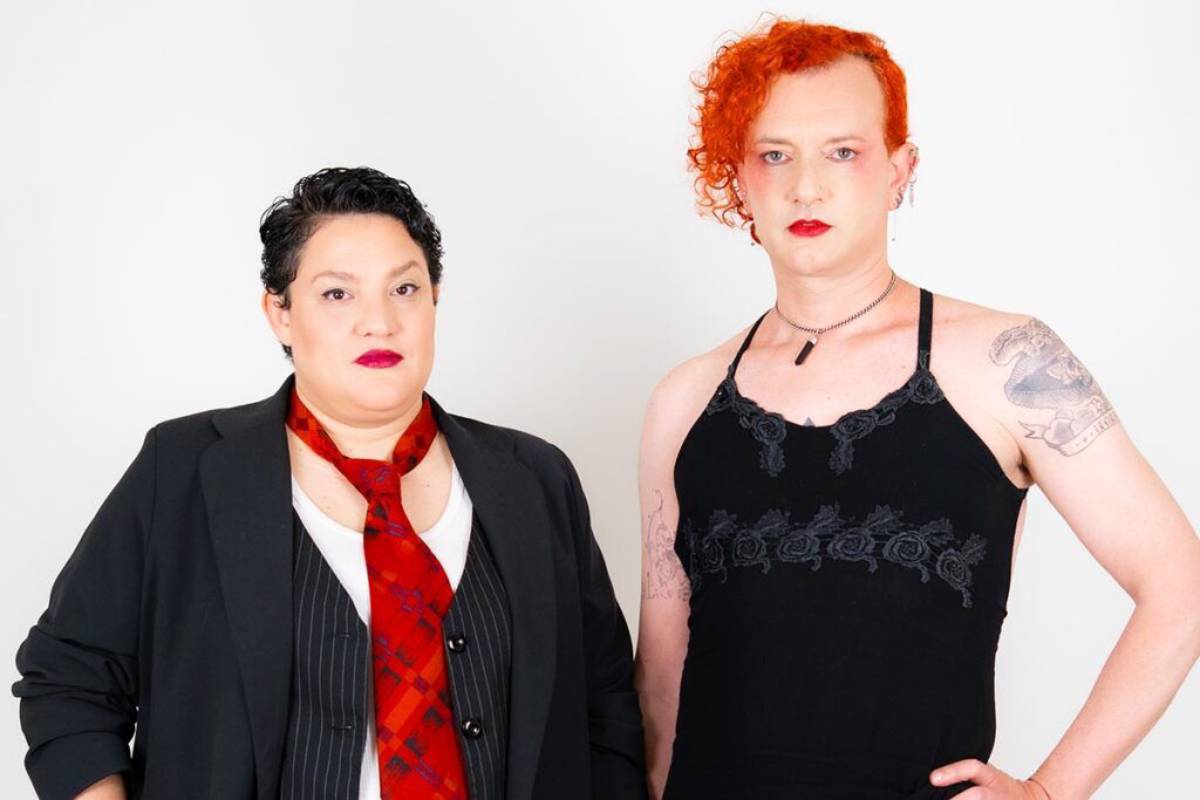
Marcela, Patricia, Ana Clara, and An walked the streets of Buenos Aires on different occasions and at different times, dressed in masculine attire. The reactions they encountered revealed the discomfort generated by challenging gender norms, whether in the art world, at school, or in everyday life. They agree that drag expresses the variety and diversity of being a lesbian. At the last Pride March, Ana Clara was visibly... femmeBut he added a very realistic beard. That gesture threw off everyone he met along the way to Plaza de Mayo: “They looked twice to ‘check,’ there was a disorientation that threw them off.”[READ MORE: 25 years of pride and politics in the streets ]
With the rise in femicides, Marcela and Patricia assert that the works they wrote seven years ago have become relevant once again. They warn that, for them, the change in government directly impacts the social understandings that had been developing around “respect for diversity.” That is why, they say, “even today there is a lot of resistance, even among artists, to the inclusion of…” Drag KingsAn admits that walking down the street in drag generates "on the one hand, horrible reactions that throw you off balance because of the violence they bring." But it also "enables questioning, because it helps to make proposals to the world, like a manifesto of what each person constructs of themselves."Follow Presentes:
Twitter
@PresentesTLGBI Instagram:
PresentesLTGBI Facebook:
https://www.facebook.com/presentesLGBTI/
]]>
We are present
We are committed to journalism that delves into the territories and conducts thorough investigations, combined with new technologies and narrative formats. We want the protagonists, their stories, and their struggles to be present.
SUPPORT US

FOLLOW US
Related notes

We are present
This and other stories are not usually on the media agenda. Together we can bring them to light.