

#PERU: Recommendation to eliminate decree on hate crimes
A vote of ten to six in Congress recommended eliminating Decree 1323, which established criminal penalties for hate crimes and discrimination against LGBTI people. Those who voted for this measure, which the Ombudsman's Office considers a step backward in the effort to prevent and combat homophobic and transphobic violence in society, are among those who voted against it.

Share

A vote of ten to six in Congress recommended eliminating Decree 1323, which established criminal penalties for hate crimes and discrimination against LGBTI people. Those who voted for this measure, which the Ombudsman's Office considers a step backward in the effort to prevent and combat homophobic and transphobic violence in society, are among those who voted against it.
Esteban Marchand, from Lima (Peru)
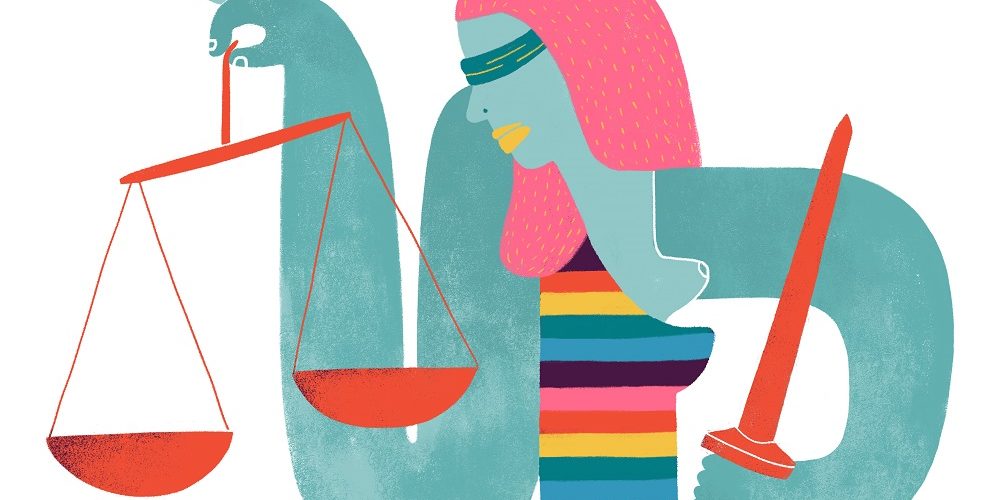
Illustration: Florencia Capella
The Constitutional Committee of Congress recommended eliminating the protections for LGBTI people in Legislative Decree 1323. The vote took place yesterday afternoon, and the issue now goes to the full Congress. With 10 votes in favor and 6 against, the committee recommended eliminating the decree that established criminal penalties for hate crimes and discrimination against LGBTI people based on their sexual orientation and/or gender identity.
Miguel Torres (president of the Constitution Commission, Popular Force party), Guilmer Trujillo, Lourdes Alcorta, Rosa María Bartra, Luis Galarreta, Karina Beteta, Miguel Castro, Edwin Vergara, Úrsula Letona and Modesto Figueroa are the names of the Fujimorist congressmen who voted for this measure.

Why was this decree important?
According to figures collected by the LGBT and HIV/AIDS Rights Observatory of Peru, between January 2005 and March 2016, 157 LGBT people were murdered in the country. They did not receive just punishment because there was no adequate legal framework in place to address hate crimes within the justice system.
Legislative Decree 1323—which flooded social media yesterday with the hashtag #YoApoyoDL1323—was issued by the Executive Branch on January 6. It amended Article 46 of the Penal Code, which now reads: “Committing the crime motivated by intolerance or discrimination, such as origin, race, religion, sex, sexual orientation, gender identity, genetic factors, parentage, age, disability, language, ethnic and cultural identity, clothing, opinion, economic status, or any other grounds, is considered an aggravating circumstance.”
[READ MORE ON THIS TOPIC: Law against hate crimes and discrimination passed in Peru]
The decree was a significant step forward in the fight for equality and was widely celebrated: "It is the first law that recognizes sexual orientation and gender identity while protecting our physical integrity," George Hale, director of the Center for the Promotion and Defense of Sexual and Reproductive Rights (Promsex) and member of ILGA LAC (International Lesbian, Gay, Bisexual, Trans and Intersex Association for Latin America and the Caribbean), told Presentes at the time.
Closed-door debate
However, the decree still had to be reviewed by the Legislative Branch. Yesterday, it was debated almost in secret. The discussion in the Congressional Constitution Committee was not broadcast on the official website. The Facebook page managed by the press office of Congressman Alberto de Belaúnde (Peruvians for Change party) was responsible for live-streaming the debate.
Is Fuerza Popular so afraid of the country seeing what's happening? https://t.co/yeDzBPdeiu
— Alberto de Belaunde (@AlbertoBelaunde) April 4, 2017
The Ombudsman's Office of Peru had sent a letter to the Commission, stating its support for the Decree. "Any repeal of the references to sexual orientation and gender identity would contravene the cited international recommendations and represent a step backward in the effort to prevent and combat homophobic and transphobic violence in society," the agency stated.
Amnesty International echoed this sentiment . "It is worrying that this decision was made despite the recommendations of the Ombudsman's Office and the international recommendations that the Peruvian State has received to address violence against LGBT populations," it said in a statement.
"They are turning their backs on thousands of threatened LGBTI Peruvians."
“In this way, the government turns its back on the thousands of Peruvians who feel threatened because of their sexual orientation and gender identity,” Belaúnde said after the vote.
For activist Verónica Ferrari, what happened in parliament is just another example of the intentions of the Fuerza Popular (Fujimorismo) bloc to go against the human rights of people in vulnerable situations.
"A homophobic and misogynistic congressional majority"
“Before, they did it under a dictatorship; now they do it in a democracy thanks to their congressional majority, an openly homophobic and misogynistic majority. A majority that hasn't even hesitated to remove the gender equality approach from other decrees issued by Pedro Pablo Kuczynski's government,” Ferrari told Presentes.
The elimination of protection against hate crimes and discrimination based on sexual orientation and gender identity comes one day before the 25th anniversary of Alberto Fujimori's self-coup.
Along the same lines, activist Gio Infante interprets this measure as a strategy by Fujimorism to eradicate the gender perspective and any protection for LGBT people from Peruvian law. Infante points out: it's not just Decree 1323 that has been eliminated.
“The gender perspective has been removed from the Interior Ministry law (DL 1266). And there is a bill to repeal the curriculum and require prior parental approval for sex education. There is also a citizens' initiative to replace the gender perspective with one of complementarity between men and women,” the activist told Presentes.
The repeal of the Legislative Decree will have to go to the full Congress for debate. However, the Fuerza Popular party holds a majority. Presentes will be closely following this important debate for the LGBT community in Peru.
#IsupportDL1323
On social media, the hashtag #YoApoyoDL1323 trended throughout the day. Many users expressed their solidarity, support, and ultimately, outrage when it was repealed.
#IsupportDL1323
Follow Presents
Twitter @PresentesTLGBI
Instagram : PresentesLGBTI
Facebook: https://web.facebook.com/presentesLGBTI/
We are present
We are committed to journalism that delves into the territories and conducts thorough investigations, combined with new technologies and narrative formats. We want the protagonists, their stories, and their struggles to be present.
SUPPORT US

FOLLOW US
Related notes


We are present
This and other stories are not usually on the media agenda. Together we can bring them to light.