

LGBT Identities at the “Rights in Focus” Photographic Event
Through screenings of the “Trans Memory Archive”, curated by María Belén Correa and Cecilia Estalles Alcón; the photographs of Marcos Adandía; and a panel discussion with representatives of sexual diversity, the international photography and human rights meeting “Rights in Focus” kicks off the week of Remembrance in Argentina, vindicating, among other things, LGBTI identities and their struggles.

Share

Through screenings from the “Trans Memory Archive,” curated by María Belén Correa and Cecilia Estalles Alcón; photographs by Marcos Adandía; and a panel discussion with leading figures in the LGBTQ+ community, the international photography and human rights event “Rights in Focus” kicks off Memory Week in Argentina, highlighting, among other things, LGBTQ+ identities and their struggles. Photos: Trans Memory Archive Argentina and Marcos Adandía. For the first time, and to begin Memory Week in Argentina, a photography and human rights event was organized at the former ESMA detention center. “Rights in Focus” will take place on March 17 and 18 and will feature thirty national and international exhibitions and the participation of more than 50 photographers. Among the scheduled activities are ten roundtables, twelve workshops, and six forums. One of these forums, on Friday the 17th at 4 pm, will focus on “Neoliberalism and LGBTQ+ Activism.” Argentine leaders in the LGBTQ+ community will participate, including Greta Pena (100% Diversity and Rights), Carlos Alvarez (Xango), Florencia Gemetro (Lesmadres), CHA, Diana Aravena (Putos Peronistas), Francisco Quiñones (Mocha Cellis), Dario Arias (Conurbanxs for Diversity), Sasha Sacayan, and Claudia Vázquez, among others. On Saturday the 18th, at 4 pm, images from the Trans Memory Archive will be projected. This photographic project is led by María Belén Correa and Cecilia Estalles Alcón. The project, which recently won a grant, can be viewed on its website and has already received contributions from over eight hundred trans people living in various parts of the world.
 Currently, there are approximately two thousand digitized images and another one thousand awaiting digitization. “We consider ourselves survivors of the dark times we endured under a state that promoted and legalized persecution against us. Most of us are exiled trans women who are connected to recover our past, just like the Grandmothers of Plaza de Mayo did. There is so much pain, because our lives were worthless and cars would run us over on the Pan-American Highway. Then they'd say they were accidents because we were just standing there. There was impunity for them to extort money from us, arrest us, beat us, and do whatever evil they wanted to us,” María Belén Correa, founder of the project and activist with ATTTA (Association of Transvestites, Transsexuals, and Transgender People of Argentina),
 Presentes Cecilia Estalles is a photographer who spearheaded the project alongside Correa. She can be contacted through the Facebook , or she can contact those who want to contribute to the archive.
READ ALSO: [ “Trans people have the right to a memory” ]
“The archive’s approach is that the stories are told in the first person, and the images are taken by the women themselves. They cover the period from the 1980s to 2000, a time of greatest repression against the community in Argentina, when police edicts were wreaking havoc,” Estalles told Present.Diana and Marcos
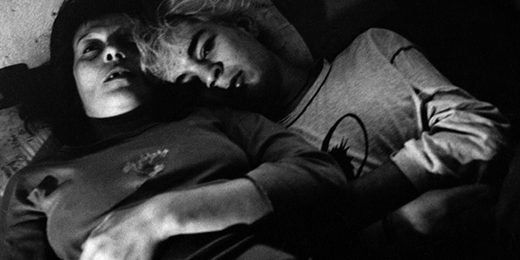
Diana was a trans woman who died of AIDS in the late 1990s amidst extreme poverty and loneliness. She spent long periods in the Muñiz Hospital and from there went out onto the streets to work as a prostitute, using what little strength she had left. When photographer Marcos Adandía met her, she was 23 years old and her life revolved around the hospital, the streets, and the local police station. “Ours was an encounter between two people who recognized each other. We were like siblings. I accompanied her for a year, and photography was an excuse. It’s always an excuse to resolve things we have inside. She had a very hard life and a past with a violent police officer father who had kicked her out of the house when she was 13,” Adandía told PresentIn the '90s, Adandia was portraying, in a decade ravaged by AIDS deaths, the paths of loss and disease and came across, not believing in coincidences, Diana and her story.
"I will always carry her in my heart."
“The relationship had a place of dignity and purity. Sometimes I wanted to help her with a few pesos, but she wouldn't take the money. And she really needed it. She always told me she'd never had the opportunity to have conversations with a man on that level, where there was no sex or violence involved. The last time I saw her, she was hospitalized in the tuberculosis ward. The next day, she died.” Besides Marcos, Diana had a friend, Nelly, a lesbian who was also homeless and would occasionally bring Diana food or look after her. It was with Nelly that Marcos received Diana's body, and it was with her that he buried her in Chacarita Cemetery. Nelly also appears in Adandia's photos.
 Some time later, after burning some negatives, Adandía was able to grieve for Diana, but also for other stories. “I was only able to cry months later. And I realized that I will always carry her in my heart because it was a very intense bond. When I cried for her, I also cried for my father, who also had a history of abandonment and homelessness.”
With the drive of Lohana Berkins
The photographer hesitated to show Diana's photos. He didn't want her pain displayed as art in a gallery. He wanted to honor her memory, so he went to talk to Lohana Berkins. “I was quite good friends with Lohana; we had been involved in various activism together. I brought up Diana's case with her, and she suggested we do a screening for the girls who were living at the Gondolín Hotel. Back then, it wasn't like it is now, well-known. Everything was much more violent; there were police outside all the time, and there were bullets and stabbings. We organized the screening, and Marlene Wayar hosted it. It was very intimate, very beautiful, and full of meaning.”
From Mexico to Gondolin
But there was the matter of the photos. What to do with them. When he was invited from Mexico City to exhibit that show—it was also in a special place: a chapel three blocks from the Zócalo—they made large, expensive, high-quality copies of Diana's photographs, which he brought with him to, this time not project but hang at El Gondolín in 2000. “The El Gondolín exhibition was crazy because it was only for three days, but thousands of people came through. There were many more people than if it had been in a gallery. Some friends and I even roofed the patio; it was incredible, it turned out beautiful.” After that single exhibition, some of Diana's photos were displayed at the Museum of Art and Memory in La Plata. Today they come to life again. You can find out about all the activities of the "Rights in Focus" event. hereTo see some of the photos, here:
Follow Presentes:
Twitter
@PresentesTLGBI Instagram:
PresentesLTGBI Facebook:
https://www.facebook.com/presentesLGBTI/
]]>
We are present
We are committed to journalism that delves into the territories and conducts thorough investigations, combined with new technologies and narrative formats. We want the protagonists, their stories, and their struggles to be present.
SUPPORT US

FOLLOW US
Related notes
We are present
This and other stories are not usually on the media agenda. Together we can bring them to light.