

LGBTI rights in Latin America: what's new?
The Inter-American Commission on Human Rights (IACHR) published a statement highlighting recent measures by Peru and Paraguay to guarantee the rights of the LGBTI population, but expressed concern about the conservative waves in civil society.

Share

The Inter-American Commission on Human Rights (IACHR) issued a statement highlighting recent measures taken by Peru and Paraguay to guarantee the rights of the LGBTI population, but expressing concern about the conservative waves within civil society. In the statement , the IACHR noted the “persistence of challenges” regarding the rights of the LGBTI population in Latin America. However, the document also emphasizes the positive actions taken by various states recently in several key areas, including education, health, employment, and the strengthening of rights.
Anti-discrimination
Regarding the adoption of anti-discrimination measures, the IACHR highlighted the adoption in Peru of Legislative Decree No. 1323 of the Executive Branch, which establishes as an aggravating factor – among others – discrimination based on sexual orientation and gender identity.[READ ALSO: #Peru: Law against hate crimes and LGBTI discrimination approved ]
Regarding the rights of transgender people, the organization highlighted the ruling by the Constitutional Court of Peru, which establishes a significant jurisprudential shift. In that ruling, the Court determined that individuals can request a change of name and gender on their national identity documents (DNI) through a summary process overseen by civil judges.[READ ALSO: Peru: Gender Identity Bill introduced ]
 Health
The international organization highlighted Resolution 695 of October 31, 2016, from the Paraguayan Ministry of Public Health and Social Welfare. This resolution stipulates that transgender people may use their chosen name on medical records, clinical histories, and forms. This right must extend to both treatment and care provided throughout all health service networks under the Ministry's jurisdiction.
 Health
[READ ALSO: #Paraguay: They entered the Judiciary to defend trans women ]
The Commission acknowledged the role of civil society in its advancement. On this point, the IACHR called on the States of the region to adopt effective measures to improve care and comprehensive access to health services for LGBTI people, and to create safe spaces that respect diverse sexual orientations and gender identities.Job quota
Regarding the labor sector, the IACHR highlighted the initiative of the Ombudsman for Audiovisual Communication Services of the Ministry of Justice and Human Rights of Argentina. Through Resolution 164/2016, it established a job quota of no less than 2% for trans, transvestite, transsexual, transgender, and intersex people who meet the qualifications to hold a permanent position.[READ ALSO: #Argentina: progress and shortcomings of the trans employment quota ]
Education
The report highlights the Peruvian Ministry of Education's initiative to adopt a new national basic education curriculum that seeks to promote gender equality and respect for all people, regardless of their sexual orientation and/or gender identity. The IACHR emphasized the importance of this measure in ensuring that education policies are specifically designed to modify social and cultural patterns of behavior, counteract prejudices and customs, and eradicate practices based on stereotypes of LGBT people that can legitimize or exacerbate hate-motivated violence. However, without directly naming it, the report also alluded to the conservative Peruvian campaign #ConMisHijosNoTeMetas (Don't Mess With My Children) that opposes this measure.[READ ALSO: #Peru: The ideology of hate against the LGBTIQ community ]
Same-sex marriage
Finally, he referred to the Peruvian court ruling that ordered the National Registry of Identification and Civil Status (RENIEC) to register the marriage of a same-sex couple celebrated abroad.[READ ALSO: Peru: Judiciary recognizes first gay marriage ]

“Threats of regression”
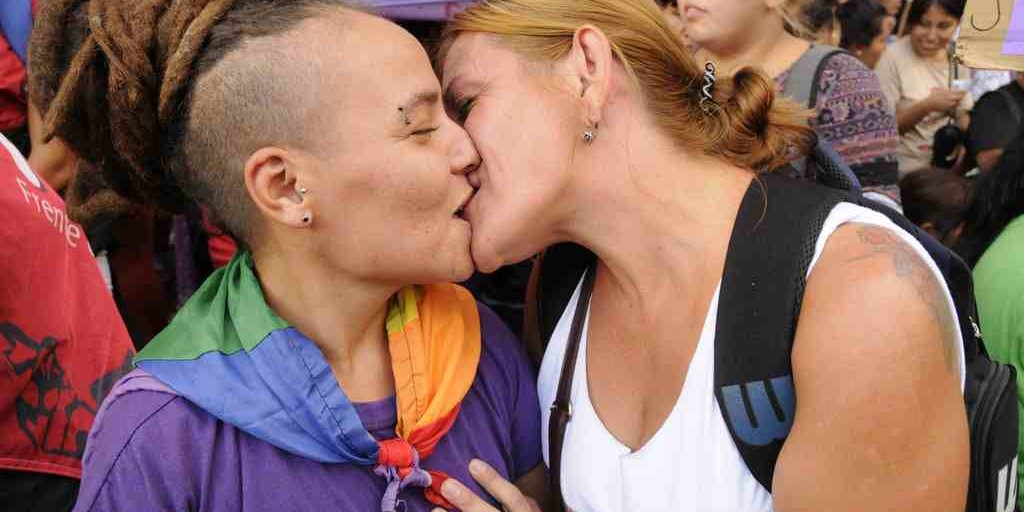
Despite the significant progress, the Inter-American Commission noted the concern expressed by various civil society organizations in the region regarding the threat of regression in the recognition of LGBT rights. “According to the information received, this situation is evident in disinformation campaigns about measures that various States are promoting in this regard, which contributes to accentuating the stigmatization of LGBT people, inciting violence, amplifying hate speech, and hindering the implementation of certain measures already adopted by States,” the report states.[READ ALSO: PERU: They took to the streets kissing to say enough to homophobia ]
The IACHR focused on the situation in Peru, where there have been episodes of aggression, a proliferation of hate speech, and rejection of LGBT people by conservative sectors. In this regard, the IACHR highlighted the initiative of the Peruvian Ministry of Education and urged other States in the region to adopt measures to counteract the proliferation of stigma, stereotypes, and violence against LGBT people, ensuring the quality of publicly available information on the various measures.Follow Presentes:
Twitter
@PresentesTLGBI I
nstagram: PresentesLTGBI Facebook:
https://www.facebook.com/presentesLGBTI/
]]>
We are present
We are committed to journalism that delves into the territories and conducts thorough investigations, combined with new technologies and narrative formats. We want the protagonists, their stories, and their struggles to be present.
SUPPORT US

FOLLOW US
Related notes


We are present
This and other stories are not usually on the media agenda. Together we can bring them to light.