Twitter @PresentesTLGBI
Instagram: PresentesTLGBI
Facebook: https://web.facebook.com/presentesTLGBI/
 Support us
The murdered young man became a symbol of the fight against homophobia, and Chile's anti-discrimination law bears his name. At a ceremony with family members and LGBTQ+ organizations, he was honored, and the law's shortcomings and the lack of effective public policies by the state were denounced.

If Daniel Mauricio Zamudio Vera were alive, he would be turning 30 this coming August. However, on March 2, 2012, he was brutally attacked and tortured in San Borja Park in the Santiago commune by a group of young men, tragically dying on the 27th of the same month from severe head trauma. Those were days, afternoons, and nights of painful waiting, agony, and uncertainty for his family and friends, including the LGBTQ+ organizations that urgently raised the banners of non-violence against homophobia.
According to his closest friends, “Daniel longed to finish high school and study modeling, and he was saving money for that. His dream was to be famous.” Zamudio achieved fame and worldwide recognition, but at a very high cost: he paid with his own life for being different, living his life his way, and openly embracing his homosexuality. His name is inscribed on the long list of victims of homo/lesbo/transphobic violence in Latin America.

Last Thursday, March 2nd, on the fifth anniversary of the attack, the foundation that bears his name and numerous LGBTQ+ organizations in Santiago, working against sexual discrimination in Chile, gathered at the same location where the young man was assaulted to pay him a fitting tribute. Among those present at the event were the Sexual Diversity Front, Fundación Iguales, Todo Mejora, Rompiendo el Silencio, Movimiento de la Diversidad Sexual MUMS, ACCIONGAY, Fundación Transitar, Colectivo Lemebel, and Fundación Savia.
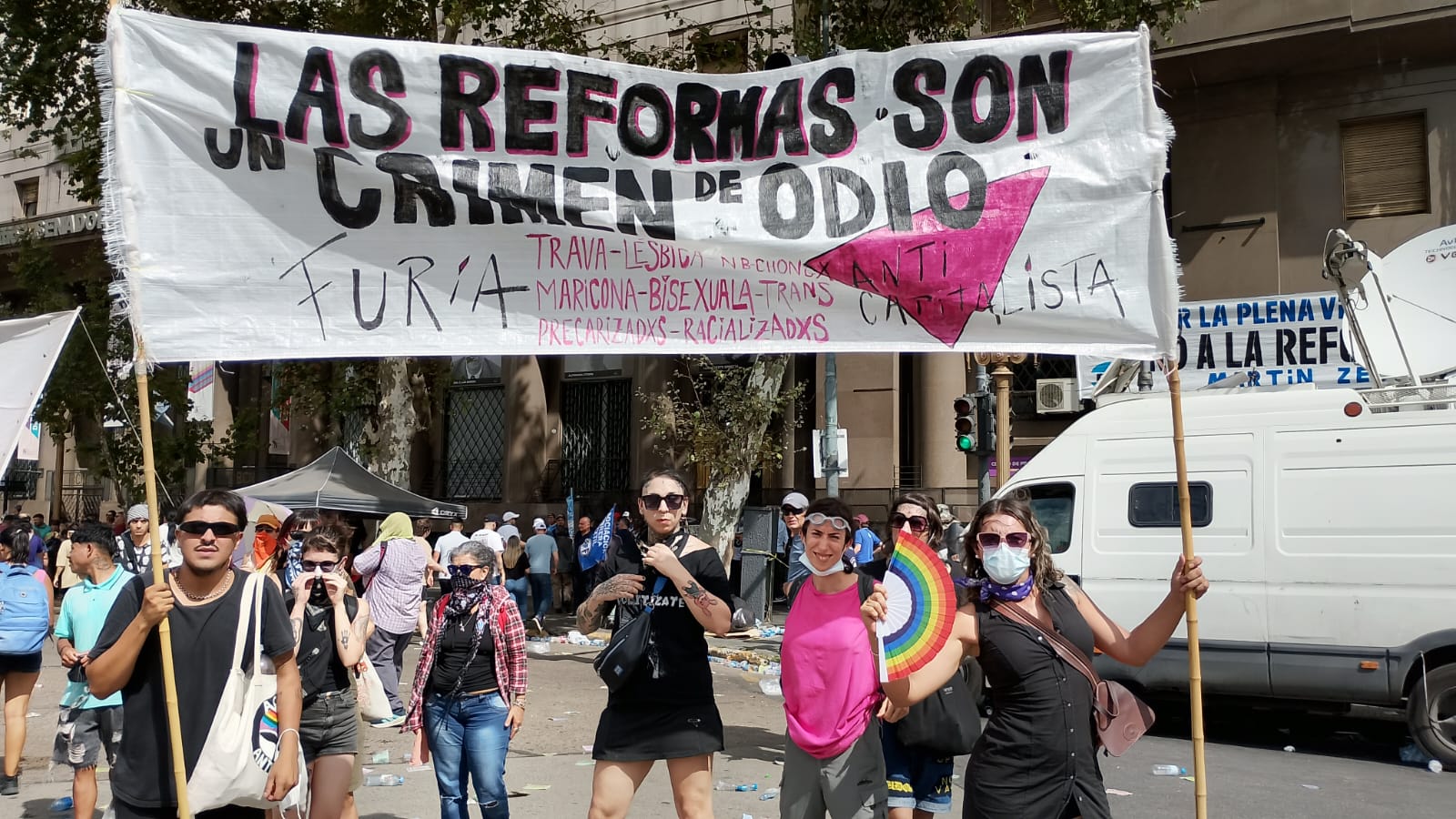
The moving ceremony included speeches by Daniel's father, Iván Zamudio, founder of the Daniel Zamudio Foundation, and the mayor of Santiago, Felipe Alessandri. It featured singing, poetry, and theater performances, as well as a candlelit procession to the exact spot where Daniel Zamudio was brutally attacked, a place now marked and commemorated with a flower-adorned roadside shrine. The most tense moment occurred when the mayor of Santiago was reading his speech and was interrupted by shouts from activists of left-wing university groups, including "Pan y Rosa," who questioned his political and ideological affiliation. "The right wing is guilty of homophobia!" the protesters yelled.

For his part, Óscar Rementería, spokesperson for the Movement for Homosexual Integration and Liberation (Movilh), emphasized that “Daniel Zamudio raised awareness throughout the country and was undoubtedly responsible for accelerating the approval of the anti-discrimination law, which we rightfully renamed the Zamudio Law.” He noted that “unfortunately, this law falls short of what the country requires and demands in guaranteeing the rights of lesbian, gay, bisexual, transgender, and intersex people.”
Among the law's shortcomings, Rementería pointed out, are “the absence of an anti-discrimination institution, the fine imposed on the complainant if discrimination is not proven, the requirement that the victim prove the abuse, the lack of compensation for victims, and the prohibition against challenging discriminatory rulings or sentences. All of this falls short of international standards.” “The Zamudio Law has had such a weak impact on achieving justice that only 245 lawsuits have been filed since its enactment, and even worse, only 13 have resulted in favorable rulings for the victims,” the Movilh spokesperson emphasized.
The president of the Movement for Sexual Diversity (MUMS), Francisco Gutiérrez, stated: “The event that cost Daniel Zamudio his life exposed Chile’s homophobia, lesbophobia, and transphobia, and the president at the time—Sebastián Piñera—promised to strengthen his commitment against all forms of discrimination in the country. The original bill was stripped of its transformative and guaranteeing character: it obligated the state to implement measures against discrimination. Sebastián Piñera enacted an insufficient law, one that responded to the immediate situation, to his image-polishing, but not to the underlying problem. After all this time, we can see that Chile does not have an effective anti-discrimination framework, and hate attacks against sexual diversity continue.”

Closing the event, Claudia Zuñiga, spokesperson for the Zamudio Foundation, thanked those present for keeping Daniel's memory alive and read a public statement that read: “While today we can use various spaces to discuss issues of diversity and discrimination, which we have often been told is progress, we want to share our ongoing concern that our daughters, sons, and children can walk the streets without feeling the uncertainty of potentially becoming victims of a homophobic attack. This leaves us with the feeling that we have not made enough progress regarding the rights of sexual diversity. The deaths, attacks, and threats have not stopped.”
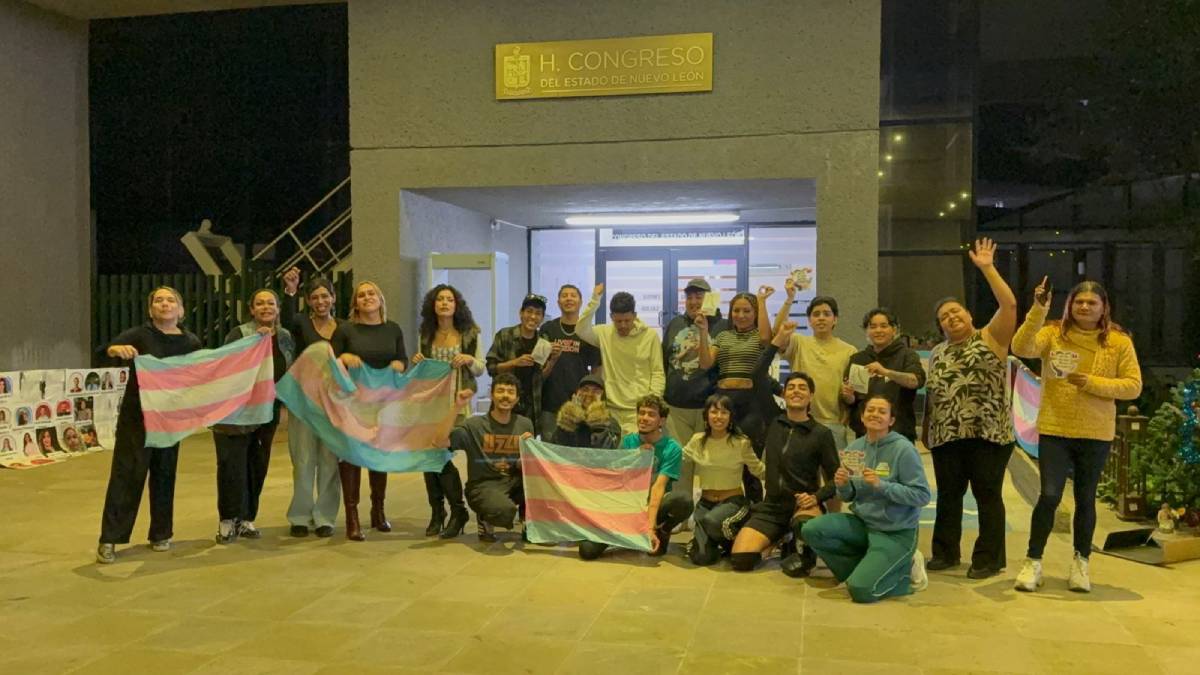
The well-attended public event honoring Daniel Zamudio served to reject the homo/lesbo/transphobic violence that persists in Chilean society and to pay tribute to its victims, including the emblematic Daniel Zamudio.
Since the enactment of Law 20.609, also known as the "Zamudio Law," dozens of attacks resulting in death have been recorded against gay men, lesbians, and transgender people in Chile. The tribute served to keep Daniel's memory alive while maintaining social vigilance against attacks, torture, murders, rapes, arbitrary and discriminatory acts against lesbians, gay men, and transgender people in schools, universities, workplaces, and entertainment venues in our country.
Twitter @PresentesTLGBI
Instagram: PresentesTLGBI
Facebook: https://web.facebook.com/presentesTLGBI/

We are committed to journalism that delves into the territories and conducts thorough investigations, combined with new technologies and narrative formats. We want the protagonists, their stories, and their struggles to be present.

This and other stories are not usually on the media agenda. Together we can bring them to light.