

Franco Torchia: “I’m concerned about people’s domestic closets”
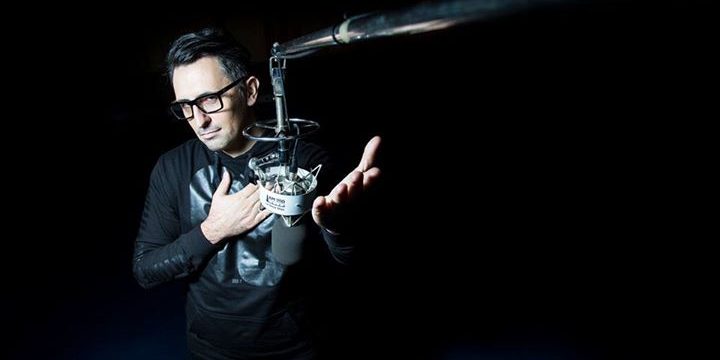
Journalist, literature graduate, media personality, and sharp analyst, Franco Torchia is known for taking himself out of context and seeing what happens. In this interview, this "oddball," as he calls himself, shares his opinions on television, the Church, coming out, and the anti-patriarchal #NiUnaMenos movement.

Share

Journalist, literature graduate, media personality, and sharp analyst, Franco Torchia is known for taking himself out of context and testing the waters. In this interview, this "oddball," as he calls himself, shares his opinions on television, the Church, coming out, and the anti-patriarchal #NiUnaMenos movement. By Luciana Caminos. Photos: Nacho Sánchez. Two milestones mark Franco Torchia's television career: he brought together the first gay couple on the show Cupido (a blind dating show for teenagers ) where he was the voice-over artist , in the early 2000s; and last year, on Pasión de Sábado , he headed the jury of the first television competition won by a trans woman. Born in Ensenada, then living in La Plata, and finally in Buenos Aires, he began working in the media at 25, after completing his degree in Literature. He rose to fame as a panelist on Intratables . At midnight, he hosts the radio program " No se puede vivir del amor" (You Can't Live on Love) , which he describes as "a program about sexual, emotional, and journalistic diversity." He returned to television a month ago as a panelist on " Confrontados ," which airs on Channel 9. After the birth of his daughter, he decided to no longer hide his sexual orientation. He is married to Tomás.
-It's impossible not to associate you with Cupid . From your experience in the media, how do you see that experience?
– Cupid was a misunderstood program; it was anti-television because there were no auditions and no call screenings. Then it moved online and returned in 2012 with 40 episodes. We had the first gay marriage on Argentine television, broadcast live. That got us into trouble with COMFER (the Federal Broadcasting Committee) and the Catholic Church because the guys kissed at 6 p.m. There were also threesomes. All of that caused quite a stir. It was labeled a program freakThanks to Cupid, I knew I wanted to be Roberto Galán; I even wrote a book about that desire. At that time, I was still a mysterious figure. Only my voice was recognized.– What are you looking to achieve with your radio program?
– As a journalist, I'm interested in people's lives. You can't live on love We reflect using the logic of the show. It's a show about reflection. We try to add a certain sparkle to reflection. While a program that airs at that time is meant to lull you to sleep, we wake up the audience. We make a program to change people's lives.
– For that program, you interviewed the Archbishop of La Plata, Monsignor Héctor Agüer, who publicly opposes homosexuality and same-sex marriage. There, among other statements, he said that he asks young men who want to enter the seminary if they like girls. If they say yes, he says, "Oh, well, that's good," and if they say no, he doesn't ordain them.
"I wasn't shocked. I've been studying this for a long time, but why does what this person says matter so much? Why is the level of violence within the Catholic Church still not fully understood? Aguer simply referred to the texts, which are the same ones the Pope reads. People refuse to understand that. We're in denial. Jorge Bergoglio's election as Pope was a tragedy for the secularization process in our country. We shouldn't demonize Aguer without demonizing the rest of the Church."-How do you handle your role on television?
– I'm not completely serious all day long. On broadcast television, building a certain persona allows you to be reflective, to spark discussions without it being so obvious. I really enjoy what's happening to me in Passion It has an audience that one might have prejudicially thought wouldn't like me. It was a challenge for those who invited me. I do very well there because I speak clearly. The audience in the stands is made up of people who are down, left behind, and excluded. These are not times for... snobbish. In Passion No one is misunderstanding. Some find that charming, others don't.-What would you say to younger people about coming out of the closet?
– I'm very concerned about people's domestic closets. For example, trans people don't have closets, unlike gay or lesbian people. They're exposed to greater risk. I've noticed that domestic violence is increasingly worse than street violence. I'm very worried about the levels of domestic violence. There's a lot of exclusion within homes. That's where the most reactionary elements of Argentina reside.. The relationship model from the dictatorship still persists. It is essential to discuss family ties and educate ourselves emotionally.-What do you mean by emotional education?
– It's about being able to train our emotions through the spaces we move through: knowing how to experience them in a powerful and healthy way. In this country, we lack emotional education, and the law on higher sex education isn't being enforced. The political class is responsible for the problem of machismo in that regard. I believe in the health of emotions, which is achieved through training. And governments, politicians, communicators, artists, and those who shape public perceptions all have the competence and responsibility to do so.-With the #NiUnaMenos movement and the upcoming women's strike – 8M – much of what you point out is becoming visible.
– #NiUnaMenos is a movement that's very functional for the media. It's a movement that emerged from social media and found its capacity for propagation in traditional media. But to what extent, how deeply, is patriarchy and its causes discussed? The deaths don't stop; they increase. We've seen the figures these past few days. We're more accustomed to the narratives of victims of violence in general, but what about the men we produce? Why don't we listen to them? It would be important, in order to dismantle machismo, to know what these men have in their subjectivity. Without listening to them, it will be difficult. We only hear the victims' stories. So, as I said at the beginning, we've entered a plateau; it's as if there are only victims. I'll give you the case of Wanda Taddei as an example: no one has engaged in social reflection to consider why a member of Callejeros, besides being a fan of flares, burned his wife. In the logic of the media, at the end of the day, all that remains are emotions. Faced with emotions, everything else fades away.Follow Presentes:
Twitter @PresentesTLGBI Instagram: PresentesTLGBI Facebook: https://web.facebook.com/presentesTLGBI/]]>We are present
We are committed to journalism that delves into the territories and conducts thorough investigations, combined with new technologies and narrative formats. We want the protagonists, their stories, and their struggles to be present.
SUPPORT US

FOLLOW US
Related notes

We are present
This and other stories are not usually on the media agenda. Together we can bring them to light.