

Who is Calenna Garbä, the trans pianist who won an award in Mar del Plata?
Talented and understated, this composer and performer of "light music" moved to Mar del Plata almost 15 years ago to develop her art and turn her life around. After two albums, several shows, and a self-made career, her adopted city rewarded her with the summer's top prize. For…

Share

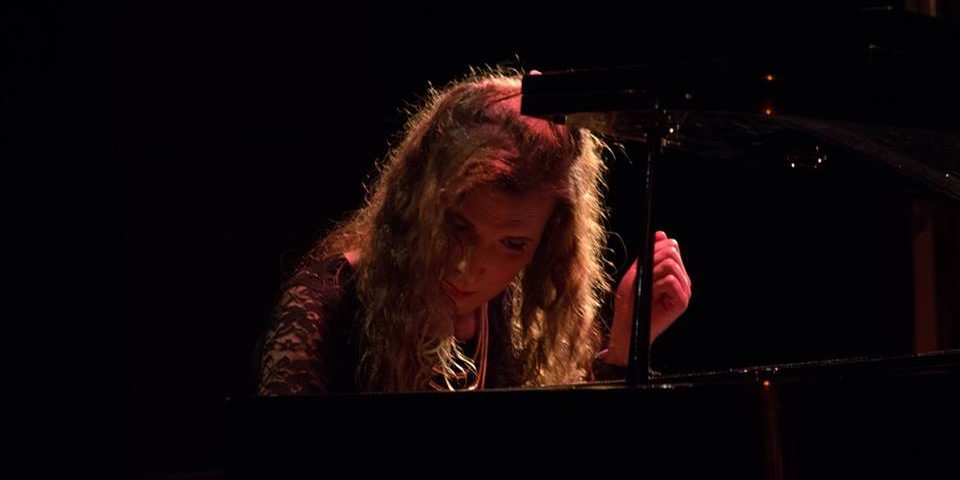
Talented and understated, this composer and performer of "light music" moved to Mar del Plata almost 15 years ago to develop her art and turn her life around. After two albums, several shows, and a self-made career, her adopted city rewarded her with the summer's top prize. By Amanda Alma Photos: Vanesa Meier It was the biggest surprise of the 2017 Estrella de Mar Awards. This time it wasn't Cacho Castaña or Lizzy Tagliani. It wasn't young up-and-coming actors or well-known figures with long and distinguished careers. It was Calenna Garbä, A trans pianist and composer who received an award for her work on February 6th. Although she came from a classical background, five years ago she proudly burst onto the scene with her light music. It's difficult to follow the movement of her hands across the eighty-eight keys of a piano. They move with the dexterity acquired over more than two decades of work and learning. In 2012, she recorded—entirely at home—her first album, "Demoliendo años" (Demolishing Years): nine original compositions. She sold around 600 copies herself. That encouraged her to continue. In 2016, she released "Calenna Clásica Ligera" (Calenna Light Classical), an album that earned her a place on the Mar del Plata music scene. Her musical exploration and her experience of her gender identity have gone hand in hand, but she says she prefers not to be categorized. "I define myself as a human being," she told Present“For me, every category is a form of restriction.” Calenna speaks deliberately. She takes her time to consider each answer and is selective with her words. She doesn't like to delve into her past—it's painful—and subtly avoids questions. "My goal has always been to transform the world through music." Born in Buenos Aires 44 years ago, she emigrated to Mar del Plata when she was approaching 30. In that temporary home, she was able to develop her art and her dissident identity. She left behind the denial of her own history and a business administration job in Buenos Aires. She found a city by the sea, with wide horizons, from which to expand. The city welcomed her with prejudices but also with many possibilities, which she gradually discovered.

Make yourself heard
“Uprooting yourself, settling in a new city, making your way, isn’t easy,” says Calenna. “You have to try to find a way; if they don’t listen one way, try another.” Trans visibility in an aging and very conservative community challenged her to create unique pieces. Her musical exploration ranges from popular to classical, recreating her own story in every note. Wordless. Alone or accompanied by an orchestra. “At eight years old, I fell in love with the piano at my aunt’s house. My father was a bandoneon player who played folk and tango music, and he would go there to rehearse or make arrangements. I would go with him. My childhood was surrounded by music, and that determined my vital pulse in art. The piano was like a game, with its black and white keys that combined.” She says that her mother, after years of estrangement, picked up the phone when she found out about her award."My way of fighting, my contribution"
In 2011, the Municipality of Mar del Plata gave a boost to the organization and coordination of the LGBTQ+ community. At that time, Argentina was debating the Equal Marriage and Gender Identity laws, and transgender employment inclusion—a cause championed by Diana Sacayán—was also at the heart of the discussions. Four years ago, she joined the legendary Auditorium Theater with a grant, where she continues to work. Today, that same theater welcomes her back as an artist and awards her. Upon receiving the recognition, she expressed her heartfelt gratitude to her colleagues. “My mission is to leave behind as much written music as possible, for posterity: that is my particular form of normalcy, somewhat artificial, but without labels. It is my way of fighting, my contribution.” The show “Calenna Clásica Ligera”—for which she received the award—is a significant undertaking in her artistic vision. Alongside a dozen musicians on stage, they seek "the most intelligent way to break with the paradigms that confine human expression." This versatility at the piano is what the jury of the summer's most important award recognized. In a city like Mar del Plata, adrift amid accusations of the dismantling of cultural policies by Mayor Carlos Arroyo (PRO) and the impunity of gangs that attack LGBTQ+ people, this award also carries political weight. Art remains a battleground, and she is emphatic: "Culture is sustained by recognizing it."Follow Presentes:
Twitter @PresentesTLGBI Instagram: PresentesTLGBI Facebook: PresentesLGBTI]]>We are present
We are committed to journalism that delves into the territories and conducts thorough investigations, combined with new technologies and narrative formats. We want the protagonists, their stories, and their struggles to be present.
SUPPORT US

FOLLOW US
Related notes
We are present
This and other stories are not usually on the media agenda. Together we can bring them to light.
1 Comment