

ARGENTINA: a #toplessprotest for bodily sovereignty
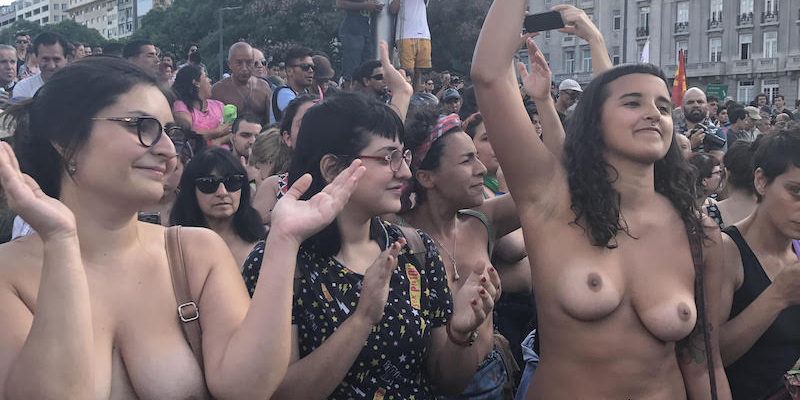
Downtown Buenos Aires was abuzz Tuesday afternoon when hundreds of women, lesbians, trans people, and some men took over the Obelisk for a "topless protest." Some with bare torsos, others in bras, they chanted and carried signs, saying "enough" to the patriarchal system's use and appropriation of women's bodies. Presentes was there and tells the story through photos and testimonies from its participants.

Share

Downtown Buenos Aires erupted Tuesday afternoon when hundreds of women, lesbians, trans people, and some men took over the Obelisk for a topless protest. Some with bare torsos, others in bras, they chanted slogans and signs declaring "enough" to the patriarchal system's use and appropriation of women's bodies. Presentes was there and tells the story through photos and testimonials from those who participated. The call for the topless protest came from various feminist and social organizations in response to the events of January 28 in Necochea, a seaside resort 500 km south of Buenos Aires. Three women sunbathing topless were forced by about 20 police officers to cover their bodies under the threat of arrest for violating a penal code in effect since 1973. The release of the video sparked a debate in Argentine society, and ultimately, Judge Mario Juliano of Necochea decided to dismiss the case for the alleged crime of "obscene acts."
 "You see how many women have been abused, touched against their will, or had men masturbate in front of them, and we have countless memories of situations where the police or anyone else never showed up. Today, we have the problem that the Comprehensive Sex Education Law isn't being properly implemented, and educational programs are being shut down. All of this is happening, and the only thing the security forces are concerned about is repressing three young women who are topless in the street, which is completely disproportionate." “This movement is related to the accumulated efforts of a women’s movement, a very strong LGBT movement in Argentina, where we’ve been making progress, winning rights, and we’re not willing to back down,” says Laura.
 “We came because we believe there are rights that haven’t yet been won: Why can men walk around however they want in the street? And why have women’s bodies been historically sexualized? Why do breasts have to be used for public display or for breastfeeding? And we can’t even relax and sunbathe on a beach.”
 “Our bodies are ours, they belong to us, and we show them where we want.”
 “We’re here to reclaim bodily autonomy, to stop being censored, and to build connections with other women ,” Belén, from the lesbian organization “La Fulana,”
 Presentes “ I’m fed up with the patriarchy, with being told that our lives are conditioned by multiple instruction manuals: they tell us how we have to have sex, how we have to move around, how we have to sunbathe, how we have to cook.” “They tell us everything: from the media, from those in power, from husbands confined to their homes. We’re tired, but you see what this is like. We’re surrounded by creeps, by guys who want to impose their presence when the truth is they could free up a little space for us to express ourselves, so we can be at peace, like we usually are when we’re topless,” said journalist and #NiUnaMenos activist Marta Dillon.
 “We’re here for the freedom we deserve.”


Follow Presentes:
Twitter @PresentesTLGBI Instagram: PresentesTLGBI Facebook: https://www.facebook.com/presentesLGBTI/?fref=ts ]]>Share
We are present
We are committed to journalism that delves into the territories and conducts thorough investigations, combined with new technologies and narrative formats. We want the protagonists, their stories, and their struggles to be present.
SUPPORT US

FOLLOW US
Related notes



We are present
This and other stories are not usually on the media agenda. Together we can bring them to light.