

The first map of the LGBTI population has been published
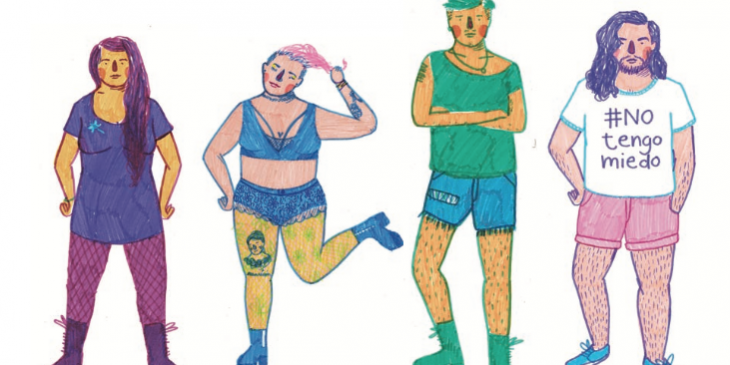
The investigation, carried out by the "I'm not afraid" collective, includes testimonies from the interior of the country and covers various aspects, from violence to education.

Share

The investigation, carried out by the collective "I'm not afraid", includes testimonies from the interior of the country and covers various aspects, from violence to education.
Although there has been some progress regarding the rights of LGBTI people in recent times, there are no figures managed by the State that describe the situation in which they live.
That's why many organizations and groups within civil society have gathered data through small surveys, newspaper clippings, and constant monitoring of news. But none as comprehensive as the one presented by the No Tengo Miedo (I'm Not Afraid) .
[READ ALSO: Peru: Judiciary recognizes first gay marriage ]
“Our Voice Persists” is a report that collects the voices of 772 people. “It is a response to all the centuries of invisibility of these identities in Peruvian history, identities that are part of our past, present, and future,” Adriana Gallegos, one of the authors of the research, Presentes
The testimonies and cases were gathered through personal interviews and the organization's website. Furthermore, it was a collective and decentralized effort: Peru is not just Lima.

For Gallegos, it means an effort to "say that our voice matters, that we are people who have been victims of a heteronormative system that oppresses us."
How was it done?
This is the first time a study has included voices from the interior of the country thanks to the strategic alliances they developed with various local organizations in the regions.

A combined qualitative and quantitative approach was used. While the sample size was large, the main objective was to learn firsthand the stories of LGBTIQ people in Peru.
“Queer activism needs to be made visible not only from Lima. We were interested in recognizing that activism exists in other territories, in other parts of Peru. This makes the study much more complex and rich. We have learned about particularities of the situation of violence in regions for which there was no data,” Gallegos notes.
READ ALSO: [ Peru: Gender Identity Bill introduced ]
The design of this research project began in January 2015, and it took approximately two years to present the results. Malú Machuca Rosé, Rudi Cocchella, and Adriana Gallegos Dextre were responsible for the development and writing of this report.
The figures on violence
One of the most relevant aspects of this research is identifying the groups through which violence has been perpetrated against diverse individuals. Aggression perpetrated by third parties or strangers accounts for 47.7% of cases, followed by 35.7% originating from the nuclear family.

However, one of the most relevant findings is the violence perpetrated by members of the LGBTIQ community: 12.2% have felt attacked by our own community. Many questions in this survey allowed for multiple responses, resulting in totals exceeding 100%, meaning many people experienced violence from two or more groups.
[READ ALSO: #Peru: Police beat and abused him for being gay: he went to the IACHR ]
Education
Another important piece of information, which will be compared when the LGBTIQ population is taken into account in national censuses, is the level of education.

Responses from the government
The collective “I’m Not Afraid” states that they are releasing this data so that the central government, and all those in positions of power, can gain a better understanding of the realities faced by LGBTQ+ people. Only in this way, they assert, can public policies be implemented that directly address the diverse needs that must be met to provide them with a better quality of life.
[READ ALSO: #Peru: President PPK opposes same-sex marriage ]
Peru's Deputy Minister of Justice, Giselle Vignolo, told Presentes that gathering information from various parts of the country will allow for the coordination of initiatives with local governments. She added that the report "will allow us to establish a baseline for working on LGBTIQ issues in our upcoming National Human Rights Plan."

Follow Presentes:
Twitter @PresentesTLGBI
Instagram: PresentesTLGBI
Facebook: https://www.facebook.com/presentesLGBTI/?fref=ts
We are present
We are committed to journalism that delves into the territories and conducts thorough investigations, combined with new technologies and narrative formats. We want the protagonists, their stories, and their struggles to be present.
SUPPORT US

FOLLOW US
Related notes


We are present
This and other stories are not usually on the media agenda. Together we can bring them to light.