

Interview: "Genitals do not define a person"
Gian Franco Rosales is the first trans man to hold a high-ranking position in the Argentine public sector. The Director of Diversity for the Avellaneda district recounts his journey from Googling "A man trapped in a woman's body" to the challenges he faces today as a public official…

Share

Gian Franco Rosales is the first trans man to hold a high-ranking position in the Argentine public sector. The Director of Diversity for the Avellaneda district recounts his journey from Googling "A man trapped in a woman's body" to the challenges he faces today as a public servant in the areas of health and human rights.
By María Sucarrat
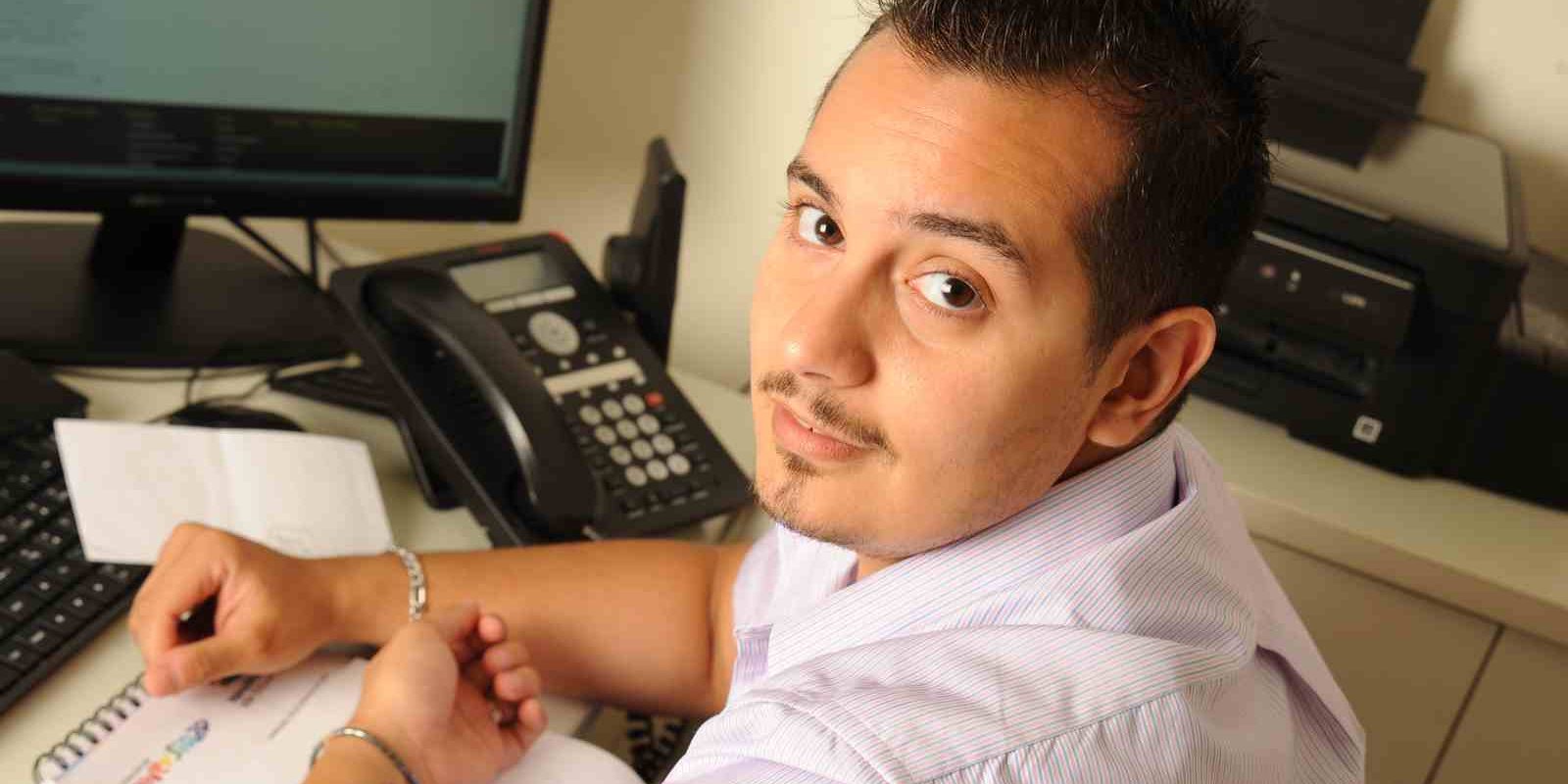
Photos: Ariel Gutraich Gian Franco Rosales is the Director of Diversity for the Avellaneda district. He is the first trans man to hold a high-ranking position in the public sector, the first trans person to legally change his gender identity in that district. An activist with the Association of Transvestites, Trans and Transgender People of Argentina (ATTT) and the Argentine Federation of Lesbians, Gays, Bisexuals and Trans (FALGBT), nothing in his journey happened overnight. His identity didn't appear around the corner in Avellaneda. "I didn't feel respected by my family. So, I decided to leave home." For six years he lived in different places. When he decided who he really was, he returned to Avellaneda. In 2011, he enrolled at the university to study for a degree in Computer Science and requested that his gender identity be respected. They told him no, that they had to register him according to his national identity document. A few days later, Gian returned to the office with a folder containing resolutions that already existed at the University of Córdoba, the University of Buenos Aires, and other parts of the country. He left it there. In March, a letter awaited him. The University had issued a resolution respecting gender identity, for his case and for all others. "The rector called me in to congratulate me. He asked for my resume and forwarded it to the Municipality. That's how I started working." Initially, because of his computer skills, he took a position in the security camera office. Months later, he developed a project on diversity and presented it to Mayor Jorge Ferraresi (Front for Victory). Almost immediately, he was transferred to the health department to work on a health program. Gian was the first trans person to work for the municipality. Today there are at least six of them holding positions.
"We live in a phallocentric society"
Avellaneda is leading the way in inclusion. Diversity is a public policy. In fact, the city voted to adopt the provincial trans quota law, even though Mayor Jorge Ferraresi didn't think it was necessary. He has been committed to this since 2012, and the Directorate of Diversity was established in March 2016. -What does it mean to work in health in diversity? -It means providing training in health units to explain how to treat a trans person, especially a man, because trans women are more well known. -How is a trans person treated? A trans person constructs their gender identity outside of what is socially and culturally predetermined. And also outside of medicine, outside of the sex assigned at birth. Because when a person is born, nothing else is taken into account except their genitals. In fact, not even the vagina is considered. Gender is determined by the presence or absence of a penis. From that moment on we know that we live in a phallocentric society. -The genitals at first glance -Yes, the observation of the external genitalia. And Genitals do not identify a personThe law states that it is about the individual's internal experience. Not only trans people construct their gender identity, but everyone does.The difference is that people, in general, construct an identity according to what society expects. Our construction goes beyond that.

Delays in gender identity certificates
-How many trans people live in Avellaneda? "We can't know the exact number anywhere. But we do know that since the Gender Identity Law was passed until June 2016, 181 trans people have legally changed their gender identity. We know there are many more who haven't done so due to personal, family, or work-related issues. But not all trans people want to make their identity visible, and that's just as valid as making it visible. We believe there's still a negative stigma attached to them. Many people come to the office with questions and give the name on their ID. Sometimes the person uses female pronouns and says their name is 'Damian.' Almost five years after the law was passed, people in general don't know they can change their ID." -How difficult is it to access change today? –In Buenos Aires, shipments used to take a month. Today they take six.In Avellaneda, a little less."I had no idea what a trans man was."
In 2006, Gian set aside everything he knew and typed into Google: “A man trapped in a woman’s body.” He then searched for websites in Spain and encountered, for the first time online, “trans men.” He immediately knew what he was looking for: the identity he wanted to live with. He never felt alone again and demanded to be addressed as “he.” His loved ones, however, told him that no matter what he said, he would always be a woman. Gian suffered. He knew that his journey as a trans person would be a solitary one. -You had to leave Avellaneda to build your identity. "I couldn't do it here, because of my family and all the people who knew me. Discrimination affects people so much that it prevents them from moving forward. Once I was out of my comfort zone, I could see everything differently. I no longer felt like a burden." -Who did you leave Avellaneda as?
“I didn’t leave here as a trans man. In fact, I had no idea what a trans man was. I considered myself a lesbian, which was the closest thing I could come to understanding. My group of friends was all lesbians. Actually, when I was finally able to publicly say ‘I’m a lesbian,’ I did so knowing that wasn’t my identity either; something didn’t quite fit. Construction involves deconstruction, and the process is long. Today, Gian is undergoing fertility treatment to conceive. He and his partner, a trans woman, want to be parents. To do this, he had to stop his hormone therapy. He needs to return to the same estrogen levels he had before becoming Gian. A few months ago, he conceived but lost his baby at eight weeks. But he’s not giving up, and today he’s repeating all the tests to try again. Meanwhile, he’s launching a program, the first of its kind in the country, that works with migrants and Afro-descendants. It aims to provide trans people with a range of opportunities to live and work. It’s a process of construction and deconstruction.” And their struggle continues to amaze.
-Who did you leave Avellaneda as?
“I didn’t leave here as a trans man. In fact, I had no idea what a trans man was. I considered myself a lesbian, which was the closest thing I could come to understanding. My group of friends was all lesbians. Actually, when I was finally able to publicly say ‘I’m a lesbian,’ I did so knowing that wasn’t my identity either; something didn’t quite fit. Construction involves deconstruction, and the process is long. Today, Gian is undergoing fertility treatment to conceive. He and his partner, a trans woman, want to be parents. To do this, he had to stop his hormone therapy. He needs to return to the same estrogen levels he had before becoming Gian. A few months ago, he conceived but lost his baby at eight weeks. But he’s not giving up, and today he’s repeating all the tests to try again. Meanwhile, he’s launching a program, the first of its kind in the country, that works with migrants and Afro-descendants. It aims to provide trans people with a range of opportunities to live and work. It’s a process of construction and deconstruction.” And their struggle continues to amaze.
Follow Presentes:
Twitter @PresentesTLGBI
Instagram: PresentesTLGBI
Facebook: https://web.facebook.com/presentesTLGBI/
]]>We are present
We are committed to journalism that delves into the territories and conducts thorough investigations, combined with new technologies and narrative formats. We want the protagonists, their stories, and their struggles to be present.
SUPPORT US

FOLLOW US
Related notes
We are present
This and other stories are not usually on the media agenda. Together we can bring them to light.
Excellent article, clear, compelling and above all educational.