

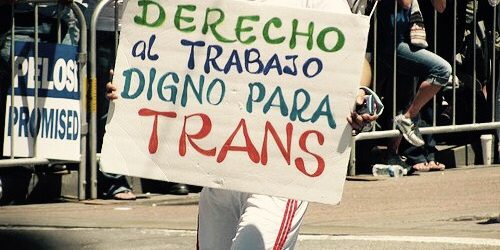
Rosario opened the call for trans workers
Applicants must register beforehand in the Single Registry of Applicants (RUA) and have no criminal or misdemeanor record. There are five openings at the Municipality, and admission is by competitive process.

Share

They must register beforehand in the Single Registry of Applicants (RUA) and have no criminal or misdemeanor record. The quota is for five people at the Municipality, and entry is by competitive process. By Laura Hintze, from Rosario. The Municipality of Rosario yesterday launched the Single Registry of Applicants (RUA) for transvestite, transsexual, and transgender people. Registration in this registry is the first step in selecting the five people who will be hired permanently, as indicated by the Trans Employment Quota ordinance. The news was, in general, celebrated: it means that the path to making the quota effective has begun. However, trans leaders who campaigned for the project and are supporting the municipality in its implementation objected to the decision to include the presentation of a certificate of good conduct among the exclusionary requirements. “The inclusive spirit of the ordinance is lost. Many of our colleagues could be left out,” emphasized Michelle Mendoza, a leader of the Evita Diversity Movement. And he recalled that for years the Code of Misdemeanors criminalized prostitution and transvestism, which meant that a large part of the local trans population would be left out of the conquest.
[YOU MAY BE INTERESTED IN: #Argentina: progress and shortcomings of the trans employment quota ]
In May 2016, Rosario became the first city in Argentina with a Transgender Employment Quota. The ordinance was approved with the affirmative vote of the entire political spectrum represented on the City Council, with the exception of the Unión PRO Federal bloc, which abstained. The project almost languished on its laurels. Updates on its implementation were slow in coming, but they finally arrived. On the phone, Michelle, Jackie Romero, and Fátima Rodríguez Lara—the three leading figures who worked on and promoted the Quota—sighed with relief, celebrated, and murmured, “Finally.” Then came the butThe certificate of good conduct. According to them, this requirement goes against the reality of the group it is intended for, ignoring the application for years of several now-repealed articles of the Code of Misdemeanors against “scandalous prostitution, transvestism, and offenses against public decency.” Rodríguez Lara emphasized yesterday: “The return of democracy did not mean more freedom for us. I would go out to buy bread and not know if I would come back. You didn't even have to be prostituting yourself.”[YOU MAY BE INTERESTED IN: To provide reparations to trans and transvestite victims of police violence ]
The questions arise again: Does a certificate of good conduct reveal your background? Michelle Mendoza reminded us that the police were – and in many cases still are – one of the main institutions that persecuted and criminalized trans people, especially women.We are present
We are committed to journalism that delves into the territories and conducts thorough investigations, combined with new technologies and narrative formats. We want the protagonists, their stories, and their struggles to be present.
SUPPORT US

FOLLOW US
Related notes

We are present
This and other stories are not usually on the media agenda. Together we can bring them to light.